Safer Farms Champions Promote Quad Bike Crush Protection Devices
Safer Farms Regional Champions are putting Crush Protection Devices (CPDs) through their paces and sharing their first-hand experiences with other farmers.




 increase font size
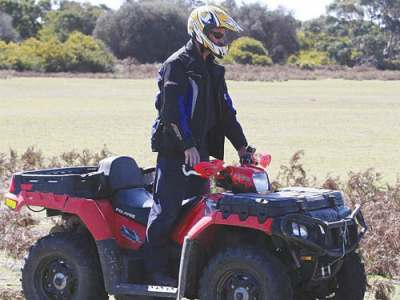 Quad bike safety is under review in Australia following a spate of fatal crashes.
Not many weeks pass when quad crashes don’t make the news here or in Australia; for example, the first weekend in March saw two fatalities and a serious injury in NSW.
In a move to limit these, Queensland last week made helmets compulsory; and in Victoria and NSW rebate incentives are offered to encourage farmers to fit roll-over protection devices.
Farmsafe AU spokeswoman Sarah McKinnon says a big change is needed in quad use ‘culture’ to raise safety, and she suggests manufacturers find ways to design for greater safety.
In response, the Australian quad industry is urging state and regional governments to immediately ban riders younger than 16 from operating adult-size machines.
The Federal Chamber of Automobile Industries (FCAI) also wants state governments to mandate continuous adult supervision of riders under 16 when they are operating “age-appropriate” quads.
The industry insists that full-size quads were never designed to be ridden by children, yet they keep doing it despite warning notices on machines and freely available safety and training materials.
In New Zealand, the Motor Industry Association chief executive David Crawford reiterates the long-held industry viewpoint that only vehicles that comply with the ANSI standards on power and speed for age-related quads or side-by-side machines should be sold in NZ.
The MIA is also urging the government to prohibit the importing of machines that do not meet this standard. And it urges parents to prohibit children younger than six from riding any size quads or side-by-sides, and youngsters under 16 from riding adult-size machines.
Safer Farms Regional Champions are putting Crush Protection Devices (CPDs) through their paces and sharing their first-hand experiences with other farmers.

It's hard to believe that quad bikes or ATVs have been around for about 50 years – even longer if you add in the balloon-tyred trikes that first appeared in the Bond movie Moonraker.
Federated Farmers says the farming sector has been unable to effectively address quad bike safety.
The launch of the new Safer Rides incentive programme will see farmers encouraged to install crush protection devices (CPDs) on their quad bikes to help reduce harm on farm.
Last year saw a major shift in the supply of ATVs or quad bikes in the Australian market, with the Consumer Goods (Quad Bikes) Safety Standard 2019 coming into effect on 11 October 2021.


Decades piloting planes has ensured vet and farmer David Hayes is focused on safety. So, after a serious accident while welding on farm, he is sharing his experience so others can learn from it.

Canterbury milk processor, Synlait Milk has confirmed Leon Fung as its chief executive officer.
OPINION: Making it easier to collect rainwater and use it to grow crops and livestock is a no brainer.
As part of its Election 2026 coverage, Rural News asked political parties how they would help pull the arable sector out of the doldrums. Here's what they said:
Farmers are being encouraged to rethink how they manage waste on farm with the launch of ruralwastesorted.co.nz, a new website bringing together practical tips, real farmer experiences and resources.
New Zealand Winegrowers (NZW) is celebrating the India-New Zealand Free Trade Agreement (FTA) coming into force today, bringing New Zealand wine improved access to one of the world’s fastest-growing economies.




OPINION: It seems Canterbury processor Synlait is still in the doldrums.
OPINION: Get offside with New Zealand First leader Winston Peters at your own peril.




