Westgold Butter Ranked Best Supermarket Butter in Consumer NZ Blind Taste Test
Westgold butter has been named New Zealand's tastiest in a blind tasting conducted by Consumer New Zealand.




 increase font size

Westland Milk Products, New Zealand's second largest dairy cooperative, has made a strategic step into the international paediatric nutrition market with the commissioning of a state-of-the-art nutritionals plant at Hokitika.
The new multi-million dollar plant started commercial production in February and already has committed customers, taking Westland from a dairy ingredient supplier to a new entrant in the infant nutrition sector.
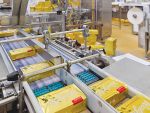
In technical terms, the new Westland nutritional plant is a state-of-the-art Tetra Pak system comprising a wet mix batching system including wet and dry macro and micro ingredient handling areas, oil dosing, vacuum mixing, homogenisation and pasteurisation.
This wet mixing approach ensures a high degree of product composition control and consistency which is crucial for customers.
Traceability of all ingredients is enabled through detailed logs and batch control software. The products are dried through evaporation and spray drying, and packed in a newly created high-hygiene area which staff enter via a second red-line zone and wear full coverage hat and facial masks in addition to the usual overalls, hats and boots.
These measures reflect the elevated levels of hygiene and control required beyond Westland's already strict quality standards.
Westland's production manager Bernard May says building the plant was an exercise in cooperation with more than 200 people involved. At its peak, 38 mechanical installers and 40 electricians were working on the site. About 60,000 hours went into bringing the nutritionals plant to completion.
May says it was a huge advantage to work with Tetra Pak Oceania which has extensive experience in spray drying technology and innovation.
"Tetra Pak had the overall contract, but we were also able to offer work to a number of West Coast companies," says May. "We also made sure we put time and resources into staff and training, making use of experienced contractors and consultants who have been through nutritional plant commissioning before. It's been a fantastic effort from everyone involved. We have successfully commissioned the plant; we have product in the warehouse; customers visiting, auditing and ordering; and commercial production has commenced."
Westland chief executive Rod Quin says, "To achieve success in the nutritionals market we have to have the sophisticated technology required, which is where the investment in the nutritionals plant comes in. It's a huge step for us to take, but one that expresses confidence in the future of Westland as a company and dairying as an industry."
Noel Ayre, managing director of Tetra Pak Oceania says: "Our team enjoyed working with Westland, to install our superior infant formula wet mix plant technology, which allows Westland to produce a quality product."
Westgold butter has been named New Zealand's tastiest in a blind tasting conducted by Consumer New Zealand.
Yili's New Zealand businesses have reported record profits following a major organisational and strategic transformation.
OPINION: Westland Milk may have won the contract to supply butter to Costco NZ but Open Country Dairy is having the last laugh when it comes to cashing in on NZ grass-fed butter.
Hokitika-based Westland Milk Products is bracing for another good year after hitting $1 billion in revenue for the first time in 2022.
A bid by Irish dairy giant Ornua to prevent the sales of New Zealand-made Westgold Butter in the US was today (Thursday time in California) dismissed in the Californian District Court.


National’s pledge to introduce 19 new national standards shows the party is serious about getting Wellington out of farming, Federated Farmers says.
The National Party’s policies to make it easier to grow fresh vegetables, secure reliable water and energy and simplify farm planning are practical changes that will give growers the confidence to invest, according to Horticulture New Zealand (HortNZ).
Fonterra Co-operative Group chief financial officer Andrew Murray has resigned to take up a role outside the dairy giant.
A major move is about to get underway to improve the quality and viability of dairy beef and cattle in NZ.
Veterinarians say changes to the code of welfare for dairy cattle provides a positive foundation for improved cattle welfare across the country.
Today, 15 October, is the International Day of Rural Women, which recognises rural women’s contribution to farming, communities and the environment.




OPINION: It seems Canterbury processor Synlait is still in the doldrums.
OPINION: Get offside with New Zealand First leader Winston Peters at your own peril.




