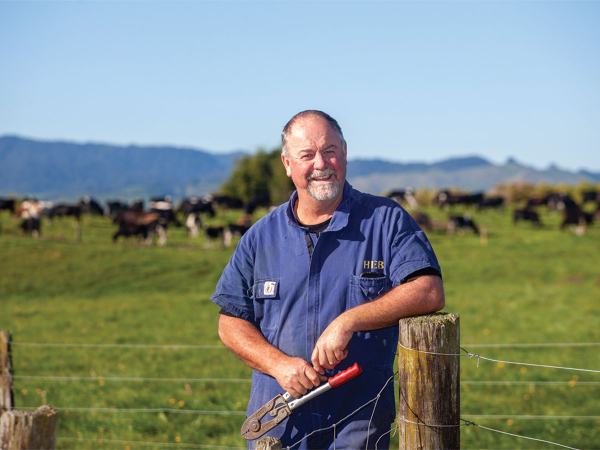
And one farmer leader says with strong prices combined with great grass growth, New Zealand farmers are pushing the envelope and getting as much milk as they can in the vat.
Major banks have revised their forecast milk price for the season upwards. Fonterra's latest forecast range is $8.50 to $9.50/kgMS, with a midpoint of $9/kgMS.
After a poor run over the second half of 2025, global dairy prices showed a solid recovery to start 2026. The Global Dairy Trade (GDT) price index lifted 6.3%, 1.5% and 6.7% at the first three auctions.
BNZ senior economist Doug Steel says that while prices are still 13.7% below their peak in May last year, it is encouraging to see a bounce from last year's lows.
He believes that if prices were to remain around current levels for the remainder of the season, a 2025/26 milk price a touch above the top of Fonterra's forecast range is possible.
Steel says BNZ's forecast of $9.50 builds in some GDT price decline into season's end.
Read More:
- Global Dairy Trade prices surge, boosting New Zealand dairy farmers
- Dairy prices defy ample supply as market momentum builds
- Editorial: Happy days
ANZ economist Matt Dilly says price drops in late 2025 were overdone.
Dilly says the welcome bounce has materially improved the milk price forecast for the current season. ANZ has also revised its forecast milk price to $9.50.
Federated Farmers Waikato dairy chair Matthew Zonderop says farmers are over the moon with how the season is progressing.
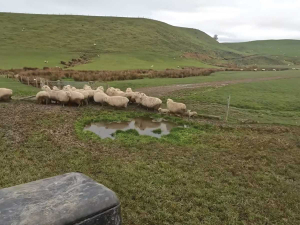
"The biggest thing is that we've got so much grass at this stage that some of us in the Waikato are still making silage," he told Dairy News.
"We've had warm temperatures but it's mild compared to other seasons. I think farmers will be pushing the envelope; we have the feed in front of us," he says.
Zonderop agrees that a $9.50 milk price is possible.
"If we get another good auction, then there's no excuse for the milk price to go up to $9.50. But a $9 milk price is still profitable.
"Things are shaping up well: we got plenty of feed and the cows are in great condition."
Zonderop believes another dollop of rain in the Waikato will keep farmers going until the end of March.
Selloff Overdone?
So what is driving dairy prices up?
ANZ economist Matt Dilly says the global supply and demand fundamentals that drove prices down in the second half of 2025 are largely still in place, but in hindsight the selloff was overdone.
Milk production is growing strongly in almost every key market and Dilly says this has mainly been a response to high prices, along with low feed costs.
"Now every key exporting country has their foot on the accelerator.
"None of that has changed in the past two months, yet the GDT Index has risen 15.2% in the first three auction events of 2026.
"A few reasons have been offered for this reversal, and... individually none of them are particularly convincing."
Dilly believes that regardless of the cause, the bounce is great news for dairy farmers, even though prices remain a lot closer to the bottom than the top, because it virtually guarantees a milk price somewhere in the mid-$9 range.