
Leon Fung confirmed as Synlait CEO
Canterbury milk processor, Synlait Milk has confirmed Leon Fung as its chief executive officer.




 increase font size
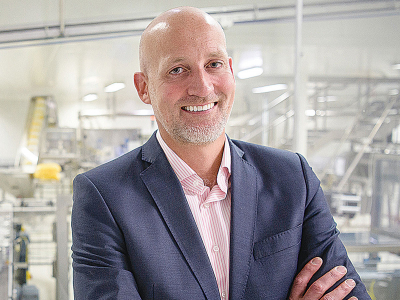 Leon Clement, Synlait chief executive.
Canterbury milk processor Synlait reports “a solid result” in its half-year profit announcement, albeit down 9.6% on the same period last year.
Net profit after tax for the first half of the financial year (HY19) was $37.3 million, down from $41.3m in HY18.
“This remains a solid result for the first half of the year, with increased sales volumes in our powders and cream and lactoferrin businesses,” Synlait told the NZX.
“The higher sales volumes were due to our ability to increase production volumes off the same asset base, a very pleasing result and representative of the efficiencies we are developing in manufacturing through our integrated work systems programme.
“While our sales volumes of fully finished infant formula were slightly ahead of HY18, these were delivered at lower margins. This is a result of the new pricing agreement entered into with The a2 Milk Company last July, as well as not having the benefit of the higher-margin sales to our China customers that we enjoyed in HY18. These brands are awaiting state administration for market regulation (SAMR) registration.”
The result also benefited from increased efficiencies at its manufacturing plant. Synlait processed 12.4% more milk, producing 90,466 tonnes of product, up 10.5%. It recorded higher sales volumes of powder and cream products (56,116t, up from 46,111t) and a higher closing finished goods inventory (44,344t vs 35,040t).
Chief executive Leon Clement said strong growth is expected for the second half of the year.
“We remain on track for our full year canned infant formula volume guidance at between 41,000 – 45,000t, with significantly higher volumes forecast to be delivered in the second half of FY19 compared to the second half of FY18, which saw only an 11% uplift on the first half,” said Clement.
“The volume growth in the second half of FY19 is driven by strong growth in The a2 Milk Company’s Platinum brand of infant formula. We maintain our outlook that full year profitability is expected to increase in FY19, but not at the same rate as FY18.”
The company said the first half-year was characterised by significant investments into its manufacturing base across all key categories.
“The build of our new infant-capable manufacturing facility in Pokeno continues to be on track for commissioning for the 2019-2020 milk season. This is a $280m investment which will allow us to meet customer demand, whilst also eliminating our single-site risk.
“At the same time, we are recruiting new milk suppliers in the area. We remain on track for the start of the 2019-20 milk season and are encouraged by the warm welcome we’ve received from Waikato dairy farmers.”
A key focus was meeting its commitments to Foodstuffs South Island (New World, Pak’n’Save, Four Square) to provide private-label fresh milk and cream through its new advanced liquid dairy packaging facility in Dunsandel. That remained on track to deliver the first fresh white milk in April.
Clement said the $18m expansion of the Dunsandel lactoferrin facility had been completed, doubling the production capacity for the high-value protein, which is recognised for its anti-bacterial and anti-inflammatory properties and in demand for infant formula.
Clement said it is producing very high quality lactoferrin.
Canterbury milk processor, Synlait Milk has confirmed Leon Fung as its chief executive officer.
Waikato milk processor Tatua has again declared a record milk payout to farmer shareholders, leaving other processors in the dust.
Synlait has swung to second-half profit as operations stabilise, but the dairy processor still posted a $75.4m annual loss.
OPINION: It seems Canterbury processor Synlait is still in the doldrums.
Speculation of a possible joint move by Fonterra and a2 Milk to buy Synlait raises a much bigger strategic question, says agribusiness expert Dr Nic Lees.



Federated Farmers has welcomed new rural policies released by ACT, saying they align closely with its own election priorities.

Rural Contractors NZ says proposed changes to land transport rules for agricultural vehicles are a welcome response by the Government to out of date regulations which have seen members hit with huge fines.
Alliance is calling for final applications for its 2027 Graduate Programme, with applications closing on Sunday 25 October.
Decades piloting planes has ensured vet and farmer David Hayes is focused on safety. So, after a serious accident while welding on farm, he is sharing his experience so others can learn from it.
Canterbury milk processor, Synlait Milk has confirmed Leon Fung as its chief executive officer.
OPINION: Making it easier to collect rainwater and use it to grow crops and livestock is a no brainer.




OPINION: It seems Canterbury processor Synlait is still in the doldrums.
OPINION: Get offside with New Zealand First leader Winston Peters at your own peril.




