Susan O'Regan Appointed New Chair of QEII National Trust
Minister of Conservation Hon Tama Potaka has appointed Susan O'Regan as Chair of the Queen Elizabeth II National Trust (QEII) for a three-year term.




 increase font size
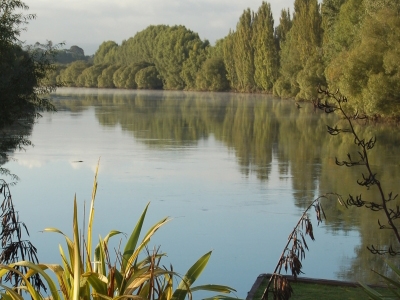 Waikato River.
With the Waikato and Waipa rivers catchments due to face new targets and limits for water quality, farmers are being encouraged to be proactive over environment-related changes to their operations.
"Starting to think about and make changes on their properties now can help put farmers in the best possible position to operate under any new targets and limits that are introduced," says Waikato Regional Council's land management advisory services team leader Alan Campbell.
"We have established a three-strong team of sustainable agriculture advisors in the two catchments who can work with individual farmers on the best options for reducing the impact of their operations on water quality."
The advisors are:
· John Vosper, Waipa catchment, 021 838 249
· Don Harford, northern half of Upper Waikato catchment, 021 816 162
· Jon Palmer, southern half of Upper Waikato catchment, 021 224 9852
Campbell says the team is committed to helping farmers with solutions to any relevant issues on their properties.
"We work with farmers, researchers and the wider agricultural industry to develop and implement practical solutions to ensure the long term sustainability of farming in the Waikato region," he says.
Campbell's comments come as the Healthy Rivers: Plan for Change/Wai Ora: He Rautaki Whakapaipai project work with stakeholders to develop changes to the Waikato Regional Plan to help restore and protect the health of the Waikato and Waipa rivers.
The plan change will target sediment, bacteria, and nutrients (nitrogen and phosphorus) entering water bodies (including groundwater) in the two rivers' catchments, an area of 1.1 million hectares.
Campbell says there are many sources of advice on estimating and curtailing current nitrogen and phosphorus losses from farms to waterways, the best practices for effluent management and reducing sediment loss to waterways.
The council's sustainable agriculture advisors work with fertiliser company reps, farm consultants, Beef + Lamb New Zealand, milk companies and DairyNZ to ensure that farmers can access consistent and reliable advice. Menus of practices to improve water quality are one example where all the agencies have combined to bring together the latest information and these are available online or in hard copy form.
"For our part, our three-strong team is also a helpful resource, particularly on how farmers can comply with regulatory requirements, as well as protecting the environment and boosting profitability," Campbell says.
More information of the assistance the council and the wider farming sector can provide is available at http://www.waikatoregion.govt.nz/frontfoot/
Minister of Conservation Hon Tama Potaka has appointed Susan O'Regan as Chair of the Queen Elizabeth II National Trust (QEII) for a three-year term.
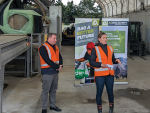
Environment Minister Nicola Grigg has announced details of a new rural plastics recycling scheme.
OPINION: The stats speak for themselves.
Farms across the upper North Island are trialling different pasture mixes as part of a research programme that aims to build greater resilience into farming systems.
The Ballance Farm Environment Awards are coming to the West Coast of the South Island.


Federated Farmers says new legislation replacing the Resource Management Act will cut red tape, unlock investment and help grow New Zealand's export-led economy, after the Planning Bill and Natural Environment Bill passed their third reading in Parliament yesterday.
Leading figures from the major political parties will be questioned on their primary sector policies at the Rural Issues Debate at Mystery Creek Events Centre, Hamilton, on 30 September.
OPINION: Have a plan in place now!
Beef + Lamb New Zealand (B+LNZ) says it welcomes the passage of the Natural Environment Bill and Planning Bill, calling the bills a positive step for sheep and beef farmers.
A spate of southerly winds bringing cold temperatures has presented challenges for Taranaki dairy farmers.
Converting a longstanding cropping farm to dairy was the only way to ensure the land stayed in the family long term, says new dairy farmer Rod May.


OPINION: It seems Canterbury processor Synlait is still in the doldrums.
OPINION: Get offside with New Zealand First leader Winston Peters at your own peril.