Fonterra Elections 2026: Voting Opens Tuesday 20 October
Fonterra shareholders can begin voting on Tuesday 20 October in the 2026 Board of Directors’ election, a Co-operative Council election in one Ward, and seven Annual Meeting resolutions.




 increase font size
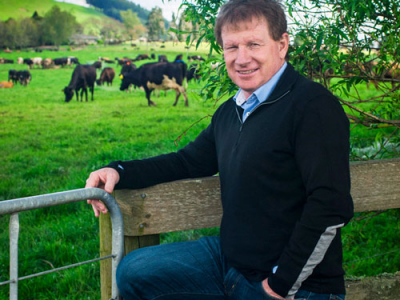 Fonterra chairman John Wilson.
Fonterra has dropped its forecast milk payout for this season by 35c to $6.40/kgMS.
Chairman John Wilson says the lower forecast milk price reflects a prudent approach to ongoing volatility in the global dairy market.
The Global Dairy Trade price for whole milk powder is a big influencer of the farmgate milk price and it has declined by almost 10% since 1 August 2017.
“While the result of the arbitration with Danone has impacted our earnings guidance for the season, it has no influence on our forecast Farmgate Milk Price,” says Wilson.
“What is driving this forecast is that despite demand for dairy remaining strong, particularly in China, other parts of Asia and Latin America, we are seeing strong production out of Europe and continued high levels of EU intervention stockpiles of skim milk powder.
“This downward pressure on global prices is being partly offset by the lower NZ-US dollar exchange rate,” says Wilson.
The drop will not affect the advance rate paid to farmers for milk.
“Our strong financial position, customer order book at this point in the year, and confidence in demand means that the Board is able to increase the payments made in January by 10 cents per kgMS and will hold the Advance Rate through to the payments in May,” says Wilson.
“In effect, our farmers will receive equal or higher payments for their milk over this period than were scheduled under the previous $6.75 milk price.
Fonterra has also updated its full season New Zealand milk collection forecast due to ongoing challenging weather conditions. The cooperative has reduced its forecast by 1% to 1,525 million kgMS – the same volume as last season.
Fonterra shareholders can begin voting on Tuesday 20 October in the 2026 Board of Directors’ election, a Co-operative Council election in one Ward, and seven Annual Meeting resolutions.

Fonterra Co-operative Group chief financial officer Andrew Murray has resigned to take up a role outside the dairy giant.
Four candidates have been confirmed for two director positions on Fonterra’s board.
A record farmgate milk price and strong global demand is laying the foundation for continued growth of organic dairy farming in New Zealand.
Waikato milk processor Tatua has again declared a record milk payout to farmer shareholders, leaving other processors in the dust.


Federated Farmers has welcomed new rural policies released by ACT, saying they align closely with its own election priorities.

Rural Contractors NZ says proposed changes to land transport rules for agricultural vehicles are a welcome response by the Government to out of date regulations which have seen members hit with huge fines.
Alliance is calling for final applications for its 2027 Graduate Programme, with applications closing on Sunday 25 October.
Decades piloting planes has ensured vet and farmer David Hayes is focused on safety. So, after a serious accident while welding on farm, he is sharing his experience so others can learn from it.
Canterbury milk processor, Synlait Milk has confirmed Leon Fung as its chief executive officer.
OPINION: Making it easier to collect rainwater and use it to grow crops and livestock is a no brainer.

OPINION: It seems Canterbury processor Synlait is still in the doldrums.
OPINION: Get offside with New Zealand First leader Winston Peters at your own peril.




