Fonterra FY26 Results: $9.69 Milk Price, $3.4bn Profit
Fonterra has unveiled its annual results for the 2026 financial year, posting $27 billion in revenue and close to $20 billion returned to New Zealand farmer owners and unit holders.




 increase font size
 Marlborough farmer Murray Beach has submitted a remit for Fonterra’s board meeting next week, proposing a new share system.
Marlborough farmer Murray Beach wants a new share system for Fonterra.
Beach has submitted a remit for Fonterra’s board meeting next week, proposing a new share system.
His proposal says that Fonterra must initiate, within three months, a formal co-op wide discussion regarding the existing share system.
Beach is proposing a new share system that will “make all suppliers equal”.
However, the Fonterra board and Shareholders Council oppose the proposal. Fonterra shareholders are now voting on the proposal and the results will be announced at its annual meeting in Lichfield next week.
Beach says when Fonterra stopped paying redemption to farmer shareholders leaving the co-op, “it left outsiders to buy up those shares from the people jumping ship”.
“This has caused the same amount of shares to be out there but the value-add pool has decreased due to the loss of milk,” Beach says.
“So the shares are staying the same and the value-add pool is decreasing through loss of milk and will continue to do so unless we change the system to stop people leaving.”
Beach questions what will happen if Fonterra loses 15% milk supply over the next 5 to 10 years? This could put Fonterra down to 65%, he says.
“That’s pretty scary with 21,400 employees and the same overheads. I can’t see that lending towards high milk prices.
The problem is the high share price, it encourages people to leave. The second problem is there are too many shares.
“If we fix the share price, it stabilises the price, it can’t go up or down, so it stabilises your security as well. You know exactly where you are from year to year. The issue is, are you milking cows or playing a share market?”
Under Beach’s proposal for example, if a farmer has 100,000 shares at $5.50, worth $550,000, he proposes changing these to $2 shares, giving the farmer 275,000 $2 shares.
The farmer must keep 100,000 shares worth $2.00. These could be called his milking quota shares.
This farmer still has 175,000 shares worth $2.00 that he can sell or transfer. We’ll call these his saleable/transferrable shares. The saleable/transferable shares can only be sold to a Fonterra farmer.
If the farmer increases production by 10,000 Milk Solids, he can transfer 10,000 of his saleable/transferable shares to his milking quota shares.
This will give him 110,000 milking quota shares and reduce his saleable/transferable shares to 165,000.
The outsiders’ shares, known as the units could be changed to$2.00 shares and the dividend will have to be honoured on them.
All existing schemes, 6 years to share up, 10 years to share up, contract milk and MyMilk to be replaced by the $2 share over a period of time, say 3 years.
These can be bought from any farmer wishing to sell some of his saleable/transferable shares. Beach believes his proposal has the support of many shareholders.
Fonterra has unveiled its annual results for the 2026 financial year, posting $27 billion in revenue and close to $20 billion returned to New Zealand farmer owners and unit holders.
Fonterra Co-operative Group has confirmed the independently assessed candidates standing for election to its board in 2026.
Fonterra has revised its Farmgate Milk Price forecast for the 2026/27 season, lifting the midpoint and narrowing the range on the back of improving global dairy commodity prices.
Outgoing Fonterra Co-operative Council chair John Stevenson says that it has been a privilege to represent the co-op's farmer shareholders.
OPINION: It seems Canterbury processor Synlait is still in the doldrums.


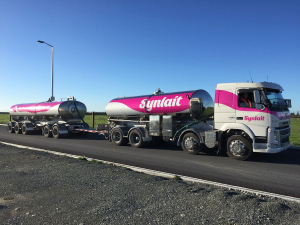
Synlait has swung to second-half profit as operations stabilise, but the dairy processor still posted a $75.4m annual loss.
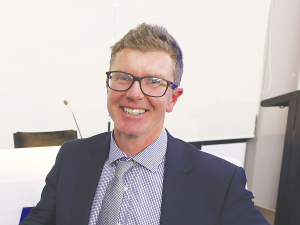
LIC shareholders have elected a new North Island representative to the co-operative's Board, along with five representatives to its Shareholder Reference Group (SRG), following the company's Annual Meeting held in Invercargill.
Farmers across parts of Southland and South Otago are continuing to deal with difficult conditions after a prolonged run of wet weather, with pressure building around feed supply, stock management, pasture damage, farm infrastructure and everyday workloads.
Federated Farmers says it welcomes Labour's commitment to reviewing the Sharemilking Agreements Act, calling on other major parties to do the same.
For Canterbury dairy farmers Sian Meijer and Rick Wobben, wearable technology has become one of their most valuable on-farm tools - helping manage 1850 cows across an expansive, high-performing dairy operation while improving efficiency, mating outcomes and day-to-day decision making.
Fonterra has unveiled its annual results for the 2026 financial year, posting $27 billion in revenue and close to $20 billion returned to New Zealand farmer owners and unit holders.




OPINION: It seems Canterbury processor Synlait is still in the doldrums.
OPINION: Get offside with New Zealand First leader Winston Peters at your own peril.