
Feds Back National’s 19 Farming National Standards
National’s pledge to introduce 19 new national standards shows the party is serious about getting Wellington out of farming, Federated Farmers says.




 increase font size
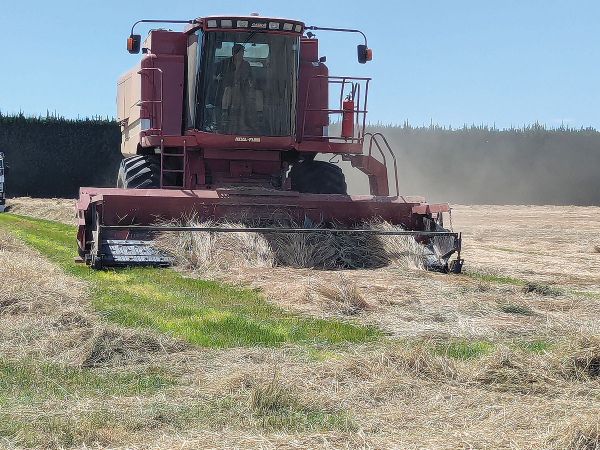 In a summer of unreliable weather, Feds Arable chair David Birkett takes advantage of a hot day to lift a paddock of ryegrass seed from a leased block near Leeston.
Canterbury arable farmers are down by tens of millions of dollars after a rollercoaster of wild changeable January weather saw harvests delayed and some crops destroyed by violent hailstorms.
Federated Farmers arable chair David Birkett, who farms at Leeston, near Christchurch, said there was a period of two to three weeks of persistent stormy and wet weather after Christmas. Some crops were ruined by damp conditions before they could be harvested and others destroyed by an unusually high incidence of hail.
“Those are the guys we’re worried about the most,” he told Rural News.
“Some of those guys have had 100 percent loss on some crops so they’re going to really struggle with this season.”
Birkett said arable farmers only get one shot at a harvest. The losses will “really start to hurt” later in the year when the money usually comes in but their cash flow will dry up.
“We’re just working with Rural Support and MPI to try and see what we can do for those guys who have been hit the hardest.
“Some of them you might be able to cut usable animal feed but you wouldn’t be able to get the grain or seed out of them. There’s not a lot you can do.”
Birkett said the hail damage was very random, with some fields flattened beside fields that were untouched. The worst affected area was mid-Canterbury between the Rangitata and the Rakaia Rivers but there were also reports of hail damage as far afield as Rangiora and Oamaru.
Canterbury’s troubles may have been overshadowed by the widespread serious damage to land, crops and infrastructure in northern regions from the same persistent weather systems.
In late January, the Government announced a $2.2 million relief package to support affected regions through Mayoral Relief Funds and marae. The following day, Agriculture Minister Todd McClay and Rural Communities Minister Mark Patterson announced an additional $200,000 to Rural Support Trusts.
“Significant rainfall, flooding, slips, and hailstorms have caused damage to farms, crops, and rural infrastructure,” said McClay.
However, that announcement specifically mentioned only Northland, Coromandel, Bay of Plenty, and Tairāwhiti.
“We’re just trying to work out whether we can get some of that,” said Birkett.
“It’s not going to be financial support to recuperate losses, it’s more around what can we do to give that moral and local and community support for these people. It’s just making them aware that people are aware of what they’ve gone through and that they’re going to have a tough year in front of them.”
National’s pledge to introduce 19 new national standards shows the party is serious about getting Wellington out of farming, Federated Farmers says.

Mobile phone coverage and reliability are deteriorating in rural areas, and farming families are bearing the cost, according to a Federated Farmers survey.
Central Otago District Council (CODC) has voted against a plan to spread treated sewage sludge from Cromwell and Alexandra on farmland near Lauder, a decision Federated Farmers says reflects strong opposition from rural residents.
Federated Farmers has called on Central Otago District Council (CODC) to drop or vote down a plan to truck sludge from Alexandra and Cromwell to farmland near Lauder, warning it would compound an "outrageous" situation created by a separate council's decision weeks earlier.
Federated Farmers says new legislation replacing the Resource Management Act will cut red tape, unlock investment and help grow New Zealand's export-led economy, after the Planning Bill and Natural Environment Bill passed their third reading in Parliament yesterday.



National’s pledge to introduce 19 new national standards shows the party is serious about getting Wellington out of farming, Federated Farmers says.
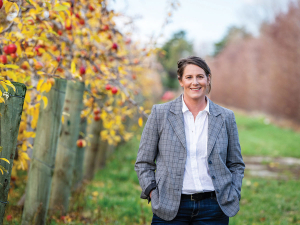
The National Party’s policies to make it easier to grow fresh vegetables, secure reliable water and energy and simplify farm planning are practical changes that will give growers the confidence to invest, according to Horticulture New Zealand (HortNZ).
Fonterra Co-operative Group chief financial officer Andrew Murray has resigned to take up a role outside the dairy giant.
A major move is about to get underway to improve the quality and viability of dairy beef and cattle in NZ.
Veterinarians say changes to the code of welfare for dairy cattle provides a positive foundation for improved cattle welfare across the country.
Today, 15 October, is the International Day of Rural Women, which recognises rural women’s contribution to farming, communities and the environment.




OPINION: The same mainstream media muppets that brought you Jacindamania in 2017 have been flat out pimping for the Opportunities…
OPINION: Your old mate reckons the atrocious way farmers in the UK are treated by their lords and masters in…




