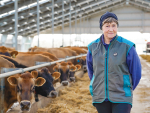
Breeding the Ultimate Robot-Ready Jersey Herd
In the beautiful, scenic expanse of Invercargill, Joanne (Jo) Crack of Southern Star Farms is redefining what it means to run a modern, self-sufficient dairy operation.




 increase font size
 Higher milk prices are giving farmers confidence to invest in robotics and data, says Lely.
Since its decision to concentrate on milk harvesting and animal husbandry, resulting in the selling of its agricultural machinery brands and factories, Lely’s focus seems to be paying off with a growing business.
Despite broader agricultural machinery sales showing a downward trend, Lely closed out 2025 with an 18% increase in revenue, for the first time topping €1 billion, compared to the €857 result in 2024, said to be driven by higher milk prices.
Higher global milk prices have led to a financially healthy year for dairy farmers in general, giving them the confidence to invest in robotics and data.
“The 2025 result is better than expected and we are proud of hitting one billion sales,” says Andre van Troost, CEO of Lely.
During the 2025 year, the company invested 8% of turnover in R&D, while also launching four new products, including Vector Next, Astronaut A5 Next, Astronaut Max and Hub.
While the company has begun 2026 with a healthy order book, the Lely CEO added that 2026 could be more challenging, partly due to the significant over supply, resulting in a lower milk price, ongoing geopolitical tension and increasing uncertainties over silicon chip deliveries.
“The latter might not impact our business in the first half of this year; however, we cannot foresee what will happen towards the second half of the year,” adds van Troost.
Looking ahead, Lely notes that farmers continue to face stricter laws and regulations, a growing demand for transparency, and an increased focus on sustainability. They suggest that innovation, robotisation and digitalisation, will be increasingly adopted by farmers to be able to produce sustainable and nutritious dairy products.
In the beautiful, scenic expanse of Invercargill, Joanne (Jo) Crack of Southern Star Farms is redefining what it means to run a modern, self-sufficient dairy operation.
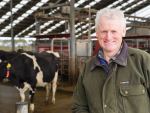
In Dacre, near Invercargill in New Zealand’s South Island, Bruce Dinnington is running a dairy operation unlike any other.
Getting calves away to a strong start means attention to detail from day one, so the Lely Calm, an automatic drinking system for calves, prepares and feeds rations at the right temperature and is designed to ensure calves receive smaller, more frequent portions throughout the day.
The first weeks of a calf's life quietly shape the future of the entire herd.
With 2025 marking the 30th anniversary of its first milking robot being installed in Belgium in 1995, Lely says it has taken automated milking to the “next level” with the release of the latest version of the Astronaut Series - the A5-Next.

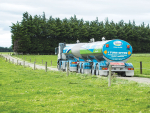
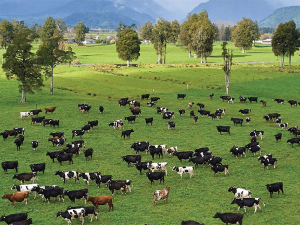
With some farmers opposing a government-industry partnership set up to develop methane reducing products, one NZ company claims that it already has a product on the market.
During the nesting season, from September to December, industrious starlings can quickly build nests in the darker areas behind tractor and vehicle, usually close to hot engines, typically resulting in localised damage or in some cases complete write-offs.
The meat processing industry is much more collegial than it was in the past and is now more focused on common goals.
With the last couple of months having seen some potential tractor purchases put on hold with the impending election and continued input cost rises, year-to-date figures, ending September, has seen deliveries up around 5% over the same period in 2025, with a total of 2026 units.
Beef+Lamb New Zealand is calling for nominations for director roles in the Northern South Island and Northern North Island electoral districts.
Fonterra chief executive, Richard Allen says being resilient has helped the dairy industry overcome extreme volatility in recent years.
OPINION: It seems Canterbury processor Synlait is still in the doldrums.
OPINION: Get offside with New Zealand First leader Winston Peters at your own peril.




