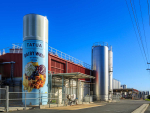
Ah Tatua, You've Done It Again!
Waikato milk processor Tatua has again declared a record milk payout to farmer shareholders, leaving other processors in the dust.




 increase font size
 Milk production in several key markets, including New Zealand, remains strong.
A $10 milk price remains on the cards for this season despite recent softening of global dairy prices.
There has been a big rise on global milk production, putting downward pressure on prices, hovering at record levels for the past 18 months.
Westpac industry economist Paul Clark believes New Zealand dairy farmers "are well in the money" given a breakeven milk price of $8.45/kgMS and Fonterra recently confirming a payout of $10.16/kgMS - plus a dividend of 57c/share for last season.
"With a forecast milk payout of $10/kgMS and an updated breakeven milk price of $8.66/kg from DairyNZ for the 2025/26 season, farmers should still sit relatively comfortably over the coming year," says Clark.
Westpac is sticking to a $10/kgMS milk price for this season.
"Our forecast payout assumes that dairy prices will track below current levels by an average of 5% over the rest of the season.
"Much of that has to do with a big rise in global milk production, with the top five exporting regions running 2.4% ahead of a year ago."
He says the increase in production reflects both the absence of disease, especially in the Northern Hemisphere; and farmers having been incentivised by higher milk prices to lift output levels.
Milk production in 2024 was affected by avian flu in the US and bluetongue in Europe.
However, the fall in world prices recently has been partly offset by a more favourable exchange rate. By August, Fonterra had hedged 66% of its FX exposure for the season at a better average rate than we had assumed. The recent fall in the New Zealand dollar should help further, says Clark.
Last week's Global Dairy Trade auction saw the price index drop for the fourth straight event. The flagship whole milk powder price has dropped from US$4374/metric tonne in May to US$3696/MT last week. Butter prices also eased 3%.
NZX dairy analyst Rosalind Crickett says the latest GDT result met market expectations, as product supply remains in abundance amidst a backdrop of tepid demand.
As a result, the overall index printed a -1.6% decline to slip below the US$4000/t mark, with anhydrous milk fat (AMF) and cheddar the only products seeing respective uplifts of 1.2% and 0.8%. The lower prices at GDT 389 proved to be a drawcard for North Asian buyers, upping their purchases by 31% on the last event to account for 52% of the total purchased volume, while buying activity from Southeast Asia/Oceania was more subdued on this occasion. On the whole, 7.5% more volume was sold.
Crickett says the global milk production picture remains strong for this time of year, with recent data out of key markets - NZ, the US, EU, and Argentina showing robust year-on-year growth in both tonnage and milksolids.
"This has naturally put downward pressure on milk powder pricing with WMP easing -2.3% and skim milk powder (SMP) -0.5% (in the last GDT auction."
While the market had already factored in extra NZ volume on the platform as it follows the seasonal supply curve, strong milk production growth, and perceived lagging contracted sales from Fonterra have seen the co-op add an additional 16,500mt of whole milk powder (WMP) to its 12-month forecast of both GDT and Pulse.
Ample cream supplies globally are behind the decline in butter prices, she says.
NZ product is facing fiercer pricing competition against both EU and US product.
"While historically not a large exporter of butter, US exports are up 125% in the year-to-date," says Crickett.
Waikato milk processor Tatua has again declared a record milk payout to farmer shareholders, leaving other processors in the dust.

Synlait has swung to second-half profit as operations stabilise, but the dairy processor still posted a $75.4m annual loss.
Westpac NZ is calling on farmers and growers to start preparing now for the possibility of a dry summer, as likely El Niño conditions raise the risk of drought across parts of the country.
A 'tsunami' of milk from key exporting countries is winding down and this may be good news for New Zealand dairy farmers.
Most dairy regions around the country have had a pretty good season so far says Tracy Brown.



National’s pledge to introduce 19 new national standards shows the party is serious about getting Wellington out of farming, Federated Farmers says.

The National Party’s policies to make it easier to grow fresh vegetables, secure reliable water and energy and simplify farm planning are practical changes that will give growers the confidence to invest, according to Horticulture New Zealand (HortNZ).
Fonterra Co-operative Group chief financial officer Andrew Murray has resigned to take up a role outside the dairy giant.
A major move is about to get underway to improve the quality and viability of dairy beef and cattle in NZ.
Veterinarians say changes to the code of welfare for dairy cattle provides a positive foundation for improved cattle welfare across the country.
Today, 15 October, is the International Day of Rural Women, which recognises rural women’s contribution to farming, communities and the environment.




OPINION: It seems Canterbury processor Synlait is still in the doldrums.
OPINION: Get offside with New Zealand First leader Winston Peters at your own peril.




