It's The Margins That Matter
OPINION: It appears to be difficult for people who haven’t tried to run a business to understand the difference between assets and cash.




 increase font size
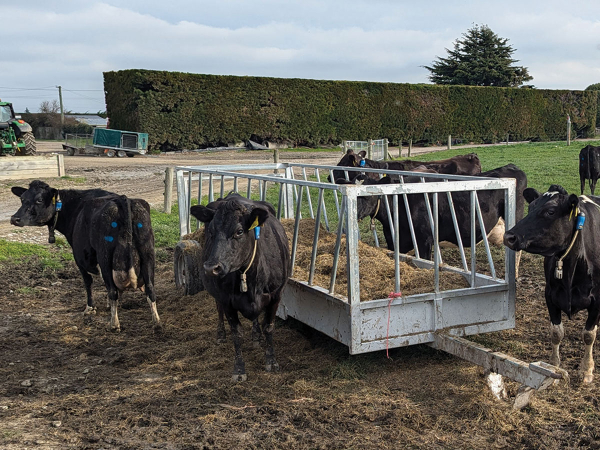 Transitioning cows showing the wearable collars which will help the farm manage a new “tactical milking” regime this season.
An early adopter of a 10-in-7 variable milking regime, the Lincoln University Demonstration Dairy Farm (LUDF) is tweaking the system this season in search of further boosting farm performance and profitability.
Partnership & demonstration lead Antoinette Archer says the farm is adopting a “tactical milking” system that considers individual cow needs and can flex to seasonal and management triggers.
LUDF’s involvement in monitoring programs, comparing data from wearables and productivity, has aided researchers in providing farmers with more informed guidelines at an individual cow level, she said.
The farm will initially milk transition cows (post calving) once-aday (OAD), monitoring rumination as a predictor of post-calving recovery.
When transition cows meet rumination criteria they will shift to twice-a- day (TAD) milking to support peak milk production.
Archer said that Increasing milking frequency early in the season drives milk production and pasture demand at a time where pasture growth is at its maximum.
“The goal is to ensure we harvest as much pasture as possible, which sets the farm up for an increased feed conversion efficiency, which will improve the farms outcomes for efficient and profitable milk production.”
LUDF will maintain milking frequency flexibility by moving to a 3-in-2 or 10-in-7 milking regime, post mating, depending on the animal and people conditions during the season. For the animals, the triggers to adjust milking frequency will include body condition score, and weather conditions, including heat or prolonged wet periods.
Archer said the “people triggers” would consider staff needs and distribution of workload. “These triggers offer flexible management levers to optimise milk production, animal health, and environmental outcomes, while looking after our people.
“The rationale behind this approach is rooted in generating more profitable and environmentally friendly milk, with a focus on reducing greenhouse gas intensity - measured through FPCM – and supporting feed management during peak growth.
“This strategic shift aims to provide resilience against seasonal challenges, support animal performance, and help meet our environmental targets and commitments.”
LUDF will also return to a two-herd system, which will enable targeted care of animals with divergent requirements and give management additional flexibility ensure our reproductive performance and animal welfare targets are achieved.
2021-22 was the first full season of ten-inseven variable milking on the farm, milking twice a day three days a week but only once a day otherwise. Small losses in production were expected to be offset by various gains including energy and labour costs, while bringing significant gains in staff and herd welfare.
At that time, they expected a 6% drop in production due to the variable milking regime. Archer said that the actual recorded drop averaged 8.4%, but that was across a period with three unusually wet seasons when even farms continuing conventional twice a day milking also suffered production decline. Benchmarking against a sample of those farms showed they recorded drops of 3.2% - suggesting LUDF’s weather adjusted production drop was only 5.2%.
Archer said the South Island Dairying Demonstration Centre (SIDDC), the partnership that runs the farm, will elaborate on the changes at an upcoming Focus Day on October 8. The focus day will also hear insights from an Emissions and Profitability Project that has been running in conjunction with Fonterra, DairyNZ and LIC.
OPINION: It appears to be difficult for people who haven’t tried to run a business to understand the difference between assets and cash.
The arable sector losing good people and land is a major concern for the 2026 Arable Farmers of the Year, Mid Canterbury seed growers John and Mel McCaw.
OPINION: Could beef cows play an increasingly important role in improving profitability and resilience on hill country farms?
New research suggests the ag sector can unlock a $2.9 billion increase in profitability, not by farmers and growing more, but by making their farming systems simpler.
A five-year study has found that the cost of reducing emissions without technology may be significant and unsustainable for Northland dairy farmers.

Farmer-owned fertiliser company, Ballance Agri Nutrients is welcoming National’s plan to negotiate security agreements with key supplier countries to protect New Zealand-bound products from export restrictions and greater supply chain certainty.

Carrfields has announced the appointment of Stu Hall to the newly created role of chief operating officer, Carrfields Ltd, reflecting the continued growth of their agribusinesses and the need to ensure the company has the leadership capacity and support in place as it pursues the emerging opportunities ahead.
New Zealand's role is not to compete with Indian growers, according to NZ Apples and Pears.
The potato industry is celebrating the success of two rising stars - James Blair, the 2026 Young Grower of the Year and runner-up and innovation award winner, Amber Davy.
Twenty-eight emerging leaders from across the horticulture sector spent two days last month learning valuable skills and connecting with industry experts.
There are five entrants in this year’s Young Horticulturist of the Year, competing in a series of technical, practical, business and leadership challenges.
OPINION: It seems Canterbury processor Synlait is still in the doldrums.
OPINION: Get offside with New Zealand First leader Winston Peters at your own peril.