Tackling Leptospirosis
Leptospirosis is one of the most significant health threats to New Zealand dairy herds and the families who work with them.




 increase font size
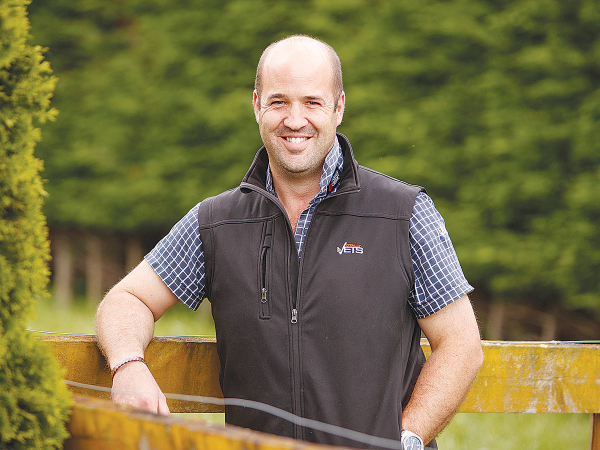 Vets led by Dr Peter Aitken worked with Zoetis to test a new synchrony programme on Manawatu dairy farms.
The team at Totally Vets, led by Dr Peter Aitken, have worked with Zoetis to test a new synchrony programme on Manawatu dairy farms, with their study finding real-world improvements in heifer reproductive performance.
Aitken presented this information to New Zealand dairy veterinarians at a national conference in 2024, and the findings have since been published as a research paper in a major international scientific journal, Theriogenology.
Synchrony programmes allow groups of dairy heifers to be put up for artificial insemination (AI) on a single day. Calves bred from heifers by AI are normally higher value than those bred by natural mating as they are often of high genetic merit, but use of synchrony programmes also improves outcomes in the current heifer group. Synchronised heifers calve earlier in the calving season, giving them more time to recover before the mating season, and resulting in higher milk income for the farm as these heifers are milking for more days during their first milking season.
Over the years international researchers identified differences between heifers and adult milking cows in how they respond to synchrony drugs, then used this knowledge to design specific synchrony programmes to suit heifers. However, these findings had never been tested in New Zealand, so Peter and the team at Totally Vets wanted to explore whether a similar effect would be found in our pasture-based seasonal dairy industry.
At the start of the 2023 spring mating season, 565 rising two-year-old heifers from four dairy farms were randomly allocated to be synchronised for AI with either the current CIDR Heifer programme or the new CIDR Heifer Plus programme (also known as a modified 5-day Cosynch programme). Both programmes used the same drugs, but the CIDR Heifer Plus programme had different treatment timings and used some additional injections to align the treatments better with the activity of heifer ovaries.
After AI on a fixed date, the heifers were mated as normal for the rest of the spring mating season, then aged pregnancy testing was carried out using ultrasound to evaluate reproductive performance. Synchronisation with the new CIDR Heifer Plus programme resulted in significantly more heifers getting pregnant as a result of the AI mating, and for the entire first 6 weeks of the mating season.
If a mob of 100 heifers were synchronised with the new CIDR Heifer Plus programme, compared to the standard CIDR Heifer programme, these study results show that this would, on average, result in:
Once both the costs (drugs, yarding, feed, etc) and benefits (extra milk, higher value calves) of the new CIDR Heifer Plus programme were calculated, this improvement would be worth around an extra $98 per heifer at a $10 milk payout compared to the standard CIDR Heifer programme. Most of this economic benefit was found to be derived from the additional milk income that the farm would receive from their heifers calving earlier and therefore being milked for more days in their first season.
The increasing availability of genomic testing is now enabling farms to identify genetically superior animals early in life, select them for entry into the dairy herd, and target them for breeding of future dairy replacement heifers.
Using the CIDR Heifer Plus programme to AI heifers would permit further acceleration of dairy herd genetic gain by breeding replacements early from their highest genetic merit animals.
Aitken and his team are grateful to the farmers who allowed their heifer groups to be included in this study. They also thanked Zoetis for their support with study design and supplying CIDR devices, and to Parnell Animal Health for supplying injectable hormones.
Leptospirosis is one of the most significant health threats to New Zealand dairy herds and the families who work with them.
Drench Options are become increasingly limited for sheep farmers, highlighting the importance of proactive parasite management planning within the wider farm system to stretch the longevity of drench as a tool.
When Simon Hales discovered triple drench resistance on his Weber farm, it was a catalyst to fast-track farm system change.
When Fraser Hasnip returned to his family farm in Pirongia, Waikato, he saw an opportunity to do things differently.
Body Condition Score (BCS) is a critical element in managing the health and reproduction of the dairy herd.


Pāmu has released its FY26 Integrated Annual Report, reporting a Net Operating Profit of $113 million, more than double the $49 million recorded in FY25.

Meat Industry Association data, released alongside the Red Meat Sector conference in Wellington, shows export value climbing across the US, China, UK and Canada.
Applications are set to open for the 2027 Zanda McDonald Award, a trans-Tasman award recognised for identifying and fast-tracking talented young leaders in agriculture and agribusiness.
The Royal New Zealand College of General Practitioners (the College) and Hauora Taiwhenua Rural Health Network are calling for investment in a proposed new training pathway for rural GPs, warning that many rural practices are struggling to recruit while a large share of the existing workforce nears retirement.
Federated Farmers has called on Central Otago District Council (CODC) to drop or vote down a plan to truck sludge from Alexandra and Cromwell to farmland near Lauder, warning it would compound an "outrageous" situation created by a separate council's decision weeks earlier.
Synlait has swung to second-half profit as operations stabilise, but the dairy processor still posted a $75.4m annual loss.


OPINION: It seems Canterbury processor Synlait is still in the doldrums.
OPINION: Get offside with New Zealand First leader Winston Peters at your own peril.