The good, the bad and the ugly – 2015 in review
Another year has almost passed us by – again – and it is time for the annual review of 2015's good, bad and ugly in regards to the primary sector as seen by the Rural News editorial team...




 increase font size
 DWOTY 2015 finalists
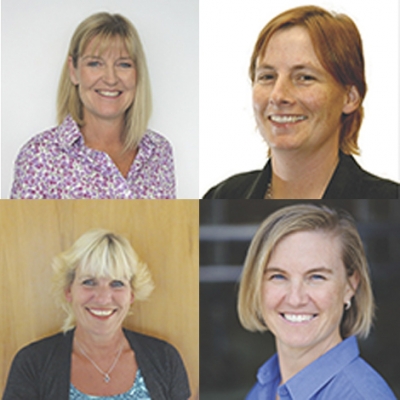
Judges could not whittle down finalists for Dairy Women’s Network’s 2015 Dairy Woman of the Year to the usual three candidates because of the calibre of nominees – so four women are standing this year.
PGG Wrightson animal nutritionist, Andrea Murphy of Alexandra; dairy director, Wilma van Leeuwen of Waimate; Southland demonstration farm director, Elaine Cook of Waikato; and
Federated Farmers board member and provincial president Katie Milne of Kumara, West Coast, will all be in the running for the prestigious title.
Organised by the
Dairy Women’s Network and sponsored by Fonterra, the award includes a 12-month scholarship to the Breakthrough Leaders Programme run by Global Women New Zealand, valued at $25,000.
Dairy Women’s Network chief executive Zelda de Villiers says it will be tough choosing the overall winner because they all four depict the Dairy Woman of the Year very well. “They are strong performing, passionate, influential and intelligent women who are dedicated to seeing the dairy industry thrive for future generations and the whole of New Zealand,” she says.
The finalists were individually interviewed by a panel of five judges including Mark Heer from DWN’s gold partner ASB Bank, Sandy Burghan, Global Women representative, DWN trustee Alison Gibb, DWN chair and 2014 Dairy Woman of the Year winner Justine Kidd, and Fonterra representative Janet Rosanowski.
The 2015 winner will be announced at a gala dinner at the Dairy Women’s Network annual conference on March 19 in Invercargill.
The current Dairy Woman of the year is Northland dairy farmer and chartered accountant Charmaine O’Shea. The current chair of the Dairy Women’s Network trust board, Justine Kidd, was the winner in 2013, and Barbara Kuriger, who last year elected to Parliament as the Taranaki MP, was the winner in 2012.
Here are the four finalists:
Elaine Cook
 Cook and her husband progressed through the ranks from lower order sharemilkers to farm owners, starting out in the Waikato and then moving to Southland in 2000.
In 2006, the couple won New Zealand Sharemilker of the Year, having already won the Southland regional title.
In 2008, Cook’s husband died suddenly and the sharemilking business was concluded with Elaine and their three daughters moving back up to the Waikato, however she retained an interested in the South Island dairy industry and in 2011, she became a director of the Southland Demonstration Farm.
In 2013, Cook was named the inaugural associate director to DairyNZ – a six-month appointment – and also holds roles as a strategic director for Young Farmers and chairs the governance committee for two Ministry of Business Innovation and Employment research contracts.
Katie Milne
Milne farms with her partner farm at Rotomanu, Lake Brunner catchment on the West Coast of the South Island. They have a small high BW Jersey herd of 200 cows which are fed on a grass based system. On a separate run-off they rear replacement heifer calves and a localised contracting operation making silage pits, hay, baleage, effluent spreading from ponds, herd homes and stand-off pads, employing one full-time staff member.
Katie has been the West Coast provincial Federated Farmers president since 2008, and holds a position on the national board, where she is spokesperson on adverse events, rural security, local government, ACC and employment.
 Andrea Murphy
Originally from Canada, Murphy now lives in Alexandra, in Central Otago.
She owns her own animal nutrition business called Maple Grove Consulting Ltd, but could not pass up the opportunity of working in her dream job as a ruminant nutritionist with PGG Wrightson’s Tech Team.
It was after joining the Dairy Women’s Network’s conference organising committee in 2007 in Invercargill, that Murphy felt she had ‘found her place’ in New Zealand and still attributes the network with the success of Maple Grove Consulting Ltd.
Murphy is involved on the committee for the New Zealand Association of Ruminant Nutrition.
Wilma van Leeuwen
Wilma and her husband have grown their dairy business over the past 29 years to milking 12,000 cows on 12 dairy farms, and started a contracting business in 1996.
In 1993 the couple and their six children moved from the Waikato to Waimate in the South Island.
There, they installed the first robotic milking system in a freestall
barn system in New Zealand in 2008 and have recently commissioned the largest robotic milking freestall barn in the world, milking 1500 cows with 24 robots.
She is a Van Leeuwen Dairy Group director, director of two other family dairy businesses and a founding shareholder and active secretary of the Waitaki Milk Supply Group and Oceania Milk Supply Group.
For more information on the finalists, awards and the conference, visit www.dwn.co.nz
Another year has almost passed us by – again – and it is time for the annual review of 2015's good, bad and ugly in regards to the primary sector as seen by the Rural News editorial team...

The end of the year is fast approaching so some end of year thoughts on a few of the significant developments of the year to wrap things up!
It was a Saturday afternoon and it had been raining for two days; Taranaki farmer Graham Fergus decided to move his ewes on a hilly paddock.
Harry Matthews knows the area well, a key to his being hired to liaise with farmers.
When Lyn Neeson, who farms near Taumaranui, saw the Whanganui and Ohura rivers rise rapidly in June, she figured this spelled trouble for farmers downstream and she was right.

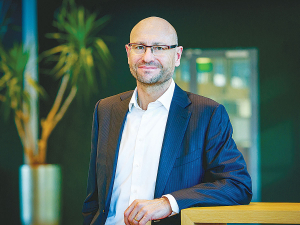
Farmer-owned fertiliser company, Ballance Agri Nutrients is welcoming National’s plan to negotiate security agreements with key supplier countries to protect New Zealand-bound products from export restrictions and greater supply chain certainty.
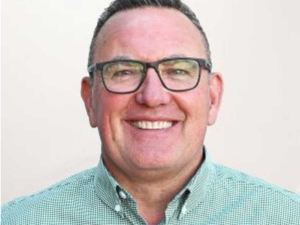
Carrfields has announced the appointment of Stu Hall to the newly created role of chief operating officer, Carrfields Ltd, reflecting the continued growth of their agribusinesses and the need to ensure the company has the leadership capacity and support in place as it pursues the emerging opportunities ahead.
New Zealand's role is not to compete with Indian growers, according to NZ Apples and Pears.
The potato industry is celebrating the success of two rising stars - James Blair, the 2026 Young Grower of the Year and runner-up and innovation award winner, Amber Davy.
Twenty-eight emerging leaders from across the horticulture sector spent two days last month learning valuable skills and connecting with industry experts.
There are five entrants in this year’s Young Horticulturist of the Year, competing in a series of technical, practical, business and leadership challenges.
OPINION: It seems Canterbury processor Synlait is still in the doldrums.
OPINION: Get offside with New Zealand First leader Winston Peters at your own peril.