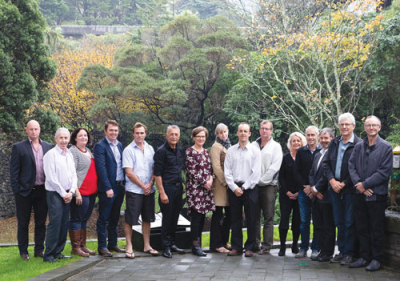
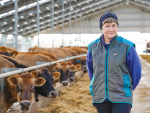
Fifteen dairy farmers well advanced in mitigating climate change on their farms are being heralded as New Zealand’s ‘climate change ambassadors’.
This DairyNZ move is the industry’s newest tactic for encouraging a culture of climate-conscious agribusiness among farmers and the broader industry, says chief executive Tim Mackle.
“These 15 men and women all represent best environmental farming practice in their farm system. They run their farms profitably and sustainably and are serious about reducing onfarm greenhouse gas emissions.
“Many farmers are already leading with environmental practices, but these 15 people have taken it a step further; they are ahead of the game and will share their knowledge and learning.”
Mackle says NZ has the opportunity to set the global standard in climate-conscious agribusiness.
“Rather than focusing on cow numbers, we want to focus on how we can continue to improve the sustainability of NZ’s agricultural sector.
“The Climate Change Ambassadors are an important part of helping dairy farmers and our farming communities understand how they can make environmental improvements on their farms that increase economic sustainability and help future-proof their farming business.”
Identified via DairyNZ’s Dairy Environment Leaders programme, the Climate Change Ambassadors are already busy improving water quality, reviewing their farm systems to reduce environmental footprint, and working at a grass-roots community level on better outcomes for the environment and farming.
“NZ is already one of the lowest emission producers of dairy in the world. But for NZ to achieve its 2030 target we must look at ways to reduce all gases in all sectors,” says Mackle.
“It’s not just dairy; all sectors need to scrutinise the way they operate. Only together can we help NZ transition to a low carbon economy.”