Federated Farmers Praises Labour's Emissions Tax Backdown
For the first time in a quarter of a century, Federated Farmers has something positive to say about the Labour Party’s climate change policy leading into a general election.




 increase font size
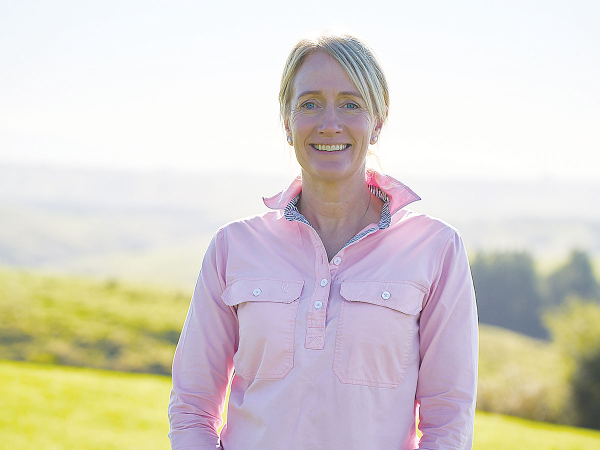 Jane Smith
OPINION: Among the many satisfying jobs on the farm is shifting our Angus heifers onto fresh pasture. They love it. Tails up, they gallop around for a minute, then it’s heads down — those long, raspy tongues pulling in mouthfuls of lush green feed.
Two hours later, bellies full, they’re lying down, chewing their cud and belching contentedly. In that short time, the age-old carbon cycle has turned a complete circle. Carbon dioxide (CO₂) has been drawn from the atmosphere through photosynthesis to grow the grass. The heifers eat it, natural juices break down the fibre, and a little methane gas is burped back into the air. Immediately, hydroxyl (OH) radicals begin breaking that methane down into CO₂ and water vapour. The natural, biogenic carbon cycle is complete.
And that’s when my contentment turns to confusion.
Despite the circular science, livestock like my heifers are condemned as climate culprits. There’s no chance to enter a plea, let alone ask for a trial by science. We are told we must do “our bit”. Yet our stable, sustainable livestock systems get no credit for the CO₂ absorbed to grow the grass in the first place. Basic high school science tells us that the only way ruminants produce greenhouse gases is by eating plants that use greenhouse gases to grow. You can’t have one without the other.
Ironically, New Zealand’s Emissions Trading Scheme pays out nearly a billion dollars each year to carbon-forestry owners — often global conglomerates — for planting exotic trees to absorb CO₂, yet our pastures have been doing that forever. Pasture plants are photosynthetic powerhouses, continuously drawing carbon from the atmosphere, feeding it into our soils, and cycling it through livestock and back again.
Climate scientists remind me that methane is more potent than CO₂ at trapping heat. Fair point — but even allowing for that, all the cattle, sheep, goats, and deer in New Zealand (plus the half-dozen giraffes at the wildlife park) contribute only about four-millionths of a degree of global warming each year. On a molecule-for-molecule basis, only around 4% of the CO₂ absorbed in photosynthesis ends up being returned as methane.
For comparison, humans collectively breathe out three million tonnes of CO₂ every year, yet we’re excused from emissions statistics because our carbon is “biogenic” — it came from food grown by photosynthesis. Shouldn’t the same logic apply to our livestock?
Let’s look at the numbers. When I run three heifers on each hectare of pasture, the annual CO₂ uptake by photosynthesis is around 20–30 tonnes CO₂/ha. The heifers respire about 7 tonnes, manure, wastage and meat out the gate account for another 6 tonnes, and methane burps equate to roughly 7 tonnes CO₂-equivalent. That totals 20 tonnes — less than the CO₂ absorbed by the grass. Add in our shelterbelts, native plantings, soil carbon, and the 2.6 million hectares of native bush on New Zealand farms, and you could argue that we’re already offsetting quite a few gas-guzzling SUVs.
Yet the inequity continues. Ruminant methane levels in New Zealand are falling, and when methane levels are stable or declining, no additional warming occurs. Peer-reviewed research from the Oxford Martin School shows ruminant methane’s warming effect has been overstated by 300–400% — a point the IPCC acknowledged in its latest report (AR6, Ch. 7.6.1.4)2.
Technically, that means New Zealand’s livestock sector is now offsetting warming elsewhere. But rather than celebrating that, hundreds of millions of taxpayer money is being wasted on methane-reducing boluses, vaccines, and feed additives — synthetic technologies that carry toxicity risks, add their own emissions footprint, and could undermine our ‘naturally pasture-raised’ reputation. Strangely enough, there's no measurable gain in global temperature reduction from them either.
Dr Kevin Trenberth, B.Sc., M.Sc. (Hons) in Physics, Sc.D - one of the world’s top climate scientists, over 600 published papers and a lead author for the IPCC, put it plainly:
“Growing trees does not help climate change… Nor does getting rid of cows. Biogenic methane must be separated from fossil methane as the former is circular — the methane comes from carbon dioxide that was in the atmosphere and taken up by grass during photosynthesis, and it ends up as carbon dioxide again.”
New Zealand farmers produce food with the lowest carbon footprint per unit of naturally raised product anywhere in the world. That’s something to be proud of — economically, ethically, and environmentally.
If we’re forced to slash production or adopt questionable methane-reduction technologies, our produce will simply be replaced by imports from countries with far less efficient systems. The result? Higher global emissions and fewer export dollars for New Zealand — climatically counter-productive and economically reckless.
So I say: Not guilty, sir.
No need for politically driven methane targets. No need for expensive ‘Frankenstein’ fixes. Let’s save taxpayers’ money for healthcare, housing, and education — and let science, not slogans, guide the conversation. There is no “bit” to do when there is no warming to undo.
Jane Smith is a North Otago farmer and member of the Methane Science Accord.
For the first time in a quarter of a century, Federated Farmers has something positive to say about the Labour Party’s climate change policy leading into a general election.
Climate, nature and animal wellbeing make up Fonterra's refreshed sustainability roadmap released last week.
Researchers at Massey University are using a special piece of scientific equipment to improve the measurement of greenhouse gas emissions from pasture soils.
A five-year study has found that the cost of reducing emissions without technology may be significant and unsustainable for Northland dairy farmers.
For Jane Smith, becoming a Ravensdown director has been a way she can actively contribute to something quite personal to her - protecting and strengthening a co-operative she deeply believes in.


South of the central Hawke’s Bay town of Waipukurau is Taniwha Station – a highly successful 550ha bull beef farming operation.
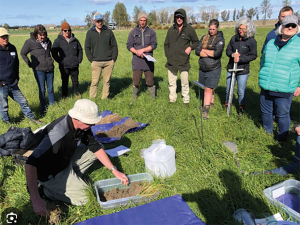
Beef + Lamb NZ funded research has shown that some simple changes to pasture management could help farmers make better use of rainfall and build resilience before dry conditions hit.
OPINION: There could hardly be a more appropriate theme for a conference than the one chosen by the red meat sector - Navigating Volatility.
When Northland leather worker Vernon Suckling started making horse saddles 50 years ago, quad bikes and side-by-side vehicles were unheard of.
Alliance Group has confirmed that eligible farmer-shareholders who supply and continue to back the business will receive up to $20 million later this year, following the strategic investment partnership with Dawn Meats.
With a general election under five weeks away, Rural News is asking major political parties about their policies and positions on key issues facing the primary sector. We will run their responses to each question over the next four weeks. The ACT Party and the Greens didn't respond in time.




OPINION: The same mainstream media muppets that brought you Jacindamania in 2017 have been flat out pimping for the Opportunities…
OPINION: Your old mate reckons the atrocious way farmers in the UK are treated by their lords and masters in…