Turning data into dollars
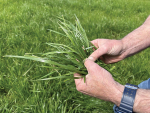
If growing more feed at home adds up to $428 profit per tonne of dry matter to your bottom line, wouldn’t it be good to have a ryegrass that gets you there quicker?




 increase font size
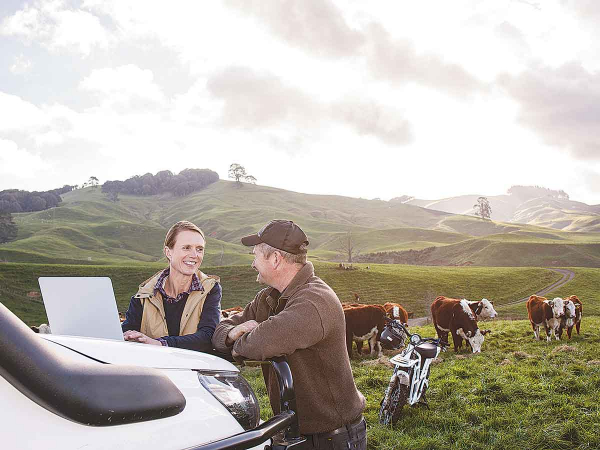 Husband and wife team Helen and Charlie Lea.
Farmers in many regions are experiencing feed shortages and are being encouraged to plan for their stock needs and seek help if required.
Coordinators have been appointed to help connect farmers with available feed and a free phone-in feed planning support service is available to all farmers, including lifestylers.
One who’s found the planning support service particularly useful is Kate Luff who runs 10 hectares in Central Hawke’s Bay. She has used the free feed planning service to decide how to get her stock and business through the winter.
“Despite keeping all our baleage this year, I looked at stock numbers – including lambs due to start arriving in June – and available feed and had a sinking feeling that it did not look good. But that I was guessing,” Luff says.
“So, I looked into the feed budgeting service and called the 0800 number.”
She adds that within an hour of speaking with Mark Harris, I knew exactly how many days feed I had on hand.
“The spreadsheet he sent enabled me to play with the stock numbers and work out what we could carry through winter. In our case the right decision was to sell 80% of our cattle, based on good factual information.”
Mark Harris, from Beef + Lamb New Zealand, is the man most likely to pick up the phone when sheep and beef farmers or lifestylers call the free feed planning service
He has had decades of farming experience. He’s also been on his own mental health journey and understands the situation and the stress callers may be under.
“We’ve answered about 130 calls since we started the planning line in the first week of April,” Harris says.
“The biggest farm we have advised is about 4000ha and the smallest 2.5ha. Everyone’s situation is different, and we can work through it. The later people have left planning, the more stressed they are and it’s a vicious cycle.”
He says there is a real challenge for lifestyle blocks or hobby farms where they haven’t experienced running out of food before.
“Some of them are carrying up to 20 stock units a hectare on bare dry land and just don’t know which way to turn.”
Harris says Kate Luff is a good example of a small block owner who got informed and made her decisions.
“She actually had about 6000kg of feed on hand; enough for 40 days. She looked at the numbers and knew what she had to do. That’s what we are here for,” he explains.
“Don’t be shy, pick up the phone and we can help sort it out.”
North Canterbury prepares
Farmers in dry parts of North Canterbury are likely to get a phone call to check in on how they are doing as the region moves from drought to winter.
The North Canterbury Rural Support Trust are driving a phone tree campaign, says coordinator Claire Ford.
“Our calls just remind people of the support that is available and give us a chance to get a feel for farmer wellbeing after a long lockdown period in drought,” she explains.
Winton Dalley, chair of the Hurunui Adverse Events Committee, says that while some useful dollops of rain landed over the last two months, it wasn’t sufficient and timely enough for a full recovery before heading into winter.
If growing more feed at home adds up to $428 profit per tonne of dry matter to your bottom line, wouldn’t it be good to have a ryegrass that gets you there quicker?
When buying supplementary feeds, farmers need to consider the entire package on offer – service, freight and all the components in a feed mix – not just focus on the price of the cheapest component – palm kernel meal, according to J. Swap Stockfoods sales manager Joe Hardman.
Two high producing Canterbury dairy farmers are moving to blended stockfeed supplements fed in-shed for a number of reasons, not the least of which is to boost protein levels, which they can’t achieve through pasture under the region’s nitrogen limit of 190kg/ha.
OPINION: Few things are more stressful for dairy farmers than running out of feed when cows need it most.
Now is not the time to stop incorporating plantain into dairy pasture systems to reduce nitrogen (N) loss, says Agricom Australasia brand manager Mark Brown.


Farmer-owned fertiliser company, Ballance Agri Nutrients is welcoming National’s plan to negotiate security agreements with key supplier countries to protect New Zealand-bound products from export restrictions and greater supply chain certainty.

Carrfields has announced the appointment of Stu Hall to the newly created role of chief operating officer, Carrfields Ltd, reflecting the continued growth of their agribusinesses and the need to ensure the company has the leadership capacity and support in place as it pursues the emerging opportunities ahead.
New Zealand's role is not to compete with Indian growers, according to NZ Apples and Pears.
The potato industry is celebrating the success of two rising stars - James Blair, the 2026 Young Grower of the Year and runner-up and innovation award winner, Amber Davy.
Twenty-eight emerging leaders from across the horticulture sector spent two days last month learning valuable skills and connecting with industry experts.
There are five entrants in this year’s Young Horticulturist of the Year, competing in a series of technical, practical, business and leadership challenges.





OPINION: The same mainstream media muppets that brought you Jacindamania in 2017 have been flat out pimping for the Opportunities…
OPINION: Your old mate reckons the atrocious way farmers in the UK are treated by their lords and masters in…




