Rural Mobile Coverage Worse After 3G Shutdown, Survey Finds
Mobile phone coverage and reliability are deteriorating in rural areas, and farming families are bearing the cost, according to a Federated Farmers survey.




 increase font size
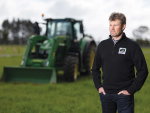
 TAMA board member John Tulloch says farmers need to carefully check whether they're dealing with a genuine and reputable dealer.
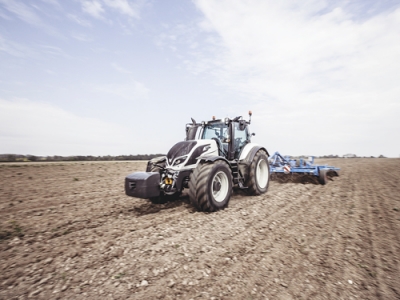
Kiwi farmers need to be cautious when purchasing farm machinery directly from overseas vendors, warns the Tractor and Machinery Association of New Zealand (TAMA).
TAMA president Mark Hamilton-Manns says the organisation is aware of a number of incidents, including a South Island farmer who paid a deposit and transport costs for a tractor advertised online, only to find the listing was a scam.
Some who received their purchases also encountered problems, including one facing a $20,000 bill for cleaning a second-hand mower, imported from Europe. The vendor claimed to have cleaned it but biosecurity inspectors found foreign matter in the machines.
"There have been numerous reports of online scams regarding tractors and farm machinery internationally and there has been at least one case of a New Zealand farmer being defrauded in this way," says Hamilton-Manns.
"He saw a second-hand tractor he liked online, checked out the website of the company listed as selling it and rang the phone number provided in the advert.
"Everything seemed all right, so he paid a 30 per cent deposit plus transport costs. Then the 'vendor' asked for additional transport costs. The buyer contacted the company named in the advert and found a fraudster had created a fake advert using the details of the genuine company and the machine they had previously sold. Only the phone number listed was that of the fraudster.
"It's not just scams which are the problem. One farmer dealt directly with an overseas dealer to buy a new baler wrapper which then broke down. The buyer's local farm machinery dealer had replacement parts but the warranty wasn't validated in New Zealand. The parts had to be shipped from the original dealer – leaving the machine out of action for quite some time."
TAMA board member John Tulloch says other problems farmers had encountered included machinery with different specifications to those normally used in New Zealand – such as different numbers of knives on a forage harvester or mowers running at incompatible speeds. Parts for those models may not be immediately available here.
"When you buy a tractor or farm machinery through an accredited dealer in New Zealand, they are trained to fully set up the machine and walk the customer through every step of the process," says Tulloch.
"There are so many factors involved with putting a machine on a tractor. For instance, arm heights – if you don't get that right it will not allow a mower to 'float'. Or setting the PTO shaft so you don't get vibration down the drive line. When you buy second hand from offshore the vendor isn't there to demonstrate how to use it – often you don't even get the manual.
Tulloch says farmers need to carefully check whether they're dealing with a genuine and reputable dealer. "Find out if the warranty will be validated in New Zealand and what back-up it provides, look into the compatibility of machinery and availability of parts and make sure you are getting the operating book.
"You also need to be absolutely confident a second hand purchase has been cleaned properly. If it gets stopped in biosecurity and needs to be waterblasted there is a risk of water getting into the sensor. All those costs of cleaning and repairs go to the purchaser importing it. Rather than saving money, you could end up tens of thousands out of pocket."
Mobile phone coverage and reliability are deteriorating in rural areas, and farming families are bearing the cost, according to a Federated Farmers survey.
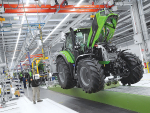
As we move into the second half of 2026, the Tractor and Machinery Association (TAMA) reports that Year-to-Date figures ending June 30 saw new tractor deliveries hitting 1,386 units or 10.7% ahead of the same period in 2025.
Coming in at a year-end total at 3088 units, a rise of around 10% over the 2806 total for 2024, the signs are that the New Zealand farm machinery industry is turning the corner after a difficult couple of years.
New tractor deliveries for 2025 jumped 10% compared to the previous year, a reflection of the positive primary sector outlook, according to the Tractor and Machinery Association (TAMA).
As the clock ticks towards the 3G mobile network shutdown, farmers are being warned to upgrade or risk losing connection to their supply chain.


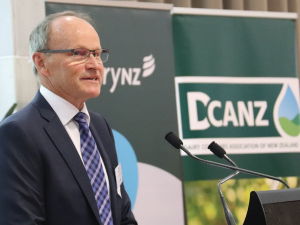
Dairy processors are ready to further boost New Zealand’s export earnings but want the incoming government to match their ambition with good policy.
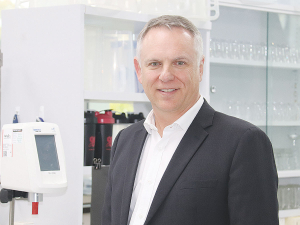
Massey University is best placed to solve the “problems” facing the dairy industry, says vice chancellor, Pierre Venter.
Synlait's longest serving employee – a man who joined the Canterbury-based milk processor even before it began processing milk – is now its newest executive.
A dairy industry leader believes eradicating the common and costly disease, Bovine Viral Diarrhoea (BVD) is within reach.
A farmgate milk price of $10/kgMS this season is firming up as milk powder prices soar and the New Zealand dollar weakens.
Federated Farmers has welcomed new rural policies released by ACT, saying they align closely with its own election priorities.



OPINION: The same mainstream media muppets that brought you Jacindamania in 2017 have been flat out pimping for the Opportunities…
OPINION: Your old mate reckons the atrocious way farmers in the UK are treated by their lords and masters in…




