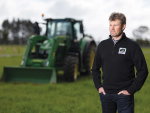
Rural Mobile Coverage Worse After 3G Shutdown, Survey Finds
Mobile phone coverage and reliability are deteriorating in rural areas, and farming families are bearing the cost, according to a Federated Farmers survey.




 increase font size
 CNH Industrial, which owns Case IH and New Holland, is urging customers to act quickly to avoid disruptions during the shutdown of 3G connectivity.
As the clock ticks towards the 3G mobile network shutdown, farmers are being warned to upgrade or risk losing connection to their supply chain.
Mobile operators are retiring their 3G networks over the next few months, making room for more advanced technologies like 4G and 5G service.
Last month, tractor and machinery giant CNH Industrial, which owns the Case IH and New Holland brands, urged customers to act quickly to avoid any disruptions from the move.
The company warned farmers that once the 3G network shuts down and 4G connectivity isn't available within the machine's modem, all functions which are reliant on the connectivity will go dark.
A spokesperson for Rural Contractors NZ told Rural News that its members would likely be well across any issues arising from the closedown of the 3G network.
"Machinery suppliers had been engaging with rural contractors over the last year or so, alerting them to the looming shutdown and helping upgrade or replace machinery reliant on the network."
Telecom Users Association of NZ chief executive Craig Young says it is important that everyone can stay connected.
"Any devices that rely on 3G technology will no longer work after the shutdown," he told Rural News.
"Many people may have checked their phones, but it's important to also check other connected devices including machinery and sensors.
"We encourage anyone who is unsure of whether their device is on 3G to check with their dealer or supplier to ensure it will work on 4G/5G or how to upgrade the device. Upgrading now, before the shutdown, will ensure continuous service. If you're not prepared, you risk losing connectivity."
Young says TUANZ has worked with various rural organisations to help share this important messaging, but it is likely there may still be a few people who have not heard the details.
"Significant areas of rural NZ are serviced by the RCG towers which never had 3G, so customers in those areas will have already upgraded to 4G devices. There may only be patches or black spots."
So, despite making the switch to 4G or 5G networks, some rural areas may still be missing out on reliable connectivity.
Precision Farming chief executive Chloe Walker says, like other technology providers, they have been working with farmers and contractors to upgrade 4G-capable hardware.
But Walker says the bigger issue is that 4G and 5G coverage in rural New Zealand is still patchy.
"Even where farmers are ready and have made the switch, the network doesn't always meet the operational reliability they need," she told Rural News.
Walker believes that the farming sector had reasonable notice, especially with the shutdown dates being pushed back.
She says farmers and suppliers have used that time to plan, budget and replace older devices.
"My concern is not readiness within the primary sector, but whether telecommunications providers have had enough time to build adequate 4G/5G coverage before the 3G network is removed," she says.
Walker's advice to farmers is to check what equipment they have that uses 3G and talk to their technology partners immediately.
"Even if your system appears to be working today, it will stop once the network is switched off, and the impact can flow through your supply chain - from compliance to co-ops to compliance reporting."
Walker says from a technology standpoint, retiring 3G makes sense.
It allows providers to free up spectrum and invest in faster, more secure and more efficient networks, she adds.
"The benefits are clear: better data speeds, more reliable connections and the ability to support advanced machinery and IoT systems, particularly as we continue to advance our digital adoption on farm and implement new technologies.
"The challenge is ensuring those benefits are available in rural New Zealand. The transition will only be successful if 4G and 5G coverage improves at the same pace as older networks are removed."
Mobile phone coverage and reliability are deteriorating in rural areas, and farming families are bearing the cost, according to a Federated Farmers survey.
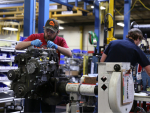
While April 23 was just another day for many manufacturers across the globe, it marked Reman Day, a timely reminder for farmers of the operational and cost-effective benefits re-manufactured parts can offer to their ongoing machinery maintenance, while also minimising environmental impact.
As manufacturers mark Reman Day, CNH Industrial says it is a timely reminder for farmers of the operational and cost-effective benefits remanufactured parts offer.
Palmerston North headquartered Transag Centre is the latest CNH Industrial dealership to be confirmed as a dual dealer for Case IH and New Holland machinery brands.
Nine months after Cyclone Gabrielle struck, affected farmers are slowly getting back on their feet, and many have the CNH Industrial initiative ‘Commence the Re-Fence’ to thank for helping relieve some of the pain of the massive rebuild.


Federated Farmers has welcomed new rural policies released by ACT, saying they align closely with its own election priorities.

Rural Contractors NZ says proposed changes to land transport rules for agricultural vehicles are a welcome response by the Government to out of date regulations which have seen members hit with huge fines.
Alliance is calling for final applications for its 2027 Graduate Programme, with applications closing on Sunday 25 October.
Decades piloting planes has ensured vet and farmer David Hayes is focused on safety. So, after a serious accident while welding on farm, he is sharing his experience so others can learn from it.
Canterbury milk processor, Synlait Milk has confirmed Leon Fung as its chief executive officer.
OPINION: Making it easier to collect rainwater and use it to grow crops and livestock is a no brainer.


OPINION: The same mainstream media muppets that brought you Jacindamania in 2017 have been flat out pimping for the Opportunities…
OPINION: Your old mate reckons the atrocious way farmers in the UK are treated by their lords and masters in…




