Milk Powder Prices Prop Up Farmgate Milk Price
Milk powder prices are keeping farmgate prices up, helping processors offset the dip in milk fat prices.




 increase font size
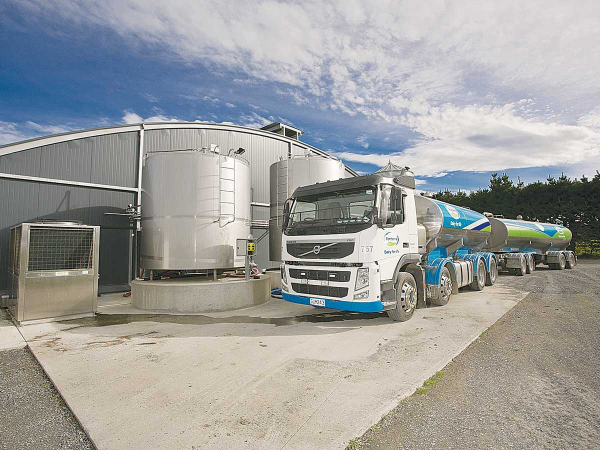 Resurging COVID-19 across the globe is continuing to take the shine off previously high dairy prices.
Resurging Covid-19 across the globe is continuing to take the shine off previously high dairy prices.
Whole milk powder prices fell between 1.5% and 3.5% for the fourth consecutive Global Dairy Trade (GDT) auction, last week.
The latest GDT result prompted ASB to lower its 2021-22 forecast milk price by 30c to $7.90/kgMS. ASB economist Nat Keall says it is clear that prices are losing momentum as New Zealand moves deeper into the season, which started on June 1.
He says this may reflect the fact that stockpiles are now much better covered after the frenzy earlier in the year.
"We knew dairy prices wouldn't sustain these heights forever, but prices are falling a bit faster than we'd anticipated," Keall told Rural News.
"The fact that prices have continued to fall even as Fonterra has reduced the amount of product on offer, clearly shows that the demand and supply balance is shifting in the direction of buyers rather than sellers.
"The key question is where prices will find their floor, and on that front we are still positive."
Keall notes that its $7.90 forecast milk price is "still lofty".
Westpac is sticking to its $8/kgMS forecast milk price, but senior agri economist Nathan Penny says it is keeping a close eye on Covid and dairy demand in the coming weeks.
"On the demand side of the equation, the renewed Covid concerns have clouded what was previously a very rosy picture," says Penny.
"That said, it will take some time to digest what this means for dairy markets and prices. As a result, we'll be keeping a close eye on Covid and dairy demand developments over the coming weeks, with a particular focus on key dairy markets in Asia."
Penny says, on balance, the risks to the milk price outlook have clearly shifted to the downside.
"However, for now we stick with our 2021/22 milk price forecast of $8/kgMS."
Keall agrees that the surge in delta variant cases overseas has added a bit of uncertainty to the economic outlook.
But he still expects the uptick in global demand and ongoing supply chain issues will keep commodity prices supported across the board.
Fonterra has issued a wide $1.50 forecast payout range for this season: $7.25 to $8.75/kgMS.
With whole milk powder prices slipping from the highs of US$4,000/metric tonne to just over US$3,700/MT, the co-operative could lower its forecast range soon.
That said, Fonterra will benefit from favourable forward exchange rates and reports of stronger prices off the auction platform.
Milk powder prices are keeping farmgate prices up, helping processors offset the dip in milk fat prices.
OPINION: With 10,500 dairy farms, New Zealand continues to punch above its weight around the world.
A milk glut around the world shows no sign of easing, putting downward pressure on farmgate milk prices for the next few months.
Fonterra has reduced its forecast 2026/27 Farmgate Milk Price.
New Zealand dairy farmers are set to be the first in the world to receive access to a new digital physical milk pricing tool that enables them to fix the price for their physical milk.



Federated Farmers has welcomed new rural policies released by ACT, saying they align closely with its own election priorities.

Rural Contractors NZ says proposed changes to land transport rules for agricultural vehicles are a welcome response by the Government to out of date regulations which have seen members hit with huge fines.
Alliance is calling for final applications for its 2027 Graduate Programme, with applications closing on Sunday 25 October.
Decades piloting planes has ensured vet and farmer David Hayes is focused on safety. So, after a serious accident while welding on farm, he is sharing his experience so others can learn from it.
Canterbury milk processor, Synlait Milk has confirmed Leon Fung as its chief executive officer.
OPINION: Making it easier to collect rainwater and use it to grow crops and livestock is a no brainer.





OPINION: The same mainstream media muppets that brought you Jacindamania in 2017 have been flat out pimping for the Opportunities…
OPINION: Your old mate reckons the atrocious way farmers in the UK are treated by their lords and masters in…




