Farmers support, foresters oppose conversion ban
The Government's latest decision to put the brakes on farms being converted to forestry to enter the emission trading scheme (ETS) has won support from many primary sector groups.




 increase font size
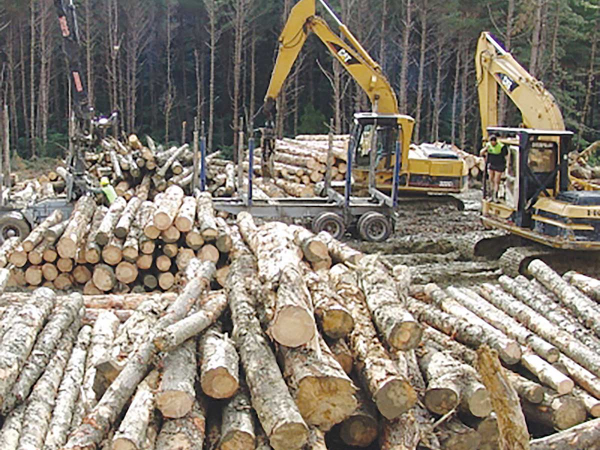 The forestry lobby believes Australia’s support for plantation forestry sharply contrasts with the increasingly restrictive measures being promised by NZ’s government.
Australia's support of plantation forestry sharply contrasts with the increasingly restrictive measures being promised in New Zealand by our government, claims the NZ Forest Owners Association.
The organisation points to Australian Prime Minister Scott Morrison's visit to Tasmania in February, where he announced an AU$86 million package for forestry in the island state. Morrison called forestry a 'critical national treasure', and said future supply is needed for future generations with global demand for timber products expected to quadruple by 2050.
President of the New Zealand Forest Owners Association Phil Taylor says the New Zealand industry is not seeking the type of financial support being delivered in Australia.
"Basically, all we want to do is get on with growing trees and responding to strong local and international demand. Our problem is a sequence of messages from the Government on new rules to restrict forest expansion."
He is referring to reports that the Government is planning to put a stop to the right to convert a whole farm to forestry.
Taylor says if there is a problem with carbon farming - planting trees to absorb carbon from pollution, reimbursed by the Emissions Trading Scheme - that should be treated separately. "Not by threatening to change the rules relating to production forestry."
"A modest expansion of the exotic plantation estate is vital to provide enough carbon sequestration for the Government to budget for a carbon zero economy by 2050," Taylor claims. "The right signals have to be sent to farmers and other landowners to ensure this happens and these are not the signals we are getting."
He echoes the expectations of Australia's government for a huge increase in wood demand.
"It's already happening with biofuels.
"Our industry is going to struggle to just meet the demand from New Zealand dairy processors to deliver enough wood material for heating powder driers as the processors move out of burning coal."
Taylor believes that NZ should be leading in producing these products, not adopting policies, which would result in having to import them.
The Government's latest decision to put the brakes on farms being converted to forestry to enter the emission trading scheme (ETS) has won support from many primary sector groups.



OPINION: At a time when farmers are advocating for less government spending and no new taxes, the dairy sector is rightly concerned by ACT's new immigration policy.
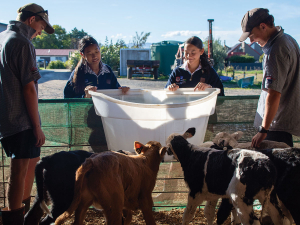
Feilding Agricultural High School isn't alone in offering agricultural or horticultural subjects as part of its curriculum, but the location of one of its farms on the northern edge of the urban fringe makes for some interesting considerations.
Analysis of decades of research has revealed the good farming pracrtice plays a critical role in reducing nutrient losses to improve freshwater outcomes.
Could New Zealand use its unproductive land to help solve possible fuel insecurity in New Zealand? Scientists say yes.
Wool Impact and ASB have signed a new partnership with the bank set to provide financial backing to support the revitalisation of New Zealand's strong wool industry.
OPINION: Farmers have been clear: it is getting harder, not easier, to find and keep good people.




OPINION: When Donald Trump returned to the White House, many people with half a brain could see the results for…
OPINION: Media trust has tanked because of what media's more woke members do and say.