
Federated Farmers Welcomes ACT’s New Farming Policies
Federated Farmers has welcomed new rural policies released by ACT, saying they align closely with its own election priorities.




 increase font size
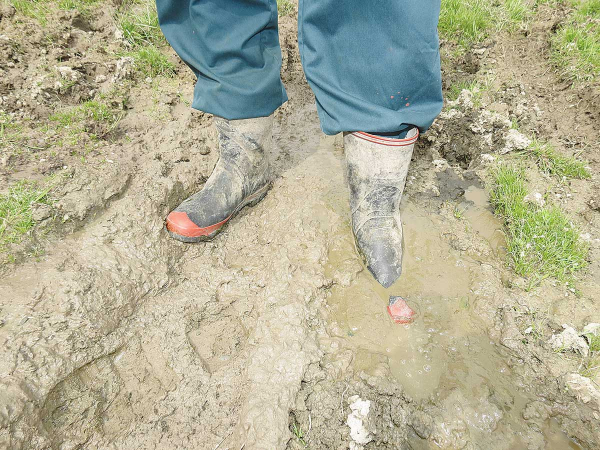 Fed Farmers remains skeptical that Overseer will be a valid regulation tool, despite the current review of the software.
Federated Farmers remains sceptical that Overseer can become a valid regulatory tool.
This is despite the recent appointment of a panel to review the software.
The first part of the review will look at Overseer’s suitability as a decision-making and regulatory tool. The panel is expected to report back on that by the end of the year.
Farmers have long voiced concerns that the software, originally promoted as a planning tool, is increasingly being used by regulatory bodies as a potential compliance tool.
Feds’ water and environment spokesman, Chris Allen says the review is very timely and long overdue.
“We need to know what its strengths and weaknesses are, given that no-one really gets to look under the bonnet into how it really works.”
Allen emphasised that he was not knocking Overseer. He said it did a good job of benchmarking “what-if” scenarios, but gave differing results with frequent updates and changing models.
He questions whether it could come up with “a single number” for regulatory purposes.
“What sort of signal is it sending farmers or land users when the number you got five years ago has no relevance to the number you get today?”
Allen says a lot of data inputting had to be done with “workarounds” to get meaningful results.
“We would probably take a lot of convincing,” he told Rural News. “We’d say it would be quite a few years away until it would be an appropriate thing to have as a regulatory tool.
“After all, water quality will not improve because of Overseer; it will improve because of practises on the ground.”
A joint announcement from the Ministries for the Environment and Primary Industries said the review was a major part of efforts to improve decision-making tools for use on-farm.
“The eight independent and internationally-recognised environmental specialists will look ‘under the bonnet’ of Overseer to critically assess its modelling capability and explore potential improvements for its use,” said Ministry for the Environment deputy secretary, water and climate change, Cheryl Barnes.
“The panel’s conclusions and assessments will be critical to New Zealand’s future approach to land management. We must be confident that Overseer is the right tool to drive sound land management decisions and improve freshwater quality.”
The panel is expected to meet first on March 30 and report back by the end of the year on the first part of the review.
This will be an assessment of whether Overseer’s modelling approach is fit to use as a decision-making and regulatory tool.
If this is the case, the second part will then look at which aspects should be subject to a more in-depth review. This is expected to take place over a year.
Meanwhile, MPI acting deputy director-general, policy & trade, Ruth Fairhall says an additional $4 million per year has been allocated to a new contestable fund to commission longer-term research to develop and evaluate new technologies and systems to improve freshwater quality.
“More knowledge about different farming and growing technologies will enable us to fine-tune environmental models including Overseer to more accurately calculate potential impacts of different land management practices.”
Fairhall said the collaboration between government and industry, combined with leading-edge science, will ensure environmental models can be applied at the grassroots level for better freshwater management decisions.
The panel
• Chair: Dr Ian Johnson – agricultural modeller (Australia)
• Dave Clark – dairy industry and research consultant
• Dr Brent Clothier – principal scientist, Plant and Food Research
• Dr Donna Giltrap – research leader for agricultural greenhouse gas emissions and mitigations, Manaaki Whenua – Landcare Research
• Dr Clint Rissmann – founder of Land and Water Science Ltd
• Dr Nick Roskruge – associate professor in horticulture, Massey University
• Dr Peter Thorburn – chief research scientist, Commonwealth Science and Industrial Research Organisation (Australia)
• Dr Robin White – associate professor of integrated beef systems management, Virginia Tech (USA).
Federated Farmers has welcomed new rural policies released by ACT, saying they align closely with its own election priorities.
Federated Farmers is backing Feilding High School’s call to keep Agriculture and Horticultural Science as a standalone subject in Year 11.
National’s pledge to introduce 19 new national standards shows the party is serious about getting Wellington out of farming, Federated Farmers says.
Mobile phone coverage and reliability are deteriorating in rural areas, and farming families are bearing the cost, according to a Federated Farmers survey.
Central Otago District Council (CODC) has voted against a plan to spread treated sewage sludge from Cromwell and Alexandra on farmland near Lauder, a decision Federated Farmers says reflects strong opposition from rural residents.


Federated Farmers has welcomed new rural policies released by ACT, saying they align closely with its own election priorities.

Rural Contractors NZ says proposed changes to land transport rules for agricultural vehicles are a welcome response by the Government to out of date regulations which have seen members hit with huge fines.
Alliance is calling for final applications for its 2027 Graduate Programme, with applications closing on Sunday 25 October.
Decades piloting planes has ensured vet and farmer David Hayes is focused on safety. So, after a serious accident while welding on farm, he is sharing his experience so others can learn from it.
Canterbury milk processor, Synlait Milk has confirmed Leon Fung as its chief executive officer.
OPINION: Making it easier to collect rainwater and use it to grow crops and livestock is a no brainer.




OPINION: The same mainstream media muppets that brought you Jacindamania in 2017 have been flat out pimping for the Opportunities…
OPINION: Your old mate reckons the atrocious way farmers in the UK are treated by their lords and masters in…




