Some farmers in the Nelson region are facing up to five years of hard work to repair their damaged properties caused by the recent devastating floods.
Federated Farmers Nelson provincial president Kerry Irvine says there is not a farm in the province that hasn't been affected in some way by the floods.
He says one farmer has lost six and a half kilometres of fencing, and others have also been hammered.
"There are farmers who have lost tracks, culverts and flood gates and many have paddocks covered in silt," he told Rural News.
Irvine says at the height of the flood, huge trees were being ripped out and are now floating around in Tasman Bay.
He says the Motueka river is now but a shadow of itself with paddocks on the banks ripped away throughout the catchment.
Irvine says every primary sector business has been affected, including sheep and beef, dairy and horticulture.
"A number of houses have been yellow or red stickered and it's likely more will be added to the list as the full extent of the damage is revealed," he says.
Irvine says it's impossible to estimate the final repair bill because farmers will just go out and buy what they need and this will never be included in the final bill.
He says they have had government officials and ministers down to look at the damage and attend civil defence meetings. But he says, while goverment may have good intentions to help, it is slow to eventuare.
"I've got farmers who need stuff now," he says.
 |
|---|
|
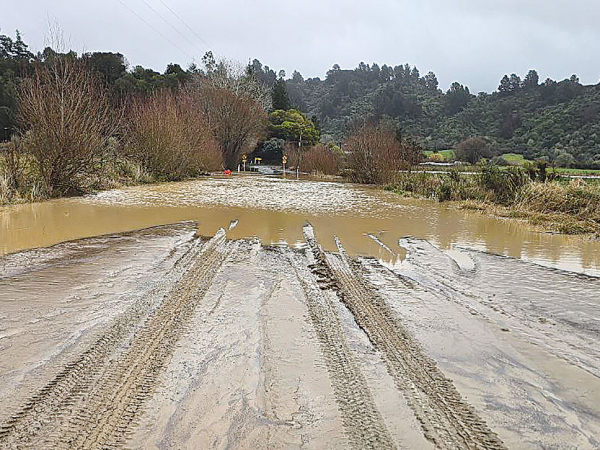
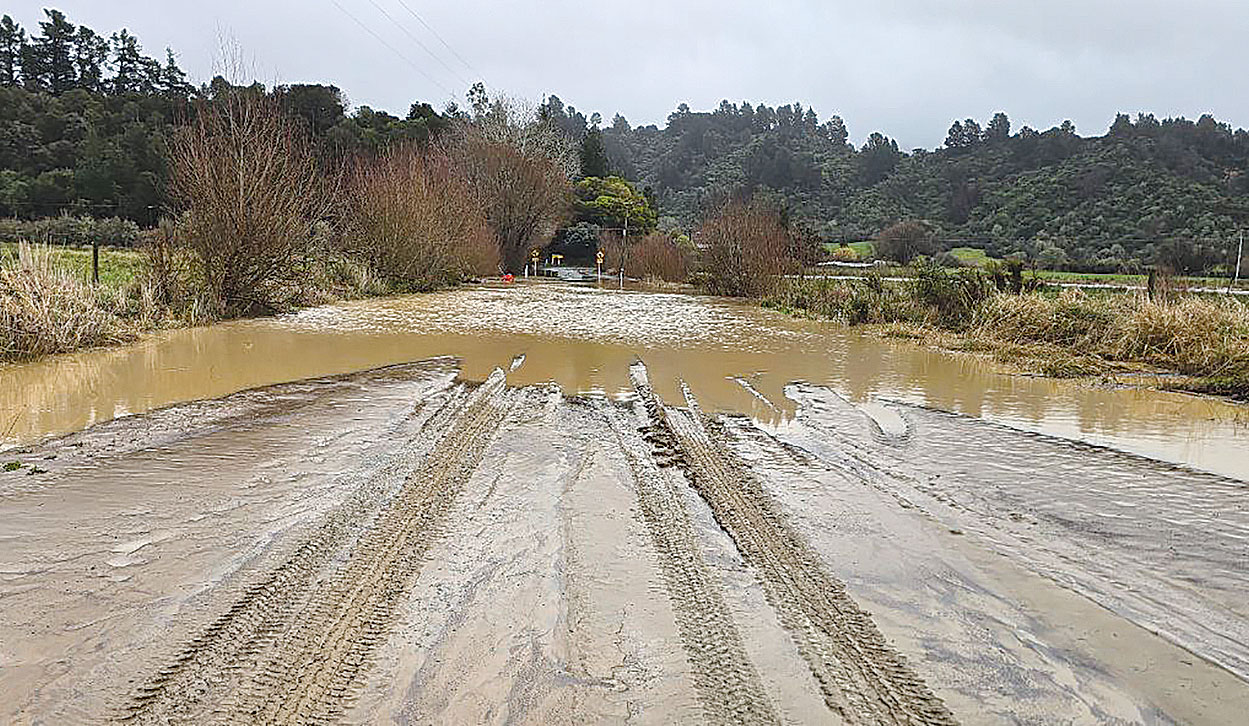
Flooded Riwaka-Sandy Bay Road in the Tasman Region. Photo Credit: Tasman/Nelson Civil Defence Facebook Page.
|
Meanwhile Federated Farmers president Wayne Langford, who farms in the region, has seen for himself the nature of the devastation.
He says the destruction in parts of Nelson and Tasman is extensive, with some farms totally unrecognisable. He says you can see where the flooded Motueka River came through and swallowed everything in its path.
"It's total devastation. One farm I visited had about 50 hectares taken out. The river changed course and just chewed right through it. Orchards nearby got smoked as well. It is clear some properties have been hit worse than others - and that those farmers urgently need our support," he says.
Langford met a farmer who has lost a quarter of his farm and says the scene is heartbreaking.
He says some of the worst of the damage is to farms right by the river, which are also some of the most productive.
As Rural News went to press, Kerry Irvine and other farmers were on tenterhooks hoping that there would be no further damage.