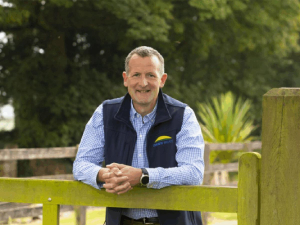
Hawke's Bay farmer Matthew Barham manages up to 2000 cattle across his 1020-hectare operation, typically a mix of Charolais, Angus and Simmental X steers and bulls, arriving at 12-16 months of age.
Usually weighing between 300 and 450kg on arrival, they are grown to over 550kg and would expect to leave at just over 24 months.
Keen to adopt new technologies, especially those that can save time and support health, Matthew heard about the Gallagher Auto Weigher system, that offered the ability to deliver accurate cattle weights, without needing to bring animals a yard.
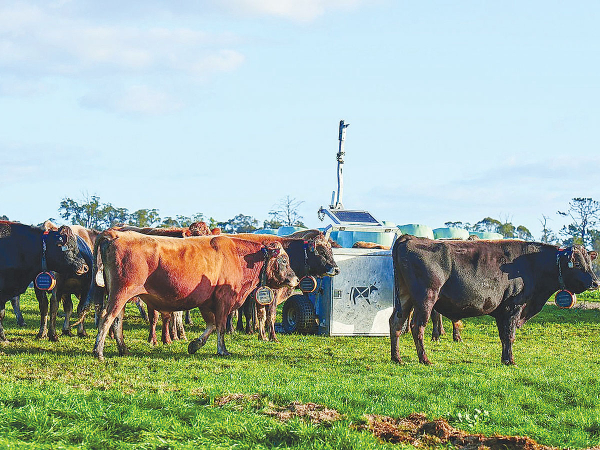
Developed by Irish Canadian company StrongBo Agritech, the Auto Weigher enables more frequent weight monitoring in the paddock or feedlot. In operation, the system entices cattle onto a platform using a mineral or molasses block, the animal is identified by using an EID, before weight data is captured and converted to full body weight, before being transmitted to the cloud.
An intuitive software dashboard allows farmers to view average weight and daily gains of the mob or individual animals, allowing for strategic, data-driven decisions.
Since using the Auto Weigher, Mathew has seen immediate benefits, from its portability between mobs, allowing cattle to weigh themselves in the paddock, resulting in quick and accurate weight measurements without unnecessary stress on the animals.
“We’ve only got one set of yards on a large station,” Matthew explains, “so moving mobs there just for weighing is very time-consuming. The Auto Weigher was a practical and cheaper solution compared to building another yard.”
One of the most significant advantages centres around improved accuracy in weight assessments, crucial information for upcoming sales.
“Previously, my stock agent would ask about weights, and I could only offer estimates unless I’d recently had animals weighed. Now, when he rings, I have real data, so can provide accurate weights rather than guesstimates.”
Originally sceptical about accuracy with the machine taking a partial weight, confidence grew after cross-checking with the farms existing scales.
Matthew explains: “The system uses AI and algorithms once you enter the breed, age and key factors relating to the animals. Data is picked up from the animal’s EID tag, with a result, apart from one outlier, it showed all animals were within just a few kilos of the conventional scales.”
Looking at animal welfare, Matthew suggests that not having to move cattle several kilometres for weighing reduces stress and potential health issues, like lameness, while also offering the ability to look at those cattle that are getting weighed conventionally, and then use the results from the Auto Weigher to do visual checks more effectively across the paddock, without having to weigh every animal.
“At the same time, it also frees up my teams’ day to be doing other things around the farm,” says Matthew.
Introducing the units to the mobs was promoted by strategically placing molasses-based attractants, that quickly encouraged the animals to step on to the unit.
Matthew says investing in an attractant is a small cost compared to the value of accurate information and the significant time savings. “It’s about making the technology part of your farm’s routine.”
On the practical front, the Auto Weigher is proving to be robust and durable, despite being exposed to rough conditions, alongside the animals using it as a rubbing post and slobbering all over the unit.