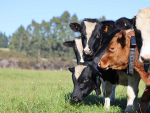
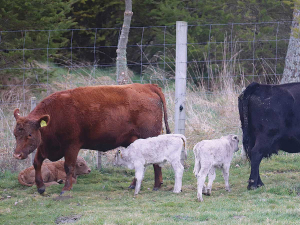
Central Otago farmer Bevan McKnight no longer worries about leaving a few Angus cattle behind while mustering on the 13,000ha station he leases.
With the Halter collars on his 200 Angus cattle now linked to satellite technology, he knows exactly where to look for them at Northburn Station in the Dunstan Mountains.
"We know exactly where to walk to and where to find them," he told Rural News.
"Previously, we always left a few behind and had to go back to look for them."
Virtual Fencing Unlocks New Land Use
McKnight was one of a handful of farmers who trialled the direct-to-satellite technology for beef cattle smart collars, a world-first solution driven by Starlink and One NZ.
He says the collars were linked to the satellite on February 26. The results are a game changer, he says.
McKnight says direct-to-satellite will also unlock unconstrained grazing.
"Virtually fencing our extensive station using Halter will be a game-changer for land utilisation.
"For the first time, we'll be able to graze large blocks of land that have never been touched by our cattle, because we had no way of managing them there."
McKnight says to have Halter collars on cattle before this satellite solution would have required 25 towers.
"So, this new practical option makes Halter a no-brainer for us."
The station also has fragile areas that are environmentally sensitive and the technology has also enabled him to keep the cattle out of those places.
Global Potential for Agtech Innovation
Internal modelling estimates direct-to-satellite capability will expand access to Halter for New Zealand beef farms by at least 20%.
Direct-to-satellite also positions Halter for expansion into more remote markets globally, such as South America and parts of Africa.
Halter also announced a suite of new tools for reproduction, animal behaviour, and precision pasture management, significantly expanding what is possible for cattle management.
Until now, the solar-powered, GPS-enabled collars system depended on Halter's proprietary LoRa (long-range) radio towers on farms. With the Starlink connection, the collars can communicate directly to satellites, eliminating the need for ground infrastructure entirely.
In New Zealand, Halter will become the largest provider of non-mobile devices connected to Starlink, with hundreds of thousands of the new collar version to go live upon launch, globally.
"Connectivity, for virtual fencing was the blocker for the most remote or large operations and direct-to-satellite solves this," says Craig Piggott, CEO and founder of Halter.
"With One NZ and Starlink, we've removed that barrier. Farmers managing animals on remote, rugged terrain can now access the same tools as operations with full cellular coverage. Combined with our new suite of product features, these farms can be even more productive."