Catch the Rain: B+LNZ Trials Boost Soil Infiltration
Beef + Lamb NZ funded research has shown that some simple changes to pasture management could help farmers make better use of rainfall and build resilience before dry conditions hit.




 increase font size
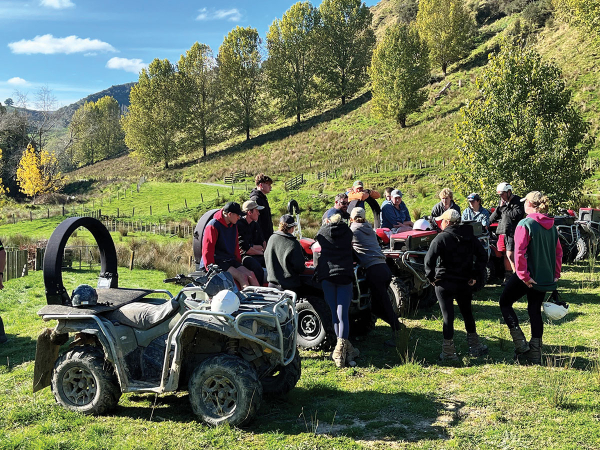 Fatalities using quad bikes continue to make up alarming statistics.
A recent Beef + Lamb New Zealand quad safety field day, held along the rugged Whanganui river valley at Kakatahi, focused on identifying risks and taking appropriate actions to minimise unplanned accidents.
While fatalities using such vehicles continue to make up alarming statistics that have life changing consequences for many rural families, lesser accidents can still result in significant personal and financial impacts.
Rural insurance specialist FMG was supporting the event, with rural manager Alex Donald explaining that in the 2025 calendar year, the company processed around 500 claims for quads or ATVs with 50% including rollovers, paying out around $3m in replacement costs
Donald also discussed data showing that the average time off from work amounted to 82 days, noting, “we’re happy to support these events, because while we can replace machines, we can’t replace people”.
Agriculture makes up around 25% of serious accidents, while only employing 6% of the total work force. In another reporting anomaly, accidents with light utility vehicles (LUVs), some of which have resulted in fatalities, are still being reported as ATVs.
Led by Andrew (Simmo) Simpson, training manager of CarNZ Training Limited, a large group of youngsters of the Growing Future Farmers Initiative were brought up to speed on the need for “active riding” when operating ATVs to establish stability and to impart changes of direction.
He also reinforced the need to always wear protective helmets and adhere to the machine manufacturer’s recommendations.
While LUVs or side-by-sides have replaced many quad bikes - offering the benefits of a substantial roll cage and greater carrying capacities - quads are still used extensively on properties with limited access.
At the event, Simpson raised the question of Operation Protection Device or Crush Protection Devices (OPD/CPD) being fitted to the rear of ATVs.
While safety helmets are mandatory, OPDs are not, so their fitment is a personal or operational choice.
Their use is not usually recommended by the vehicle manufacturers as they have the potential to change the design limits of the machines and change the centre of gravity.
In some cases, rear-mounted devices like spray packs are being fitted to front racks and changing machine dynamics.
Simpson also spoke of feedback from OPD users, who often came out with the comment, “now I’ve got an OPD fitted-I can go anywhere on the property”.
Indeed, since being made mandatory in the Australian market (leading to all bar one quad manufacturer pulling out of that market) a recent report shows that after three years of use, engineering solutions such as OPD fitment has not resulted in a change in the number of fatalities.
Focusing on day-to-day use, field day attendees looked at maintenance on a daily and weekly basis, checking oil and water levels, tyre pressures and doing a general wear inspection, including looking for cracks or fractures of frames.
They were also taught proper use of key control functions, including hi/lo transmission selection, 2WD/4WD, diff-locks and the characteristics of CVT transmissions.
Simpson insisted that any off-road operations should always be undertaken with low range selected to deliver maximum torque, so removing the need to change mid-flight from high to low range, which can result in loss of momentum and a loss of drive.
Much of the discussion centred around hazard identification and safety margin assessment, using a Search-Evaluate-Execute mantra: looking at an area that was to be driven over; assessing ground conditions for mud, ruts, streams or holes; then planning on where to travel, or indeed, looking for another route.
In summing up, Simpson reminded the trainees that irrespective of their abilities, the rules of physics and gravity always applied and could be influenced by anomalies such as momentum and traction.
He encouraged them to always ask, “Is this the right machine for the job? Can I negotiate the hazard with my experience? And is it worth the risk?”.
Simpson suggested it was safer to explain to a manager that you were not happy to do a task on an ATV rather than your family having to decide on beech or oak timber for your coffin.
After the classroom session, trainees tried out the information and riding advice they had received on a specially laid out course, configured to demonstrate active riding over climbs and descents, variable surfaced such as gravel, grass and mud, alongside site assessment to determine if a task was safe to perform.
Visit www.carnztraining.co.nz
Beef + Lamb NZ funded research has shown that some simple changes to pasture management could help farmers make better use of rainfall and build resilience before dry conditions hit.
Beef + Lamb New Zealand (B+LNZ) says it welcomes the passage of the Natural Environment Bill and Planning Bill, calling the bills a positive step for sheep and beef farmers.
If you're thinking about investing in ways to push feed forward, this is the year to do it.
B+LNZ's Wormwise veterinarian Mary Bowron has won the Best Sheep and Beef Vet of the Year Award in recognition of her outstanding contribution to New Zealand’s sheep and beef sector.
With lambing underway in many regions, Beef + Lamb New Zealand is encouraging farmers to put together a wellequipped lambing kit to help minimise lamb losses, particularly in bad weather.


A major move is about to get underway to improve the quality and viability of dairy beef and cattle in NZ.
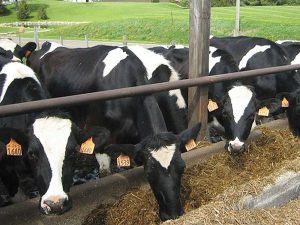
Veterinarians say changes to the code of welfare for dairy cattle provides a positive foundation for improved cattle welfare across the country.
Today, 15 October, is the International Day of Rural Women, which recognises rural women’s contribution to farming, communities and the environment.
Global dairy giant Lactalis has integrated its Australian operations with the Mainland Dairy consumer business it acquired from Fonterra earlier this year.
After almost two decades of sharemilking, saving and building equity, Aaron and Marcia Flay this year realised their long-held dream of settling on their first dairy farm.
Good medium to long term prospects for NZ beef, especially in the US, has heighted the focus on various initiatives to capitalise on this situation.



OPINION: The same mainstream media muppets that brought you Jacindamania in 2017 have been flat out pimping for the Opportunities…
OPINION: Your old mate reckons the atrocious way farmers in the UK are treated by their lords and masters in…




