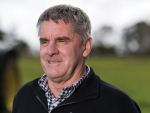
Federated Farmers Welcomes ACT’s New Farming Policies
Federated Farmers has welcomed new rural policies released by ACT, saying they align closely with its own election priorities.




 increase font size

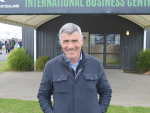
THE DAYS of selling New Zealand products based solely as 'clean and green' are gone, says Federated Farmers vice president William Rolleston.
He believes the "real fundamentals" are good science, secure safe food and freshness,
"Those are the things we have a good reputation for," he told Rural News.
"With clean and green we've heard a lot of talk about it. But the difficulty is it's more a fad than a long-term sustainable marketing ploy."
Rolleston says New Zealand's marketing position long-term should be based on good science, secure safe food and freshness. He says supermarkets follow fashion and fashion comes and goes. While he doesn't have any issues about New Zealand selling itself as clean and green, we've got to use science to prove it.
"That may be difficult, but if New Zealand wants long-term, sustainable wealth we've got to build our products on things that are long-term and sustainable."
He says while traceability is important, it needs to be market driven so farmers will respond to market signals.
"The other thing about traceability is that it does offer an ability to add value to your products – particularly if you can add value at the farm gate level you can get higher returns back to the farmer. But again, I say, it has to be market driven, not driven by some regulation."
On the issue of science funding for agriculture, Rolleston believes this decreased when the system moved from the DSIR to CRI's. He says New Zealand is too small for the competitive model of allocating money for science and the system hasn't really worked.
"We've got limited resources so we need strategic collaboration to actually deploy those resources in an efficient way. The Ministry of Science and Innovation is now moving to do that."
Rolleston says he hasn't done a good analysis of what proportion of the funding is allocated to applied science.
He adds that one of the big advantages is New Zealand has good medical research and this has a link to agriculture.
"Medicine and agriculture are one in the same thing, in that you are looking at the cellular level and you can then use these processes to move into more applied research and eventually deployment onto the farms," he says.
Rolleston wants Federated Farmers to look at science funding at a strategic level and ensure the government is putting in place strategies that build up New Zealand's capability in agricultural science sector.
Rolleston believes the science sector needs to go through a rebuilding phase in terms of agricultural science-related issues.
Federated Farmers has welcomed new rural policies released by ACT, saying they align closely with its own election priorities.
Federated Farmers is backing Feilding High School’s call to keep Agriculture and Horticultural Science as a standalone subject in Year 11.
National’s pledge to introduce 19 new national standards shows the party is serious about getting Wellington out of farming, Federated Farmers says.
Mobile phone coverage and reliability are deteriorating in rural areas, and farming families are bearing the cost, according to a Federated Farmers survey.
Central Otago District Council (CODC) has voted against a plan to spread treated sewage sludge from Cromwell and Alexandra on farmland near Lauder, a decision Federated Farmers says reflects strong opposition from rural residents.


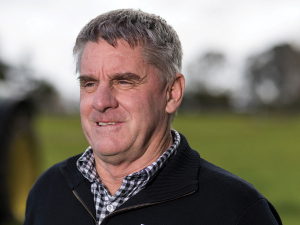
Federated Farmers has welcomed new rural policies released by ACT, saying they align closely with its own election priorities.

Rural Contractors NZ says proposed changes to land transport rules for agricultural vehicles are a welcome response by the Government to out of date regulations which have seen members hit with huge fines.
Alliance is calling for final applications for its 2027 Graduate Programme, with applications closing on Sunday 25 October.
Decades piloting planes has ensured vet and farmer David Hayes is focused on safety. So, after a serious accident while welding on farm, he is sharing his experience so others can learn from it.
Canterbury milk processor, Synlait Milk has confirmed Leon Fung as its chief executive officer.
OPINION: Making it easier to collect rainwater and use it to grow crops and livestock is a no brainer.



OPINION: The same mainstream media muppets that brought you Jacindamania in 2017 have been flat out pimping for the Opportunities…
OPINION: Your old mate reckons the atrocious way farmers in the UK are treated by their lords and masters in…




