NZ Forestry Exports to India Now Tariff Free
More than 95 per cent of New Zealand’s forestry and wood exports to India can now enter tariff free as the New Zealand-India Free Trade Agreement comes into force today.




 increase font size
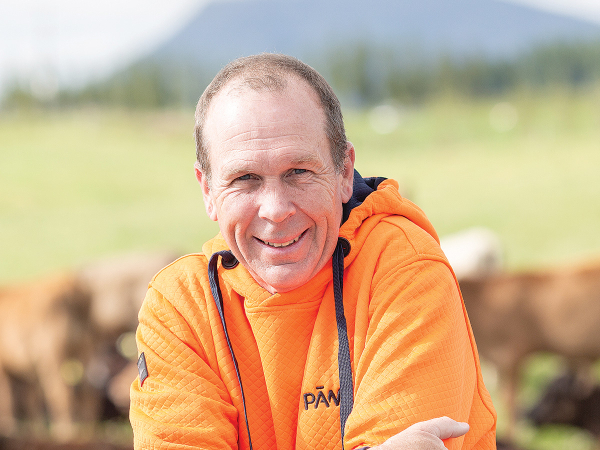 Pāmu chief executive Mark Leslie.
Bank of New Zealand (BNZ) and Pāmu (Landcorp Farming Limited) have developed a new way for landowners to earn revenue from existing native forests.
The new model is designed to help improve New Zealand's land and biodiversity while giving businesses a method to account for their carbon removals.
BNZ chief executive Dan Huggins says the new model is a practical step forward, addressing an existing gap and creating a win-win for landowners in the rural sector and businesses seeking to account for carbon renewals.
"Unlike other options, which require upfront capital to create a new asset that generates credits, this new model enables landowners to earn revenue from a pre-existing asset," Huggins says.
He says that the majority of that revenue generated would then be reinvested to restore and improve the landowners' land.
For example, they could accelerate planting or undertake pest control which could otherwise be delayed or avoided due to lack of funding.
"Nature has always been central to New Zealand's economy," says Huggins.
"By using existing financial structures in innovative ways - in this case, a leasehold agreement - we can help create incentives to direct capital to where it can make a real environmental difference, while unlocking value for landowners.
"For businesses, like BNZ, this arrangement is another way we can invest in nature restoration, alongside the work we are already doing to reduce and mitigate our environmental impact."
Mark Leslie, chief executive of Pāmu, says the model is a practical way to recognise farming's role in addressing climate resilience.
"Pāmu has had a clear commercial focus over the past five years while balancing its investment in QEII covenants, biodiversity programmes, and farm environment plans," Leslie says.
"Rather than waiting decades for new plantings, this approach values the contribution of established native forests today, while creating new opportunities to strengthen biodiversity.”
BNZ and Pāmu agreed that the design needed to uphold local and international carbon accounting standards, maintain strong governance, and deliver transparent and measurable outcomes for nature and the landowner.
Leslie says utilising the removals from existing native forests required both Pāmu and BNZ to take a forward-thinking lens.
"We have the shared goal of stimulating wider sector uptake and accelerating the restoration of native ecosystems with ongoing multi-benefits for biodiversity and climate resilience with the idea investment remains here for generations to come," he says.
All carbon removals will need to be calculated per forest and accredited to selected international and local requirements.
For this project, New Zealand company CarbonCrop will provide a platform offering measurement, monitoring, allocation, and traceability services related to the project removals. This will support independent assurance.
The project is designed to adhere to Greenhouse Gas Protocol Corporate and Land Sector and Removals Standards, ISO 14064-1 requirements, and Toitū Envirocare Net Carbon Zero programme requirements.
The land BNZ and Pāmu have chosen is sourced from a soon-to-be QEII covenanted native block of approximately 600 hectares in northern Hawke’s Bay.
“For BNZ, this is a model we hope others will use and we look forward to further discussions,” says Huggins.
QEII Trust chief executive Dan Coup says the QEII National Trust has been closely involved in the development of the Mahiwi Covenant and has had a longstanding relationship with Pāmu across their portfolio.
"We welcome additional biodiversity enhancement work in this covenant area, including what has been proposed through the Pāmu partnership with commercial carbon buyers.”
The approach has been designed to:
Currently, native forests planted before 1 January 1990 are not eligible to participate in the Emissions Trading Scheme.
Under the new model, landowners with native forests can lease their forested land to a leaseholder seeking to bring a means of carbon removal into their operations while investing in biodiversity enhancement.
The leaseholder, through the leasehold agreement, can recognise the land on its balance sheet and use the carbon removals from the forest to help meet its emissions reduction goals.
Pāmu (the landowner) and BNZ (the leaseholder) are the first organisations in New Zealand to implement this new model.
More than 95 per cent of New Zealand’s forestry and wood exports to India can now enter tariff free as the New Zealand-India Free Trade Agreement comes into force today.
A major move is about to get underway to improve the quality and viability of dairy beef and cattle in NZ.
High country stations, mixed sheep and beef farms, Māori-owned farms, corporates and family operations are among the nine commercial farms taking part in the Livestock Innovation Farming Transformation programme, known as LIFT.
Pāmu has welcomed Taranaki student Paige Burston as its newest First Foundation Scholar, supporting her journey towards a career in agriculture and animal science.
State farmer Pāmu is bracing for a $30 million hit from soaring farm input costs this financial year.



Federated Farmers has welcomed new rural policies released by ACT, saying they align closely with its own election priorities.

Rural Contractors NZ says proposed changes to land transport rules for agricultural vehicles are a welcome response by the Government to out of date regulations which have seen members hit with huge fines.
Alliance is calling for final applications for its 2027 Graduate Programme, with applications closing on Sunday 25 October.
Decades piloting planes has ensured vet and farmer David Hayes is focused on safety. So, after a serious accident while welding on farm, he is sharing his experience so others can learn from it.
Canterbury milk processor, Synlait Milk has confirmed Leon Fung as its chief executive officer.
OPINION: Making it easier to collect rainwater and use it to grow crops and livestock is a no brainer.





OPINION: The same mainstream media muppets that brought you Jacindamania in 2017 have been flat out pimping for the Opportunities…
OPINION: Your old mate reckons the atrocious way farmers in the UK are treated by their lords and masters in…




