Farmer-owned co-operative Ballance Agri-Nutrients is ceasing phosphate manufacturing at its Mount Maunganui site.
The move will lead to 60 job loss. Ballance hopes to wind down its manufacturing facilities by the end of this year.
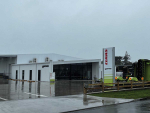
The Mount Maunganui site, located near the Port of Tauranga, will be continue to be used for nutrient storage and distribution, as well as home to its national support office.
The co-operative is beginning a process to wind down its manufacturing facilities where it manufactured super single phosphate (SSP). It recently completed a six-week consultation process with impacted staff, resulting in 66 roles being disestablished and six new roles created.
Ballance chief executive Kelvin Wickham says while it’s been a big call to transition from a near 70-year history of manufacturing in Mount Maunganui, the changes are ultimately necessary to set the co-operative up well for the future.
“We recognise the significance of this change for our co-operative and impacted people, and we’ll be supporting them by offering any suitable redeployment opportunities at Ballance as well as career transition support,” he says.
After reviewing feedback from impacted people, the proposal was modified to add two additional roles, and the timeline was extended to continue manufacturing for an additional three months.
Wickham adds while the rationale for cessation of manufacturing in Mount Maunganui remains valid, the extension will give our people more time to work through the transition and wind down the facilities.
“Our manufacturing facilities at the Mount require substantial investment to keep them operating reliably alongside increasing regulatory constraints. With an over capacity in New Zealand compared to the expected demand for this product, it is the right point in time for the co-operative to cease manufacturing at this location.”
Wickham adds the changes will enable the co-operative to have more agility in sourcing nutrients as well as find new ways to provide value to its shareholders, exploring more blendable fertilisers as well as other densified phosphate products like triple super phosphate (TSP) and diammonium phosphate (DAP).
“We’re seeing much more efficient and effective use of nutrients delivering higher productivity off a much lighter footprint, and a big focus for the co-operative is supporting our 16,000 shareholders with the technology, products and services that support those aims,” he says.
“Nutrients remain a vital part of driving New Zealand’s economic prosperity through food and fibre exports, with around 41% of the country’s agricultural exports enabled by fertiliser.
“To maintain supply, we secure nutrients from multiple sources and will continue to manufacture phosphate and urea at our Invercargill and Taranaki sites as well as imported products from offshore.
“Our focus now is supporting our impacted people and working through the process of winding down and then decommissioning our Mount Maunganui manufacturing facilities.
“We remain committed to keeping a presence in Mount Maunganui as a critically strategic location for nutrient supply and distribution through the Port of Tauranga and our home base for our national support office.”