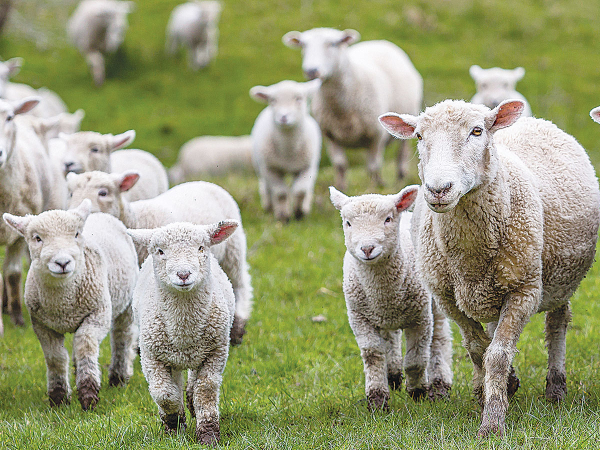
A landmark New Zealand trial has confirmed what many farmers have long suspected - that strategic spring nitrogen use not only boosts pasture growth but delivers measurable gains in lamb growth and ewe condition.
According to Ballance Agri Nutrients, which supported the trial, the result could help farmers increase returns and reduce reliance on traditional parasite controls.
The independent trial, published in the New Zealand Journal of Agricultural Research, is the first in New Zealand this century to quantify the impact of nitrogen fertiliser on animal production in lowland sheep systems. While the pasture growth benefits of spring nitrogen are well known, few studies have measured how that translates into gains in livestock performance - until now.
Conducted by Bioeconomy Science Institute, the study found that a single application of nitrogen fertiliser post-lambing resulted in a 33% increase in pasture cover and an average five to six per cent increase in ewe and lamb liveweights at weaning.
"This is a milestone study that provides hard evidence for something farmers have anecdotally believed for years," says Warwick Catto, science strategy manager at Ballance.
"It confirms that the gains are real and measurable - and importantly, it's a practical, low-cost tool farmers can use during one of the most demanding periods in the sheep farming calendar."
The research shows that lambs from treated paddocks were on average 2.3kg heavier at weaning, with nearly a quarter reaching slaughter weights, up from just seven per cent in the control group. The increase in liveweight alone equated to an extra $90/ha hectare in value - effectively covering the cost of the fertiliser while opening up options to sell more lambs earlier and reduce summer feed pressure.
Read More:
The tactical use of nitrogen also improved ewe condition going into summer and created greater flexibility in pasture management. These benefits come at a time when climate variability is increasing, and traditional tools like long-acting drenches are becoming less effective due to rising resistance.
"Worm resistance is a growing challenge on many farms," says Catto. "This study shows that lifting feed supply through spring nitrogen use can be another tool in the toolbox - not to replace drenches entirely, but to reduce reliance on them."
The work builds on Ballance's announcement in November 2024 of new fertiliser-based trials targeting parasite burdens on pasture - a wider programme exploring how nutrition can support livestock resilience.
"We're not talking about blanket nitrogen use," Catto says. "However, when it's used strategically, like in this trial after lambing, the benefits for pasture growth and animal performance are clear."
The study is part of Ballance's ongoing investment in science-backed solutions for the primary sector through the Future Ready Farms programme, supported by the Ministry for Primary Industries' Sustainable Food and Fibre Futures fund (now replaced by the Primary Sector Growth Fund).