New Rural Recycling Scheme to Replace Voluntary Farm Plastics Programmes by 2027
Environment Minister Nicola Grigg has announced details of a new rural plastics recycling scheme.




 increase font size

Making more and better investments in agriculture is one of the most effective ways to reduce hunger and poverty while safeguarding the environment.
This is the key message of FAO's flagship annual report, The State of Food and Agriculture 2012 (SOFA) presented in Rome this week.
The world's more than one billion farmers must be central to any agricultural investment strategy, as they are the biggest investors in this sector, the report notes. But farmers' investments are often limited by unfavourable investment climates.
"A new investment strategy is needed that puts agricultural producers at its centre," says FAO Director-General José Graziano da Silva. "The challenge is to focus the investments in areas where they can make a difference. This is important to guarantee that investments will result in high economic and social returns and environmental sustainability. "
New data compiled for the report show that farmers in low - and middle-income countries invest more than $170 billion a year in their farms - about $150 per farmer. This is three times as much as all other sources of investment combined, four times more than contributions by the public sector, and more than 50 times more than official development assistance to these countries.
Investing in agriculture is clearly paying off, according to the FAO report. Over the last 20 years, for example, the countries with the highest rates of on-farm investment have made the most progress in halving hunger, to meet the first Millennium Development Goal.
The regions where hunger and extreme poverty are most widespread - South Asia and sub-Saharan Africa - have seen stagnant or declining rates of agricultural investment over three decades.
"Recent evidence shows signs of improvement, but eradicating hunger in these and other regions, and achieving this sustainably, will require substantial increases in the level of farm investment in agriculture and dramatic improvements in both the level and quality of government investment in the sector," the report said.
The report emphasises that in many low- and middle-income countries, farmers are often confronted with weak incentives to invest.
A number of factors can drastically reduce the incentive to invest, including poor governance; absence of rule of law; high levels of corruption; insecure property rights; arbitrary trade practices; high "taxation" of agriculture relative to other sectors; and inadequate levels and quality of rural infrastructure and public services.
Smallholders face specific, severe constraints, often including extreme poverty, weak property rights, and poor access to markets and financial services.
Overcoming these barriers will be essential to unlock the full investment potential of farmers in many rural areas. The report recommends focusing on a number of areas in order to foster smallholder investment, including the following:
• Governments and their development partners need to help smallholders mobilize their own savings and gain improved access to credit.
• Stronger producer organizations, such as cooperatives, can help smallholders deal with risks and provide better market access.
• Social protection can contribute to the expansion of the asset base by the poorest smallholders.
National governments are the second largest source of investment in agriculture. The report urges governments and donors to channel their limited public funds into areas that have been proven to be strongly supportive of agricultural growth and poverty reduction, such as agricultural research and development, rural infrastructure and education.
Evidence from many countries shows that investing in these areas often "has much higher returns than spending on subsidies for agricultural inputs such as fertilizer." While such subsidies may be politically popular, they usually do not offer the highest returns.
Large-scale investments in agriculture
The report calls upon governments, international organizations, civil society and corporate investors to ensure that large-scale investments in agriculture, like the acquisition of land by private companies and funds, are transparent, accountable, socially beneficial and environmentally sustainable.
"The key word is good governance. We need to assure that the investments meet a certain set of conditions that assure that they contribute to food security and sustainable local development," said Graziano da Silva.
Environment Minister Nicola Grigg has announced details of a new rural plastics recycling scheme.
OPINION: David Seymour and James Meager's plan to make it easier for farmers and orchardists to operate drones can best be described a 'courageous' move.
There's been widespread support from the primary sector for the Government's announcement on changes to freshwater farm plans that come under the Natural Environment Bill, which is now set to replace the existing RMA.
The chair of the country's environmental regulator, the Environmental Protection Authority (EPA), says changes are already under way to improve the performance of the agency to better meet the needs of those who interface with them.
Are you ready for El Nino? That’s the question asked by Beef+Lamb NZ’s Ian Tarbotton who leads B+LNZ’s farm extension service.



LIC shareholders have elected a new North Island representative to the co-operative's Board, along with five representatives to its Shareholder Reference Group (SRG), following the company's Annual Meeting held in Invercargill.
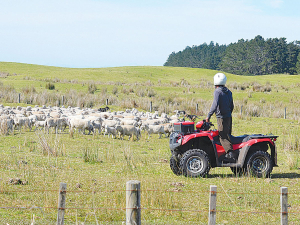
Farmers across parts of Southland and South Otago are continuing to deal with difficult conditions after a prolonged run of wet weather, with pressure building around feed supply, stock management, pasture damage, farm infrastructure and everyday workloads.
Federated Farmers says it welcomes Labour's commitment to reviewing the Sharemilking Agreements Act, calling on other major parties to do the same.
For Canterbury dairy farmers Sian Meijer and Rick Wobben, wearable technology has become one of their most valuable on-farm tools - helping manage 1850 cows across an expansive, high-performing dairy operation while improving efficiency, mating outcomes and day-to-day decision making.
Fonterra has unveiled its annual results for the 2026 financial year, posting $27 billion in revenue and close to $20 billion returned to New Zealand farmer owners and unit holders.
The first major update to the Dairy Cattle Code of Welfare in more than a decade has been released, marking what DairyNZ describes as an important step in ensuring animal welfare standards continue to evolve alongside scientific evidence and on-farm realities.




OPINION: The same mainstream media muppets that brought you Jacindamania in 2017 have been flat out pimping for the Opportunities…
OPINION: Your old mate reckons the atrocious way farmers in the UK are treated by their lords and masters in…