Fonterra Elections 2026: Voting Opens Tuesday 20 October
Fonterra shareholders can begin voting on Tuesday 20 October in the 2026 Board of Directors’ election, a Co-operative Council election in one Ward, and seven Annual Meeting resolutions.




 increase font size
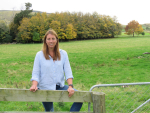
 Anne Douglas, Fonterra
South Island dairy farmers will soon be able to supply organic milk to Fonterra.
The co-operative, which has processing organic milk in the North Island farmers since 2002, is now inviting applications from farmers in the South Island for the first time.
The new South Island recruitment of farmers interested in converting as well as existing organic farms will initially focus on those located around Southland and up to the Canterbury region.
This is in addition to continuing to recruit more organic farmers in the North Island, where more than 100 farms are currently part of the Fonterra Organic Programme.
Anne Douglas, group director for Fonterra Farm Source, says the expansion into the South Island is another positive news story for the co-op.
“We already have a strong performing organic business but have more room for growth based on increasing demand from customers around the world,” says Douglas.
“Our plan is to be able to process organic dairy products at our Stirling site from the 2028/29 season, with the recruitment process starting now to allow time for converting farmers to achieve organic certification.”
Before work commences at Stirling to enable the segregated processing of organic milk, the co-op is looking to achieve minimum recruitment targets in the South Island that would ensure operational efficiencies.
“Expanding the programme seeks to offer South Island farmers another supply option and is also expected to benefit all Fonterra farmers based on the positive contribution our organic business makes to the wider co-op’s earnings,” adds Douglas.
In recent years, the global organic dairy category has shown consistent retail sales value growth year-on-year.
Fonterra is well positioned to capitalise on the growing demand with the co-op’s diverse product range, broad market access and strong customer partnerships.
Andrew Henderson, Fonterra’s general manager organics, says the co-op offers support for its shareholding farmers throughout their transition to organic.
“Our support package includes conversion incentives, advice, networking opportunities and linking farmers up with peers who can mentor them through the process,” says Henderson.
“Organic farming might not be the right fit for all shareholders, but for those interested in converting it has the potential to unlock additional returns.
“For example, since the Organic Milk Price was first established in 2016/17, it has delivered an average premium of ~$2/kgMS above the Farmgate Milk Price. There’s also the potential for lower input costs that are typical in New Zealand’s grass-fed organic systems.”
Fonterra’s organic business has been running since 2002, with Hautapu, Morrinsville and Waitoa UHT producing the majority of the co-op’s organic dairy products.
Organic Milk Price
Fonterra's Organic Milk Price was introduced in 2016/17 to provide suppliers with a market-based return for their organic milk solids.
Since the 2021/22 season, the programme's fully certified shareholding farmers have received an Organic Milk Price of more than $10/kgMS.
New record highs have been set for the past three years on the back of growing demand, culminating in a final payout of $12.35/kgMS last season. The current Organic Milk Price forecast for the 2025/26 season is $13.10/kgMS.
If any farmers are interested in switching to organic, they can either call 0800 65 65 68, email This email address is being protected from spambots. You need JavaScript enabled to view it. or get in touch with their local Fonterra Farm Source representative.
Fonterra shareholders can begin voting on Tuesday 20 October in the 2026 Board of Directors’ election, a Co-operative Council election in one Ward, and seven Annual Meeting resolutions.

Fonterra Co-operative Group chief financial officer Andrew Murray has resigned to take up a role outside the dairy giant.
Four candidates have been confirmed for two director positions on Fonterra’s board.
A record farmgate milk price and strong global demand is laying the foundation for continued growth of organic dairy farming in New Zealand.
Waikato milk processor Tatua has again declared a record milk payout to farmer shareholders, leaving other processors in the dust.


As part of its Election 2026 coverage, Rural News asked political parties how they would help pull the arable sector out of the doldrums. Here's what they said:
Farmers are being encouraged to rethink how they manage waste on farm with the launch of ruralwastesorted.co.nz, a new website bringing together practical tips, real farmer experiences and resources.
New Zealand Winegrowers (NZW) is celebrating the India-New Zealand Free Trade Agreement (FTA) coming into force today, bringing New Zealand wine improved access to one of the world’s fastest-growing economies.
New Zealand’s red meat sector has welcomed the India-New Zealand Free Trade Agreement taking effect, which removes India’s 33% tariff on New Zealand sheepmeat.
More than 95 per cent of New Zealand’s forestry and wood exports to India can now enter tariff free as the New Zealand-India Free Trade Agreement comes into force today.
Federated Farmers is backing Feilding High School’s call to keep Agriculture and Horticultural Science as a standalone subject in Year 11.



OPINION: The same mainstream media muppets that brought you Jacindamania in 2017 have been flat out pimping for the Opportunities…
OPINION: Your old mate reckons the atrocious way farmers in the UK are treated by their lords and masters in…




