China No Longer Just A Commodity Story - Luxon
China remains New Zealand’s biggest market, taking $23 billion of our exports, but it’s no longer a commodity story, says Prime Minister Christopher Luxon.




 increase font size
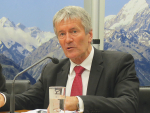
 Damien O'Connor
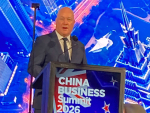
Agriculture Minister Damien O'Connor recently spoke at the China Business Summit in Auckland. The following is an excerpt from that speech.
There have been plenty of other shared successes over the past year. I'd like to briefly highlight some examples.
The first is our agricultural cooperation with China, which is longstanding and now spans a number of our major primary sectors.
Our Dairy Dialogue with China, for example, brings together government and industry representatives every two years to discuss opportunities and challenges for both countries' dairy sectors. It continues to be an important forum in which to exchange views and stay connected, including during the pandemic.
Along with agriculture, we also have regular dialogues with China on fisheries and forestry related issues.
These primary sector dialogues are important strands in our relationship, and cover significant portions of our trade with China. These discussions also provide us with the opportunity to discuss shared challenges for our primary sectors and explore ways that we can work together using our respective expertise to solve them.
Some recent examples include improving each country's understanding of changing regulatory environments, knowledge-sharing to progress our respective climate change obligations, as well as discussing ways to improve biosecurity management practices.
We've also developed exchanges at the technical level.
For example, for many years New Zealand has been involved in an experts' working group with China focused on milk quality and safety issues.
This year, we have also established a similar experts' group for the red meat sector. The sectors covered in these sorts of exchanges are wide-ranging, including for example equine health.
These kinds of programmes are hugely important for ensuring that New Zealand's systems and standards are recognised and understood by one of our key partners.
I'd like to thank all of the industry groups and companies who continue to support our agricultural relationship with China. We look forward to expanding our cooperation which underpins and supports our trading relationship.
On the business and tech front, we've seen continued success too.
And finally, a stand-out in the agri-tech sector due to its reputation for innovative technology, Waikato Milking Systems has seen notable success in China. Its milking rotaries are now found in multiple provinces across the country to meet the growing demand for high quality, reliable milking equipment.
New Zealand has all along supported the expansion of our network of plurilateral trade agreements to any economy that can meet their high standards. We have been pleased to see more trade partners expressing interest in joining these initiatives.
Whether representing New Zealand's interests at the WTO, or negotiating, upgrading and implementing our free trade agreements around the world, our job is to create opportunities for New Zealand exporters.
Ultimately our goal is to give you strong, transparent trade rules and as many options as possible when it comes to export markets, to support your commercial decision making.
We are focused on resilience, and diversification is one way to build up the resilience of individual companies - and of the New Zealand economy as a whole - to withstand future economic shocks and mitigate risks.
As a government we are focused on re-connecting New Zealand to the world, including China.
China remains New Zealand’s biggest market, taking $23 billion of our exports, but it’s no longer a commodity story, says Prime Minister Christopher Luxon.
A miserable budget that didn’t deliver much for anyone.
Fonterra is strengthening its foodservice presence in China with the launch of a new cream for professional bakeries at Bakery China 2026 in Shanghai.
National's decision to ‘dribble’ information about the NZ/India to Labour contributed to the delay in it deciding to supported the FTA.
OPINION: What does the birth rate in China have to do with stock trading? Just ask a2 Milk Company.



Entries opened on Monday, 5 October 2026 for the 2027 New Zealand Dairy Industry Awards (NZDIA), which organisers describe as the nation's biggest celebration of excellence in the dairy sector.
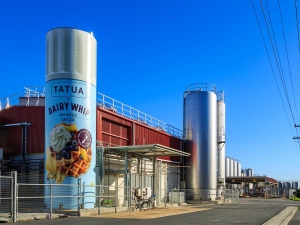
Waikato milk processor Tatua has again declared a record milk payout to farmer shareholders, leaving other processors in the dust.
A Labour-led Government won’t be bringing back the controversial freshwater rules of 2020.
National’s much-touted free trade deal with India featured in the Rural Issues Debate at Mystery Creek, Hamilton on Wednesday night.
New Zealand's 2026-27 freshwater fishing season has opened, with anglers encouraged to head to rivers and lakes over the coming days as conditions look favourable across much of the country.
Central Otago District Council (CODC) has voted against a plan to spread treated sewage sludge from Cromwell and Alexandra on farmland near Lauder, a decision Federated Farmers says reflects strong opposition from rural residents.
OPINION: It seems Canterbury processor Synlait is still in the doldrums.
OPINION: Get offside with New Zealand First leader Winston Peters at your own peril.