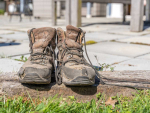
#BootsOfShame: Safer Farms Urges Farmers to Check Footwear
Safer Farms is urging farmers to make sure everyone working on farm has safe, suitable footwear for the job.




 increase font size
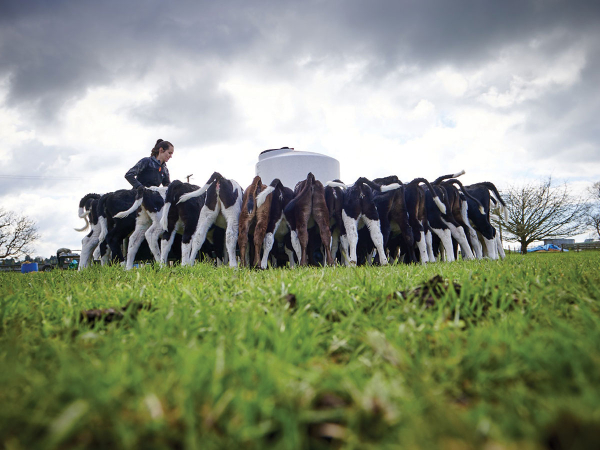 A common cause of rollovers is that the ATV being used isn’t heavy enough to tow the loaded weight of the feed trailer.
Rollovers of quad bikes or ATVs towing calf milk trailers have typically prompted a Safety Alert from Safer Farms, the industry-led organisation dedicated to fostering a safer farming culture across New Zealand.
It says there’s a pattern when feeding calves in the paddock, with many ‘near misses’ and injuries sustained, reinforcing the need to recognise that any rollover has the potential to result in serious injuries or indeed a fatality.
A common cause of rollovers is that the ATV being used is not heavy enough to tow the loaded weight of the feed trailer, leading to a case of “the tail wagging the dog”. With a thousand litres of milk weighing 1000kg, plus the weight of the trailer, it is apparent that the total is too great for a typical mid-range ATV.
Interestingly, a quick look at a range of manufacturers towing specifications, show that rated capacities appear to be around twice the kerb weight, so typically 600 to 800kg.
Other common causes of rollovers include sudden changes of direction by the driver, driving on uneven, slippery ground or steep gradients, inexperienced drivers, driver inattention or a distraction.
Safety Alerts are real-life documented incidents and key lessons which have been provided by farmers, condensed into one-page handouts that managers can download and print [see the Farm without Harm website] to be use in safety discussions with their teams.
This calf feeding alert discusses where best to feed calves, considering where they can be accessed safely, alongside the importance of reconsidering the access as necessary, so operators can drive in and out safely.
Where possible, staff should consider towing the feed trailer with a larger vehicle, such as a larger side-by-side vehicle, ute or even a small tractor.
However, if an ATV is the only vehicle available, it is important to know the loaded weight of the trailer and never exceed the manufacturer’s maximum towing capacity. Staff should also reduce the load if conditions or terrain changes, particularly in bad weather.
Farm owners and managers should also ensure that drivers are adequately trained and regularly updated for the task, knowing when to stop if conditions become unsafe.
In addition, they should always ensure that drivers always have a reliable way to call for help.
Further consideration might also centre around installing a crush protection device (CPD) or other rollover safety system to the ATV, or the availability of operating milk tanks fitted with integral baffles to reduce dynamic movement of the load.
Visit www.farmwithoutharm.org.nz
Safer Farms is urging farmers to make sure everyone working on farm has safe, suitable footwear for the job.
Improving health and safety is about incremental gain rather than a sudden decision, says Leeston farmer and Federated Farmers health and safety spokesman David Birkett.
A huge reduction in ACC claims from on-farm accidents over the last five years is due to thousands of small, practical decisions being made in sheds, yards, paddocks and around kitchen tables across the country, says Safer Farms ambassador Lindy Nelson.
Lindy Nelson, Safety Farms ambassador, has been named the winner of the Leadership category at the 2026 New Zealand Workplace Health and Safety Awards in Auckland.
A safety push across New Zealand has revealed significant gaps in hazardous substances management, farm vehicles, tractors, quad bikes and side-by-sides.


Federated Farmers has welcomed new rural policies released by ACT, saying they align closely with its own election priorities.

Rural Contractors NZ says proposed changes to land transport rules for agricultural vehicles are a welcome response by the Government to out of date regulations which have seen members hit with huge fines.
Alliance is calling for final applications for its 2027 Graduate Programme, with applications closing on Sunday 25 October.
Decades piloting planes has ensured vet and farmer David Hayes is focused on safety. So, after a serious accident while welding on farm, he is sharing his experience so others can learn from it.
Canterbury milk processor, Synlait Milk has confirmed Leon Fung as its chief executive officer.
OPINION: Making it easier to collect rainwater and use it to grow crops and livestock is a no brainer.


OPINION: It seems Canterbury processor Synlait is still in the doldrums.
OPINION: Get offside with New Zealand First leader Winston Peters at your own peril.




