Editorial: Wool's Back in the Black
OPINION: Confidence in the wool sector is rebounding as prices hit levels not seen in more than 15 years.




 increase font size
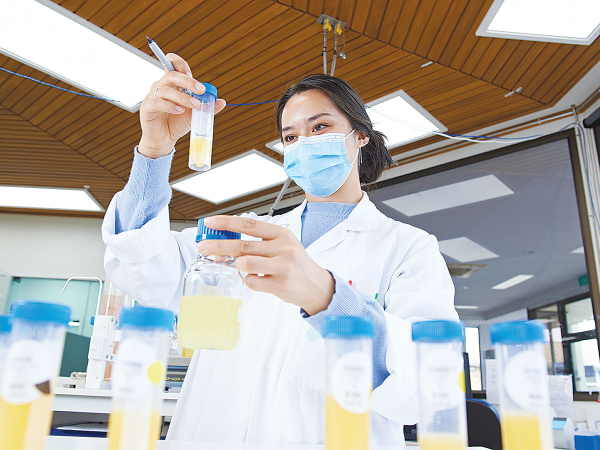 In theory the idea of merging the ag related science institutes into one conglomerate has merit.
OPINION: Will the latest science reforms make the difference that the government hopes?
In theory the idea of merging the ag related science institutes into one conglomerate has merit. Will this avoid duplication? – one hopes so. Will the money given to the new PRO be better spent and will it result in reduced overheads? – again in theory yes or is that a maybe?
There are some good aspects to the reforms including removing the ban on gene technology and setting up an organisation to get more investment into the science sector.
While the narrative around the announcement has a good feel about it, its actions not words that will determine success and we have yet to be told what this restructuring will cost. We have also got to get proof that the system will be streamlined so that scientists don’t spend days writing up bids for money for their projects. The present system according to many scientists’ reeks of unnecessary bureaucratic complexity. Many CRI’s have whole departments dedicated to dealing with bids for what sometimes is for small sums of money.
So why wasn’t MBIE, the science funder reviewed at the same time?
Science is the key to the success of our primary sector and it’s adoption by farmers, growers and supporting industries. That can only happen when the science is communicated well and made relevant to them. Back in the 1970’s and 80’s NZ this was very good at this, but over time the close connection between farmers and industry and scientists has somewhat faded.
The late Professor Alan MacDiarmid, who won the Nobel prize for chemistry, once told me that there was no point in doing science unless it is communicated properly. Will these reforms deliver that – who knows?
Peter Burke is the founder and life member of Science Communicators Association of NZ and has worked as a journalist in the primary and science sectors for more than 50 years
OPINION: Confidence in the wool sector is rebounding as prices hit levels not seen in more than 15 years.
OPINION: When I moved to Marlborough two decades ago, I found countless lines of tidy vines, neatly mowed and carefully sprayed, with diligent conventional practices interspersed with the odd organic or cover-cropping outlier, like Te Whare Ra.
OPINION: The Government has been seeking industry feedback on its proposed amendments to a range of Resource Management Act (RMA) national direction instruments.
OPINION: The Government's decision to stop local authorities going ahead with reviews of district and regional plans makes sense for several reasons.
OPINION: Good times are coming back for the primary industries. From sentiment expressed at Fieldays to the latest rural confidence survey results, all indicate farmer confidence at a near-record high.

New Zealand dairy farmers are set to be the first in the world to receive access to a new digital physical milk pricing tool that enables them to fix the price for their physical milk.
State farmer Pāmu is opening its farm gates this summer in an effort to give the rural sector the opportunity to see how large-scale, multi-system farming is delivering productivity and profitability across New Zealand.
A five-year study has found that the cost of reducing emissions without technology may be significant and unsustainable for Northland dairy farmers.
DairyNZ says Waikato farmers need certainty on Plan Change 1, but they say that certainty must be matched with practical, workable rules and a clear transition that doesn't get ahead of the new resource management system currently under review.
While the Government has moved quickly to make commercial hauliers' lot easier during the current fuel crisis, they appear to be stuck in the creep box when it comes to the agricultural industry.
Waikato farmers have been told that the Government’s new planning system legislation and the region’s Plan Change 1 (PC1) “won’t mesh together very well”.

OPINION: No one messes around with Winston Peters, more so in a general election year.
OPINION: Staying on Federated Farmers, this week's annual general meeting in Auckland is shaping up to be an interesting one.