How Trace Minerals Support Dairy Cow Recovery Pre-Mating
By September, pre-mating heat recording is underway on many spring-calving dairy farms.




 increase font size
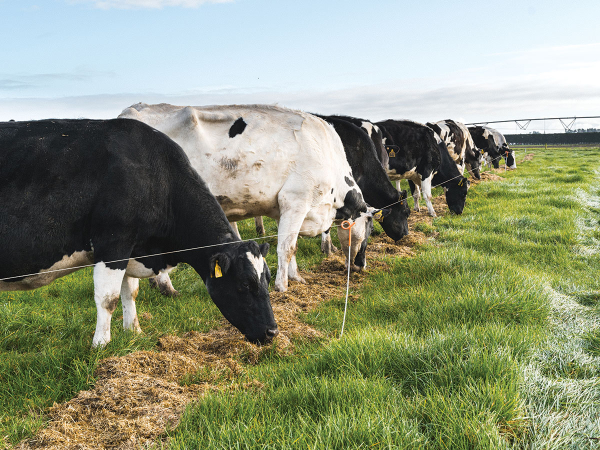 Free choice minerals are a practical option for low-input systems.
There's a common assumption that effective transition cow management is only practical for high-input farms, as controlled rations can make delivery simpler.
Yet the biological risks at calving do not change with the farm system. Low-input farms can still support springer cows well before calving when the plan is started early and matched to the system.
Pasture-based herds still face major transition pressure. Lower dry matter intake, rising calcium demand at calving, energy balance shifts and the onset of lactation can all affect cow health and production. Springing cows still need support for calcium metabolism, magnesium status, trace mineral coverage, appetite and steady diet changes.
The basics of transition management are straightforward. Start early, provide the minerals needed for the correct timing of calcium mobilisation, maintain trace mineral coverage, support appetite and avoid abrupt feed changes at calving. On many farms, that means close-up management from about three weeks before expected calving and using feed and mineral delivery options that cows can reliably access.
Each delivery option has trade-offs. On high-input farms, fortified close-up rations or mixer-wagon blends make dose and intake easier to control. Feed pads and controlled groups also make small-group management and intake monitoring easier. While these systems improve control, they are not the only way to manage transition risk.
For low-input and pasture-based systems, practical options that work well when feeding supplement in the paddock include freechoice mineral licks, or minerals layered into feed out wagons, or blended into silage. Freechoice formulae can work well, but the limitations need to be understood. Individual intake can vary, and dominant cows may push others out. The rule of thumb is to have one access point per 50 cows (per 100 cows at minimum) to increase even access to the supplement.
The right option depends on mob management. If springers are managed in a tight mob, targeted paddock placement or offering minerals at hay feed can work well. If younger and older springers remain mixed in larger mobs, then offering multiple mineral stations or combining free-choice minerals with short, supervised, controlled feeding periods can improve the chance that more cows get enough.
Intake variation needs to be managed. Freechoice systems can create wide intake ranges, with some cows consuming too much and others too little. Controlled feeding can help, but it needs infrastructure and labour. A practical approach is to start mineral support early, use free-choice minerals as a baseline and add short-term controlled feeding (e.g. feed pads or supplement troughs) for the last two weeks precalving if you can.
Before calving, ask the following questions to shape a workable plan:
The answers will help match the feeding method to paddock layout, labour and cow movement. The earlier this is planned, the easier it is to make the system work.
The main nutrition priorities are calcium metabolism, magnesium status, trace mineral coverage and steady dry matter intake. Timing is important, so start mineral support several weeks before calving to give the cow’s physiology time to respond, even when delivery is less controlled.
A good transition does not depend on the formulation alone. It depends on good springer management, selecting cows at the right time in order to allow long enough to effectively prime the body for calving, and it also requires getting the mineral balance right.
High-input farms may have more control, but low-input farms can still reduce transition problems with a plan that fits their infrastructure, labour and mob management. The goal is the same on every farm – give springers reliable nutritional support before calving. Infrastructure always dictates how that support is delivered. Chris Balemi is Agvance Nutrition founder and managing director.
By September, pre-mating heat recording is underway on many spring-calving dairy farms.
It's easy to look over a lush spring paddock and assume cows are getting enough usable nutrition. But while fast-growing pasture can give plenty of volume, in high moisture, variable dry matter and uneven mineral profile can leave real nutrition gaps when cows need it most.
When a cow goes down after calving, it is easy to blame the calving itself. Milk fever, calving stress, poor weather, bad luck. Yet many down cows are not caused by one dramatic event. They are the end result of poorly transitioned cows entering calving under nutritional pressure.
The dry period isn’t just a farm holiday but a chance to get your herd match-fit for calving and early lactation. If you treat it as a focused phase of preparation, recovery and capacity building, you’ll see the benefits when the cows return to milk.
March often brings a useful mix of opportunity and risk on New Zealand dairy farms.


Four candidates have been confirmed for two director positions on Fonterra’s board.
Returning to the family dairy farm after playing 20 years of professional rugby around the world is no easy task.
After delivering another record farmgate milk price to 100 supplying farms, independent milk processor Tatua is entering thee new financial year with a positive outlook.
Managing feed by sticking to a firm plan has helped the Southern Dairy Hub (SDH) demonstration farm survive an extremely wet winter, says the farm's acting general manager Greg Delaney.
A record farmgate milk price and strong global demand is laying the foundation for continued growth of organic dairy farming in New Zealand.
Mobile phone coverage and reliability are deteriorating in rural areas, and farming families are bearing the cost, according to a Federated Farmers survey.

OPINION: It seems Canterbury processor Synlait is still in the doldrums.
OPINION: Get offside with New Zealand First leader Winston Peters at your own peril.




