With input costs still riding high because of ongoing global events, scrutinisation of machinery operational costs has come to the forefront.
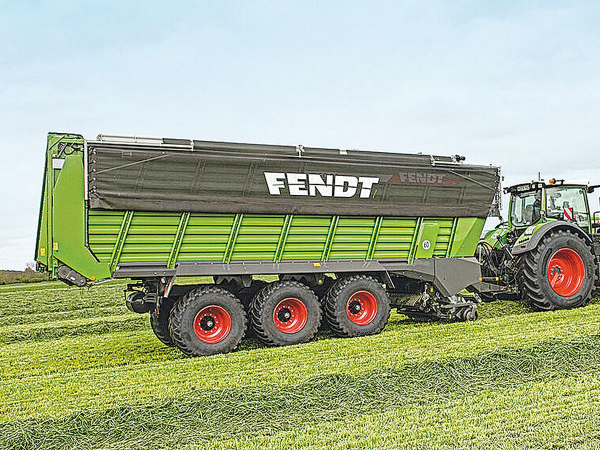
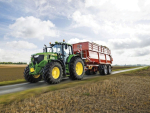
Tractor and grassland machinery manufacturer Fendt wanted to test the efficiency of its TIGO loader wagons, in June 2022 handed a machine over to the renowned DLG organisation in Germany to take a closer look.
Focusing on their TIGO 90XR-D model, the machine was compared with a competitor machine in like-for-like conditions, looking at the key areas of throughput, fuel consumption, power requirement and of course, consistency of chop length. The overall result showed the Fendt machine delivered high output and consistent chop quality, but importantly, required less horsepower and used significantly less fuel.
This also meant fuel consumption per tonne was reduced to 0.44 litres per tonne against the competitor’s 0.49 litres per tonne – a saving of 10.4%, despite 6% higher compaction values.
Looking at the important areas of quality of chop, pick-up losses and contamination, the TIGO delivered 40% of the chop in the key 25-50mm range, 0.3% pick-up losses, compared to 0.9% for the competitor, and no fodder contamination, resulting in the machine being awarded a DLG-approved award for functionality and quality of work (DLG Test Report 7293).
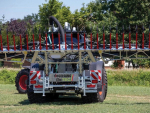
Fendt TIGO 90XR-D
- 2.2m wide cam-less pick up with seven tine bars
- 880mm diameter chopping rotor with 45 knives at 37mm spacing
- Chain and slat floor conveyor system
- 50 cubic metre capacity/ permissible maximum weight 31,000kg
- Dimensions 10.75m long x 2.95m wide by 4m high
- Power requirement 230hp+