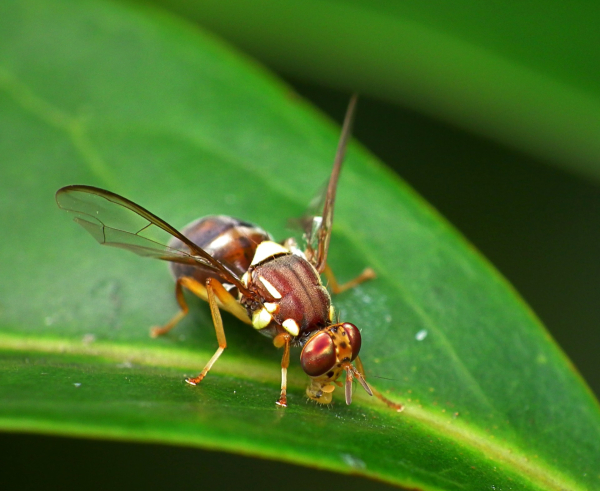
Fruit growers and exporters are worried following the discovery of a male Queensland fruit fly in Auckland this week.
Horticulture NZ hopes this is an isolated case and does not indicate an outbreak.
HortNZ chief executive Kate Scott says the discovery in the suburb of Mount Roskill will concern growers and exporters.
Scott says that while the fruit fly poses no risk to human health, its establishment in New Zealand could have significant consequences for growers, exporters and the wider horticulture sector.
“The fruit fly damages a wide range of fruit and vegetables, including some of our most important export crops, but it also means New Zealand cannot export to some of our key markets if this pest takes hold.
“We support the ramping up of trapping and inspections and the legal restrictions on the movement of fruit and vegetables out of the area where the fruit fly was found.
“Protecting the horticulture sector from biosecurity threats like the fruit fly is critical to the country’s economy and reputation as a producer of high-quality produce.”
Biosecurity New Zealand Commissioner North Mike Inglis says a single male Queensland fruit fly was found in a surveillance trap.
“The fly was identified as part of Biosecurity New Zealand’s national surveillance programme, involving almost 8,000 traps around the country,” he says.
"By setting traps for these pest insects, we are able to find them early, know exactly where the problem is, and respond quickly and effectively.”
Inglis says the capture of a single male does not mean we have an outbreak.
“However, while we do our checks for any other fruit flies, we need community help to prevent any possible spread,” he says.
A Biosecurity NZ response is underway in the suburb - it will be ramping up trapping and inspection, with daily checks in a 200-metre zone from the original find and checks every three days in a second zone out to 1500m.
As a precautionary measure, Biosecurity New Zealand will be putting legal restrictions in place on the movement of fruit and vegetables out of the area where the fruit fly was found.
Instructions about these controls, and the exact area affected, will be issued today.
“In the meantime, we ask that people who live and work in the suburb not take any whole fresh fruit and vegetables out of their property,” Inglis says.