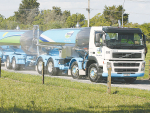
Fonterra Elections 2026: Voting Opens Tuesday 20 October
Fonterra shareholders can begin voting on Tuesday 20 October in the 2026 Board of Directors’ election, a Co-operative Council election in one Ward, and seven Annual Meeting resolutions.




 increase font size
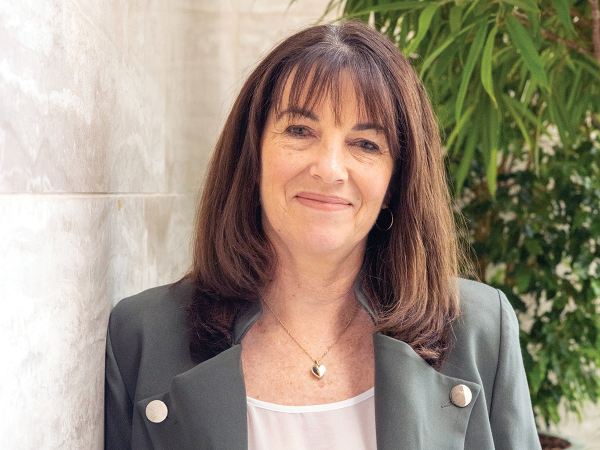 ANZ NZ’s managing director for business and agri Lorraine Mapu says the bank would be supporting Fonterra farmers’ ambitions and plans.
The Fonterra divestment capital return should provide “a tailwind to GDP growth” next year, according to a new ANZ NZ report, but it’s not “manna from heaven” for the economy.
Writing in the latest ANZ NZ Agri Insight report, economists Matt Dilly and Matthew Galt said the $3.2b return, subject to regulatory approval, will be equal to about 0.7% of New Zealand’s GDP, averaging about $400,000 for each of Fonterra’s 8162 shareholders.
“The capital return will provide a tailwind to GDP growth through 2026,” the report says, “however, the boost to GDP is likely to be considerably smaller than 0.7% of GDP as only the portion spent domestically will add directly to GDP
“As such, the return is one tailwind to growth among a wider mix of tailwinds and headwinds and doesn’t change our view that GDP growth will pick up from 0.3% annual average growth in 2025 to a more robust 2.6% annual average growth in 2026.”
About 78% of New Zealand’s dairy farmers are Fonterra shareholders, and the report called the capital return “the icing on top of an already sweet farmgate milk price” for the year.
Discussing how farmers will likely spend their funds, the authors said “it will of course vary from farmer-to-farmer based on their personal circumstances”.
“Some combination of debt reduction, on-farm investment, off-farm investment, and consumption are the main possibilities.
“With the special dividend coming on top of an already favourable backdrop for dairy farmers, some are likely to loosen the purse strings on household spending, whether that be an overdue holiday, home improvements, a new car, or just regular day-to-day spending.”
ANZ NZ’s managing director for business and agri Lorraine Mapu said the bank would be supporting farmers’ ambitions and plans, and that it’s important they take the time to consider what’s right for their business
“Your proceeds, your plan – that’s our message,” Mapu said.
“We’re here to back what’s right for each farm, whether that’s restructuring lending, investing in growth, or simply holding on to the funds.
“There’s no one-size-fits-all approach. Some may look to reduce debt, others might invest in productivity or sustainability, and some may choose to hold a cash buffer for seasonal needs.
“For a small group of customers, repaying debt will be the most sensible choice and we will be transparent about any such needs and why.”
Mapu also noted some farmers may choose to use the funds outside their farming operations, including for family succession or other investments.
“This is a rare opportunity for shareholders to take stock and plan ahead with confidence,” she said.
Fonterra shareholders can begin voting on Tuesday 20 October in the 2026 Board of Directors’ election, a Co-operative Council election in one Ward, and seven Annual Meeting resolutions.

Fonterra Co-operative Group chief financial officer Andrew Murray has resigned to take up a role outside the dairy giant.
Global dairy giant Lactalis has integrated its Australian operations with the Mainland Dairy consumer business it acquired from Fonterra earlier this year.
Four candidates have been confirmed for two director positions on Fonterra’s board.
A record farmgate milk price and strong global demand is laying the foundation for continued growth of organic dairy farming in New Zealand.


Federated Farmers has welcomed new rural policies released by ACT, saying they align closely with its own election priorities.
Rural Contractors NZ says proposed changes to land transport rules for agricultural vehicles are a welcome response by the Government to out of date regulations which have seen members hit with huge fines.
Alliance is calling for final applications for its 2027 Graduate Programme, with applications closing on Sunday 25 October.
Decades piloting planes has ensured vet and farmer David Hayes is focused on safety. So, after a serious accident while welding on farm, he is sharing his experience so others can learn from it.
Canterbury milk processor, Synlait Milk has confirmed Leon Fung as its chief executive officer.
OPINION: Making it easier to collect rainwater and use it to grow crops and livestock is a no brainer.

OPINION: It seems Canterbury processor Synlait is still in the doldrums.
OPINION: Get offside with New Zealand First leader Winston Peters at your own peril.




