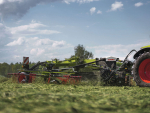
Kuhn has expanded its range of finger-type mower-conditioners with the addition of the rear-mounted FC 3515 model that offers a working width of 3.5m.
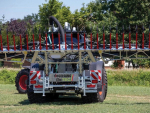
Featuring a vertically folding mowing element that folds up to 126°, the configuration offers a compact package for transport and optimum weight balance between the tractor’s rear wheels.
The FC 3515 D mower-conditioner uses the well-known Kuhn DigidDry layout with pivoting steel fingers mounted to the gearbox-driven conditioning rotor.
The FC 3515 D mower-conditioner uses the well-known Kuhn DigidDry layout with pivoting steel fingers mounted to the gearbox-driven conditioning rotor.
It can deliver variable width swaths, while a low rotor speed is particularly useful for more delicate crops.
At the heart of the machine, the FC 3515 D model is fitted with the Optidisc Elite cutter bar, well-known for its robustness and cutting quality, requiring no maintenance and fitted as standard with the Fast-Fit quick knife release system.
The Lift-Control suspension offers constant ground pressure control for improved plant cover protection, complemented with a break-back system for protection from impact with immoveable objects and nonstop return to work. The pivoting point, with a wide offset to the left also contributes to an effective protection of the working parts around the area of the first discs.
For operations undertaken in hilly areas, or with medium-sized tractors, an adaptable counterweight on the left side of the frame is available as optional equipment, to help alleviate any instability.
www.kuhn.co.nz