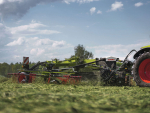
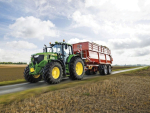
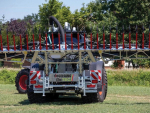
Following its acquisition of the Lely grassland business, Fendt, part of the global AGCO group, has invested €20m (NZ$34m) at its Wolfenbuttel factory in Lower Saxony.
It has also announced that the facility is now fully operational for the production of both round balers and Tigo forage wagons.
Following the takeover in 2017, the formally known Welger Werke had a history of agricultural engineering, particularly balers, dating back around 123 years.
Manufacture of loader wagons started in September with all models of the Fendt range being assembled in a newly equipped 4,200m² production hall. A further 10,000m² of logistics space has also been added to support the loader wagon assembly.
Despite the industry suggesting the market for loader wagons was at best static, with major player Claas withdrawing from the sector earlier in the year, Christoph Groblinghoff, chairman of the Fendt management board, commented, “Because the market for loader wagons is manageable worldwide, we want to, and must, build the best loader wagons for our customers”.
During the factory upgrades, the works were completely gutted and a new single line for the balers installed, which, through process optimisation, has allowed all the balers to be produced on the same production line. The same strategy has been applied to the loader wagon assembly line with eight ranges and 25 models available. The investment has also created employment for a further 60 staff.