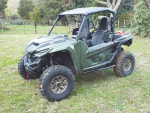
Yamaha's new machine hits all the right notes
The increasingly popular UTV/side-by-side sector offers a wide range of choices for farm or rural mobility, which has been made even broader with a new machine from Yamaha.




 increase font size
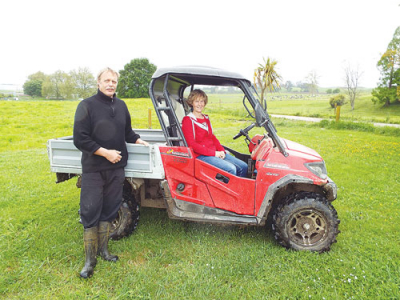 Klaas and Janny Akkersma with their Avataar UTV.
When Klaas and Janny Akkersma arrived in New Zealand from Holland in 1998 they brought with them a bucketful of hope and limited funds.
Fast forward 20 years and now the industrious Dutch couple farm 114ha south of Lichfield in South Waikato and milk 300 Montbeliarde-cross cows typically found in France. These are larger framed than typical Kiwi crosses: they weigh 700 - 800kg, keep much better condition through the season, and importantly for Klaas produce at peak level consistently for long periods, typically producing 620kgMS/year on a diet of 75% grass and 25% maize and PKE.
Having used quads for many years, the couple were early adopters of a petrol-powered UTV (side by side) and although impressed by their capabilities were disappointed at the maintenance cost and high fuel cost.
Five years later the business took delivery of a new Avatar UTV powered by a 3-cylinder intercooled turbo-diesel engine — used by Renault — that delivers 66hp, with142Nm torque at 1890 rpm. Drive is through a 5-speed manual transmission sourced from a 1.5 tonne truck, reaching a top speed of 75km/h.
Suited to the rigours of agriculture, the machine’s powder coated frame and galvanised steel load deck uses double A-arm independent suspension front and rear with adjustable air/spring shocks.
Electronic, switchable 4WD offers the choice of 2WD or 4WD, the choice of front and rear differential locks and an electronic park brake.
Klaas says the high power/high torque engine combined with the manual transmission “allows us to travel at the desired speed at much lower throttle settings, unlike a CVT-style machine that requires more revs to go faster”.
“This makes the job a lot quieter, and the diesel motor is also very economical. At the other end of the spectrum, when we are using slow speeds, perhaps when feeding, the machine is very controllable and carries out the task with no fuss.”
Typical duties are transport around the farm, but the Avatar comes into its own during the calving season, when a purpose-built crate offers plenty of room for bringing newborns back to the yard. It easily tackles jobs like moving feed trailers and effluent applicators.
A load capacity of 500kg and towing capacity of 990kg makes the vehicle very capable; it stays level when heavily loaded and is adaptable, with fold-down panels on the rear bed to accommodate irregular shaped loads.
Although a sizeable unit, the Avatar is said to have the tightest turning in the industry, with electronic power steering, and its operator comforts include a three-person bench seat and front and rear windshields.
Klaas also likes the half-doors at the cabin entry points, noting that these were “initially a bit of a pain, but after a few days we realised they kept the cabin area clean and occupants’ legs safe by preventing them from putting their feet down before the vehicle stops. And after a while opening and closing becomes just an intuitive habit”.
Summing up the change to the Avatar, after nine months of ownership and with about 150 hours on the clock, the purpose-built machine has none of the weaknesses of ATV-derived competitors’ machines and is a valuable part of the farm’s gear.
The increasingly popular UTV/side-by-side sector offers a wide range of choices for farm or rural mobility, which has been made even broader with a new machine from Yamaha.
Call them what you will, but UTVs, or side-by-sides, have certainly found a place in much of New Zealand’s rural sector.
Kubota New Zealand’s new RTV520 claims to set a higher standard in performance and comfort for drivers.
Honda's Pioneer UTV range has a huge following on the farms and back blocks of New Zealand.
A stoush is brewing with the Federal Chamber of Automotive Industries (FCAI) heavily criticising Farmsafe Australia’s recent Safer Farm Report.


A major move is about to get underway to improve the quality and viability of dairy beef and cattle in NZ.
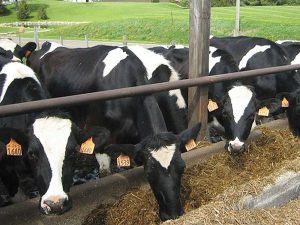
Veterinarians say changes to the code of welfare for dairy cattle provides a positive foundation for improved cattle welfare across the country.
Today, 15 October, is the International Day of Rural Women, which recognises rural women’s contribution to farming, communities and the environment.
Global dairy giant Lactalis has integrated its Australian operations with the Mainland Dairy consumer business it acquired from Fonterra earlier this year.
After almost two decades of sharemilking, saving and building equity, Aaron and Marcia Flay this year realised their long-held dream of settling on their first dairy farm.
Good medium to long term prospects for NZ beef, especially in the US, has heighted the focus on various initiatives to capitalise on this situation.



OPINION: It seems Canterbury processor Synlait is still in the doldrums.
OPINION: Get offside with New Zealand First leader Winston Peters at your own peril.




