Rabobank Launches HortPathways for Emerging Hort Leaders
Twenty-eight emerging leaders from across the horticulture sector spent two days last month learning valuable skills and connecting with industry experts.




 increase font size
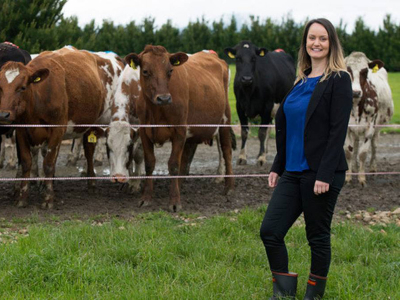 Emma Higgins, Rabobank dairy analyst.
Whole milk powder, butter and cheese prices were the big drivers of the eighth bounce in a row for the Global Dairy Trade (GDT) last week, says Emma Higgins, Rabobank dairy analyst.
The overall price index was up 1.9%.
Positive results for farmgate milk price purposes included butter pushing past the US$5000/tonne mark in a 9.3% lift to US$5089/t, a price not seen since mid 2018, says Higgins.
Whole milk powder (WMP) nudged up a healthy 4% to US$3317/t.
“Underpinning price increases lies the risk to milk collections over the tail of the season,” she told Dairy News.
“Fonterra has pulled back its forecast milk collections for the 2018-19 season for the second time in recent weeks as dry conditions take hold, particularly in pockets of the north.
“Buyers will be looking to procure volumes before production tails off and the seasonal hiatus takes place until next season.”
Skim milk powder (SMP) was down 2.4% to US$2405/t.
“The market is now digesting EU intervention stocks, sold on paper and now moving physically through the supply chain.”
While favourable weather in Europe has been reported in the first few weeks of spring, Higgins says buyer focus will remain on New Zealand over the next couple of GDT events, before attention turns sharply to the northern hemisphere spring peak.
BNZ senior economist Doug Steel says the GDT has made a cumulative 26.2% gain since November last year.
“To us, the overall price increase reflects generally tight global milk supply and solid demand (the number of unsatisfied bidders remains elevated),” Steel says.
“This result will again have forecasters discussing upside [prospects for] milk price forecasts. On our calculations, if current conditions persist a milk price in the top half of Fonterra’s $6.30/kgMS to $6.60/kgMS range is likely.
“Current global prices also set up a better milk price for next season, although we would be a little wary of extrapolating current product price strength right across next season as a whole.”
Twenty-eight emerging leaders from across the horticulture sector spent two days last month learning valuable skills and connecting with industry experts.

A 'tsunami' of milk from key exporting countries is winding down and this may be good news for New Zealand dairy farmers.
Milk powder prices are keeping farmgate prices up, helping processors offset the dip in milk fat prices.
Chinese beef trade quotas and a looming suspension of Brazilian beef imports into the European Union are expected to reshape global beef trade flows over the remainder of 2026, with implications for New Zealand exporters, according to Rabobank's Q3 Global Beef Quarterly report.
New Zealand consumers are paying more for beef mince than ever before, with the average retail price now sitting above $24 per kilogram, according to Rabobank.


Federated Farmers has welcomed new rural policies released by ACT, saying they align closely with its own election priorities.

Rural Contractors NZ says proposed changes to land transport rules for agricultural vehicles are a welcome response by the Government to out of date regulations which have seen members hit with huge fines.
Alliance is calling for final applications for its 2027 Graduate Programme, with applications closing on Sunday 25 October.
Decades piloting planes has ensured vet and farmer David Hayes is focused on safety. So, after a serious accident while welding on farm, he is sharing his experience so others can learn from it.
Canterbury milk processor, Synlait Milk has confirmed Leon Fung as its chief executive officer.
OPINION: Making it easier to collect rainwater and use it to grow crops and livestock is a no brainer.


OPINION: It seems Canterbury processor Synlait is still in the doldrums.
OPINION: Get offside with New Zealand First leader Winston Peters at your own peril.




