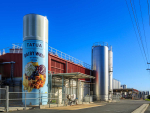
Ah Tatua, You've Done It Again!
Waikato milk processor Tatua has again declared a record milk payout to farmer shareholders, leaving other processors in the dust.




 increase font size
 Northland farmers at the DairyNZ Farmers Forum.
Milk price volatility can have a silver lining, says Dave McCall, DairyNZ’s general manager R&D.
Volatility favours the resilient, he told the DairyNZ Farmers Forum in Kerikeri, Northland. You gain advantage if you come out of a downturn more quickly and more efficiently than competitors,
But his message carried several warnings. As an industry we have become “a bit complacent” about expecting up cycles to follow down cycles.
“While I don’t want to preach doom and gloom – because the mid-term fundamentals in our industry are very strong and increasing – there are supply issues which haven’t been there in other cycles making this a different cycle,” he said.
We jumped out of the last down cycle, after the global financial crisis (GFC), more quickly than the rest of the world, he said. The opportunity in volatility comes when we can climb out of downturns faster and better than our competitors, to “progressively take the high ground as an industry and cement out competitiveness”.
We did that in the last down cycle but this down cycle is potentially different.
“We had the GFC and that took a lot of liquidity out of countries like the US and Europe. Farmers there were going broke. Quite a number of farmers went broke in the US. That compounded to make investors very nervous about investing in dairying in the US. Farmers couldn’t even get liquidity so more farmers went broke so they went into a downward cycle.
“It took a long time to claw their way out of that cycle. On top of that they had some droughts. They had ethanol taking up corn because corn prices were much higher in the US.”
But he says the US and Europe are winding out of their problems. Europe is having quotas taken off and countries like Ireland, Germany and Netherlands are ready to put more supply into the markets we are chasing. In the US, farm pools have margin protection insurance so they are not even getting the price signals yet.
“This time we are in a situation in which we don’t have our major competitors with a credit crisis on their hands,” he says. “I think we will have to be prepared for a bit more supply coming at us through this downturn before things correct.”
For the future we will be farming with more and more volatility in our milk prices, he said. Volatility in milk price has been more pronounced in the last seven-eight years. We need to make our farm practices resilient to those milk prices so volatility can be our friend.
“If this next down cycle knocks out a few more European and US farmers and ours remain resilient then their investor confidence will take a whack while ours remains high.
“Therefore through the next up cycle our good times remain for longer. The key thing is we’ve got to maximise our good times.
“Volatility can be a good thing for our industry, looking for the silver lining out of the challenge. Volatility favours the resilient; what we’ve got to do is make ourselves the most resilient farming industry on the planet and I think we are a long way to doing that.”
Key to that is keeping our costs lower than our major competing suppliers in the US and EU and making sure we make a profit.
“As an industry if we don’t continue to make a profit each and every year no matter how small then we will have this investment crisis, this liquidity crisis visited on us. That would bring us down.
“It is a salutary reminder to us about the efficiency of our production and how we’ve got to hold on to that to survive and thrive when the next upturn comes.”
Waikato milk processor Tatua has again declared a record milk payout to farmer shareholders, leaving other processors in the dust.
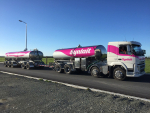
Synlait has swung to second-half profit as operations stabilise, but the dairy processor still posted a $75.4m annual loss.
A 'tsunami' of milk from key exporting countries is winding down and this may be good news for New Zealand dairy farmers.
Most dairy regions around the country have had a pretty good season so far says Tracy Brown.
Fonterra says its interim results show continued momentum in its performance, with revenue of $13.9 billion in the first half of the 2026 financial year.


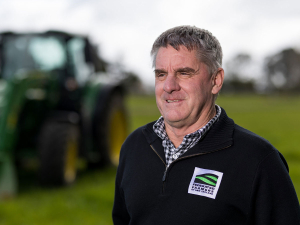
National’s pledge to introduce 19 new national standards shows the party is serious about getting Wellington out of farming, Federated Farmers says.
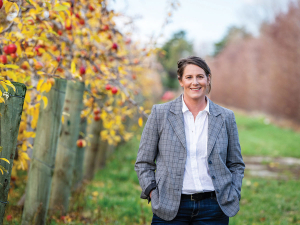
The National Party’s policies to make it easier to grow fresh vegetables, secure reliable water and energy and simplify farm planning are practical changes that will give growers the confidence to invest, according to Horticulture New Zealand (HortNZ).
Fonterra Co-operative Group chief financial officer Andrew Murray has resigned to take up a role outside the dairy giant.
A major move is about to get underway to improve the quality and viability of dairy beef and cattle in NZ.
Veterinarians say changes to the code of welfare for dairy cattle provides a positive foundation for improved cattle welfare across the country.
Today, 15 October, is the International Day of Rural Women, which recognises rural women’s contribution to farming, communities and the environment.


OPINION: It seems Canterbury processor Synlait is still in the doldrums.
OPINION: Get offside with New Zealand First leader Winston Peters at your own peril.




