
Rocky Road milk is here
Speciality milk producer Lewis Road Creamery is celebrating its 10th anniversary of iconic chocolate milk with a new flavour.




 increase font size
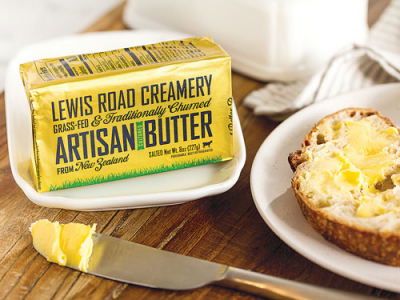 Lewis Road Creamery butter is now available in Texas and California.
The US states Texas and California are being targeted by Lewis Road Creamery for its specialty butter.
Its founder and chief executive Peter Cullinane says the decision to sell butter in the US started about six months ago when they worked with Southern Pastures, a company with many dairy farms in the South Island and the biggest single supplier to Westland Milk Products (WMP).
Southern Pastures has developed a special quality standard called Ten Star Premium Standard (10SPS) and have a joint venture with WMP.
Cullinane says working with Southern Pastures and WMP immediately gave Lewis Road a source of quality milk and production ideally suited to producing high quality branded butter for China and the US.
“The big opportunity in the States is for grass fed butter.
“We take the idea of grass-fed butter for granted but in the US they don’t; its valued by discerning consumers who want products from animals that are grass fed and they are prepared to pay a premium for this,” he says.
The two markets in the US that Lewis Road is targeting are hubs for Air New Zealand – Houston and Los Angeles. Cullinane says they are putting their product into high-end Texas supermarkets in Houston, Dallas and Austin.
In Los Angeles they have done a deal with another high-end supermarket chain called Erewon.
When his general manager was in the US, he identified Erewon as the perfect supermarket for them to sell their butter to.
He found out that the owners of the supermarket chain lived next door to the NZ counsul-general in Los Angeles, Maurice Williamson the former politician.
“A friend of mine asked Maurice Williamson if there was any chance of us meeting the owners of Erewon and the next day I was sitting down with them in Maurice’s office and a deal was done. In my view Maurice Williamson is doing a great job,” he says.
Cullinane says the first shipment of butter is small in volume by commodity standards but he says they just want to start developing the market in the same way as they did in NZ – starting small and gradually building sales.
Cullinane is impressed with the Irish, with their grass fed Kerrygold brand, having developed a stronghold in the market.
“They are now number-two in the market in the US and as far as I am concerned anything the Irish can do we can do better,” he says.
The Irish have focused on developing a strong brand whereas NZ has remained focused on commodities. Cullinane says in the US market NZ hasn’t really got its heads around added value and especially the value of products produced from grass fed animals.
“This attribute is completely under-appreciated in NZ,” he says.
Cullinane says NZ must get away from feeding PKE to cows and produce high quality milk by cows fed only grass.
Old style churning
Peter Cullinane has strong West Coast connections and the arrangement with WMP fits well with that, as does the way WMP makes his butter.
He says they use the Fritz system as opposed to the Amix system used by most companies.
“When I was a young lad I had a two-and-sixpenny postage stamp with a large kauri butter churn on it. The Fritz system is the modern day version of what it was like 100 years ago so there is an added charm to our butter being produced in an artisan-like way,” he says.
Cullinane says the Fritz system produces a very soft butter with a velvety texture.
Speciality milk producer Lewis Road Creamery is celebrating its 10th anniversary of iconic chocolate milk with a new flavour.

Premium dairy brand Lewis Road Creamery is celebrating a decade since the country went crazy for its iconic fresh chocolate milk.
One of New Zealand's largest dairy farmers won the 2024 'Food, Beverage and Fibre Producer' award at the NZ Primary Industries Awards.
OPINION: Boutique milk company Lewis Road Creamery’s latest offering to mark Matariki is unfairly facing heat from certain quarters of Māoridom, who are opposed to any commercialisation of all things Māori.
Corporate dairy farmer Southern Pastures has been judged to be a responsible investment leader for the seventh year running.


Alliance is calling for final applications for its 2027 Graduate Programme, with applications closing on Sunday 25 October.
Decades piloting planes has ensured vet and farmer David Hayes is focused on safety. So, after a serious accident while welding on farm, he is sharing his experience so others can learn from it.
Canterbury milk processor, Synlait Milk has confirmed Leon Fung as its chief executive officer.
OPINION: Making it easier to collect rainwater and use it to grow crops and livestock is a no brainer.
As part of its Election 2026 coverage, Rural News asked political parties how they would help pull the arable sector out of the doldrums. Here's what they said:
Farmers are being encouraged to rethink how they manage waste on farm with the launch of ruralwastesorted.co.nz, a new website bringing together practical tips, real farmer experiences and resources.




OPINION: It seems Canterbury processor Synlait is still in the doldrums.
OPINION: Get offside with New Zealand First leader Winston Peters at your own peril.




