Election 2026: How Parties Would Lift the Arable Sector
As part of its Election 2026 coverage, Rural News asked political parties how they would help pull the arable sector out of the doldrums. Here's what they said:




 increase font size
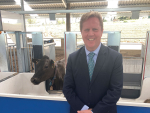
 Trade and Agriculture Minister Todd McClay.
Trade Minister Todd McClay has used a meeting of the CPTPP hosted by Canada to take that country to task for defiantly refusing to open up its dairy market to NZ.
The Comprehensive Progressive Agreement for Trans-Pacific Partnership (CPTPP) is a gold-standard free trade agreement of which both NZ and Canada are members. Canada is obliged to comply with the rule of the agreement, which means allowing NZ access for its dairy exports.
But in what is seen as a hypocritical and illegal stance, and despite winning arbitration actions, NZ has been unable to budge the Canadian government to comply with CPTPP rules.
McClay has in the past described Canada's action as cynical, while the head of DCANZ, Kimberly Crewther says Canada is a recidivist breaker of international trade rules and has cost the NZ dairy industry in the order of $120 million. The Canadian dairy industry is very small - there are just 1.3 million cows, but the dairy farmer lobby there is strong.
Before he left for Vancouver for the meeting, McClay told Dairy News that he'll be meeting his counterpart Mary Ng and will be raising this dispute with her directly. He says officials have met and have scheduled ongoing formal dispute process meetings, and continue to encourage Canada to meet their obligation to New Zealand.
"I have been clear, we have a good relationship with Canada, and we can work through issues, but in this case, they are not upholding their obligations to us and as a result, NZ dairy farmers are missing out on market access that was negotiated and granted under the CPTPP. This is a matter of principle and we take our obligations seriously and expect others to do the same," he says.
McClay says the ball is now squarely in Canada's court and NZ reserves the right to take any action deemed appropriate, including imposing tariffs sanctions on Canadian exports to New Zealand if this cannot be resolved at the diplomatic level.
As host of a free trade summit, this is not a good look for the Canadians who are clearly out of step with the other eleven member states.
As part of its Election 2026 coverage, Rural News asked political parties how they would help pull the arable sector out of the doldrums. Here's what they said:
Food and fibre exports have returned a billion- dollar bonus to the country.
The Government is backing work on a community-led water storage scheme that could irrigate up to 11,000 more hectares of the Poverty Bay flats, Agriculture Minister Todd McClay says.
A Labour-led Government won’t be bringing back the controversial freshwater rules of 2020.
It was billed as a chance for all the political parties to woo the rural vote, but question marks hang over just how effective this was.



Federated Farmers has welcomed new rural policies released by ACT, saying they align closely with its own election priorities.

Rural Contractors NZ says proposed changes to land transport rules for agricultural vehicles are a welcome response by the Government to out of date regulations which have seen members hit with huge fines.
Alliance is calling for final applications for its 2027 Graduate Programme, with applications closing on Sunday 25 October.
Decades piloting planes has ensured vet and farmer David Hayes is focused on safety. So, after a serious accident while welding on farm, he is sharing his experience so others can learn from it.
Canterbury milk processor, Synlait Milk has confirmed Leon Fung as its chief executive officer.
OPINION: Making it easier to collect rainwater and use it to grow crops and livestock is a no brainer.




OPINION: It seems Canterbury processor Synlait is still in the doldrums.
OPINION: Get offside with New Zealand First leader Winston Peters at your own peril.




