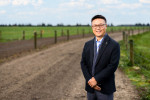
Leon Fung confirmed as Synlait CEO
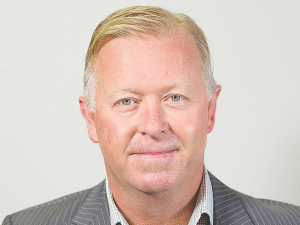
Canterbury milk processor, Synlait Milk has confirmed Leon Fung as its chief executive officer.




 increase font size
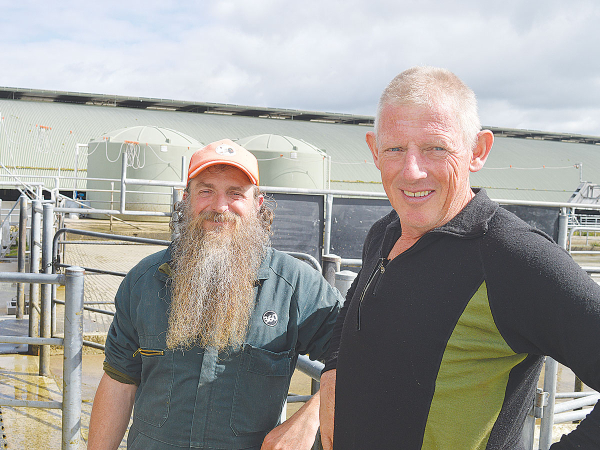 Canterbury farm owner Willy Leferink and sharemilker Rick Butler.
A former farming leader believes that farmers should be wary that milk processors don't take over management of dairy farms under the guise of scope 3 emissions target.
Willy Leferink, who has a sharemilker on his 200ha Canterbury farm and supplies Synlait, says if applied correctly, scope 3 targets might deliver some easy wins, like tidying up particularly those farmers who drag the chain on sustainability.
However, he warns that if reducing emissions intensity on farm becomes a box ticking exercise, then it won't mean anything.
"For instance, in Northland the proposed regulations are so strict, that it drives people out of business," he told Dairy News.
"Half the farmers in Northland don't meet the regulations."
Leferink agrees that, in the end, it's the democratic right of regional councils to set regulations. But on top of this, Fonterra has its own expectation of what is right and wrong and Leferink wonders if the co-op can apply the same rules in every region.
Leferink, who stepped down as Federated Farmers dairy chair in 2014, also holds some Fonterra shares from previous farms he had ownership in.
"The implementation is the trick. I said in 2010 that most environmental regulations can be net positive on the bottom line in the long run, but as long as they don't cash strap management.
"Fonterra should not be looking to run management on dairy farms - that should be left to farmers.
"If Fonterra starts telling flash restaurant owners that they must run their businesses like a McDonalds outfit, those restaurant owners and chefs will get very upset. It's the same for farmers - we don't like to be told."
Fonterra recently announced that they plan to reduce their on-farm emissions intensity 30% by 2030. It's a co-op wide target.
On Leferink's farm, for the past five years they've been part of Synlait's 'Lead with Pride' programme that recognises and financially rewards suppliers who achieve dairy farming best practice. The four pillars are environent, animal health and welfare, milk quality, and social responsibility.
Leferink notes that some scope 3 emissions targets announced recently by Fonterra are already part of Lead with Pride. But it hasn't been all plain sailing. There have been meetings between farmers and Synlait.
"We've had some serious discussions with Synlait after they interfered in the social aspects on things," he says.
"Three quarters of the programme is very good and keeps you on your toes. But when it comes to employing staff, the expectations were so high that if we compete with a Fonterra farm, the employee would be long gone before we even employ him."
Lead with Pride has meant a lot of work, mainly for sharemilkers, he adds.
The sharemilker on Leferink's farm, Rick Butler, says at a recent meeting, they discussed the cost benefit of Lead with Pride with Synlait.
Butler says the processor has come to the realisation that if they ask us to do something, it has to be paid for.
"Anything you do above your normal regulatory and business things, it needs to be paid for because for some things, cost-benefit wise, our thinking is: it doesn't make us any money so why we should even do that?
"Why do you want me to spend a dollar to get 50c back?"
Leferink says Lead with Pride isn't only reflected in the payout they get for their milk. Instead, it has massively improved processes on farm.
"It has made us look much harder on what is good for our farm, our people, and our animals; makes us far more professional with our people.
"We even have performance reviews with the cows once a month if they're not performing - they go to a course (saleyards) and don't come back."
Canterbury milk processor, Synlait Milk has confirmed Leon Fung as its chief executive officer.
Waikato milk processor Tatua has again declared a record milk payout to farmer shareholders, leaving other processors in the dust.
Synlait has swung to second-half profit as operations stabilise, but the dairy processor still posted a $75.4m annual loss.
OPINION: It seems Canterbury processor Synlait is still in the doldrums.
Speculation of a possible joint move by Fonterra and a2 Milk to buy Synlait raises a much bigger strategic question, says agribusiness expert Dr Nic Lees.


Federated Farmers has welcomed new rural policies released by ACT, saying they align closely with its own election priorities.
Rural Contractors NZ says proposed changes to land transport rules for agricultural vehicles are a welcome response by the Government to out of date regulations which have seen members hit with huge fines.
Alliance is calling for final applications for its 2027 Graduate Programme, with applications closing on Sunday 25 October.
Decades piloting planes has ensured vet and farmer David Hayes is focused on safety. So, after a serious accident while welding on farm, he is sharing his experience so others can learn from it.
Canterbury milk processor, Synlait Milk has confirmed Leon Fung as its chief executive officer.
OPINION: Making it easier to collect rainwater and use it to grow crops and livestock is a no brainer.

OPINION: It seems Canterbury processor Synlait is still in the doldrums.
OPINION: Get offside with New Zealand First leader Winston Peters at your own peril.




