Milk Powder Prices Prop Up Farmgate Milk Price
Milk powder prices are keeping farmgate prices up, helping processors offset the dip in milk fat prices.




 increase font size
 The Global Dairy Trade overall price index remaining unchanged overnight.
ASB is sticking with its 2016/17 milk price forecasts of $6/kgMS, with the Global Dairy Trade overall price index remaining unchanged overnight.
"However, we note that to maintain our forecast, prices will need to rise materially over coming months, particularly as peak auction volumes are on offer for the season over the coming three months or so," says ASB rural economist Nathan Penny.
Last night's overall result was in line with expectations, says Penny. Butter prices dipped 5%, while SMP and cheddar also fell circa 1%. In contrast, Anhydrous Milk Fat and casein prices were up a touch.
"From here, and with the market focus shifting away from Brexit, dairy fundamentals should begin to drive price movements once again.
"On that front, we continue to look to data that support or otherwise our view that global supply is tightening. For example, Fonterra's NZ collections were down 10% in June versus June 2015, although it is still early days in the NZ production season."
Key Global Dairy Trade Event 168 results:
AMF index up 0.2%, average price US$3,628/MT
Butter index down 5.0%, average price US$2,687/MT
BMP index down 0.5%, average price US$1,565/MT
Ched index down 1.1%, average price US$2,886/MT
LAC index down 4.0%, average price US$721/MT
RenCas index up 0.4%, average price US$5,286/MT
SMP index down 1.1%, average price US$1,927/MT
WMP index up 1.9%, average price US$2,079/MT
Milk powder prices are keeping farmgate prices up, helping processors offset the dip in milk fat prices.

OPINION: With 10,500 dairy farms, New Zealand continues to punch above its weight around the world.
A milk glut around the world shows no sign of easing, putting downward pressure on farmgate milk prices for the next few months.
Fonterra has reduced its forecast 2026/27 Farmgate Milk Price.
New Zealand dairy farmers are set to be the first in the world to receive access to a new digital physical milk pricing tool that enables them to fix the price for their physical milk.


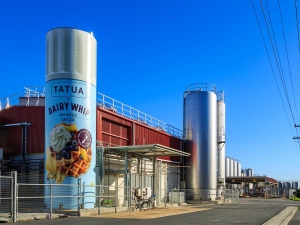
Waikato milk processor Tatua has again declared a record milk payout to farmer shareholders, leaving other processors in the dust.

A Labour-led Government won’t be bringing back the controversial freshwater rules of 2020.
National’s much-touted free trade deal with India featured in the Rural Issues Debate at Mystery Creek, Hamilton on Wednesday night.
New Zealand's 2026-27 freshwater fishing season has opened, with anglers encouraged to head to rivers and lakes over the coming days as conditions look favourable across much of the country.
Central Otago District Council (CODC) has voted against a plan to spread treated sewage sludge from Cromwell and Alexandra on farmland near Lauder, a decision Federated Farmers says reflects strong opposition from rural residents.
Pāmu has released its FY26 Integrated Annual Report, reporting a Net Operating Profit of $113 million, more than double the $49 million recorded in FY25.



OPINION: It seems Canterbury processor Synlait is still in the doldrums.
OPINION: Get offside with New Zealand First leader Winston Peters at your own peril.