Federated Farmers Welcomes ACT’s New Farming Policies
Federated Farmers has welcomed new rural policies released by ACT, saying they align closely with its own election priorities.




 increase font size
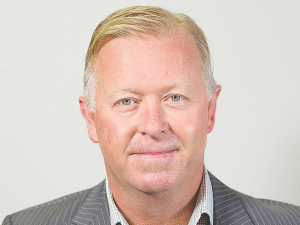
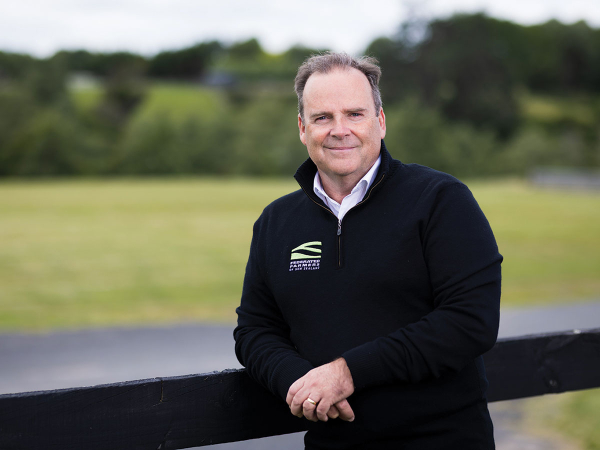 Mike Siermans, Federated Farmers chief executive.
Federated Farmers has been urged to consider establishing a policy on artificial intelligence (AI).
During a discussion at Auckland Federated Farmers Conference recently, Environmental consultant, Richard Gardner, who was formerly a policy analyst with the lobby group, said he was recently watching via the internet members of the Environment Select Committee of Parliament hearing submissions on the Natural Environment and Planning Act.
“I just had a feeling that AI had been used by some Members of Parliament to ask some of their questions,” he said.
“That made me worried as AI has its limitations. Does the federation have a strategy to deal with its use?”
Chief executive Mike Siermans, who attended the meeting, said the lobby group didn’t at present.
“We probably need one.”
Mark Hooper, the federation’s board member with responsibility for the Resource Management Act (RMA), part of which will be replaced by the Natural Environment and Planning Act, who was also at the meeting said AI was useful to some extent in summarising submissions but not in formulating policy.
While the federation was very supportive of the Government’s intent in reforming the RMA, it felt the draft policy produced didn’t align with that.
“We hope we can get some issues resolved, but it’s a big ask,” he said.
“We’re holding our breath and waiting to see.”
The major concern centred around the setting of environmental limits on farms as the natural inclination was to try to make improvements to current levels
“But that can become a hard limit, and farmers could be worse off than they are at present,” he said.
After the meeting, where Gardner was made a life member of Auckland Federated Farmers, he said around 10,000 submissions had been made on The Natural Environment and Planning Act.
“But when I watched on the internet I wondered what was happening at the select committee,” he said.
“I had the distinct feeling that in some cases the submissions had been summarized and AI had been used when it came to what questions should be asked.”
“If that’s the case what else could be done with AI? Is there any point in having politicians and making submissions?
“It does worry me. Things should be done in a different way. The federation needs to know what’s happening and have a policy to address that.”
Hooper says the use of AI in advocacy is already here.
He says this technology is a useful tool that’s being used successfully by a lot of organisations to increase productivity and efficiency in the workplace.
“There are some very useful applications when it comes to analysing complex data, brainstorming, research, or automating simple and mundane tasks,” he told Dairy News.
“As a sector, we can’t shy away from these kinds of technological advances – it’s no different to when the computer or the internet first arrived. This is just the next wave.”
Hooper believes in time AI will be like a computer or internet is today – used by everyone in some way.
However, he wants AI to be viewed as a ‘tool’, not a replacement for human input or thought.
“The technology is very impressive, but it also has its limitations.
“We do still need that human input, critical analysis and thought, but I think the two can work together well in a complementary way.
“It’s by no means a replacement for our expert policy advisor, lawyers and communicators – but it can help them do their jobs faster or more efficiently.”
Federated Farmers has welcomed new rural policies released by ACT, saying they align closely with its own election priorities.
Federated Farmers is backing Feilding High School’s call to keep Agriculture and Horticultural Science as a standalone subject in Year 11.
Mark Hooper has been appointed the new chair of NZPork, the industry organisation representing New Zealand pig farmers.
National’s pledge to introduce 19 new national standards shows the party is serious about getting Wellington out of farming, Federated Farmers says.
Mobile phone coverage and reliability are deteriorating in rural areas, and farming families are bearing the cost, according to a Federated Farmers survey.


Federated Farmers has welcomed new rural policies released by ACT, saying they align closely with its own election priorities.
Rural Contractors NZ says proposed changes to land transport rules for agricultural vehicles are a welcome response by the Government to out of date regulations which have seen members hit with huge fines.
Alliance is calling for final applications for its 2027 Graduate Programme, with applications closing on Sunday 25 October.
Decades piloting planes has ensured vet and farmer David Hayes is focused on safety. So, after a serious accident while welding on farm, he is sharing his experience so others can learn from it.
Canterbury milk processor, Synlait Milk has confirmed Leon Fung as its chief executive officer.
OPINION: Making it easier to collect rainwater and use it to grow crops and livestock is a no brainer.

OPINION: It seems Canterbury processor Synlait is still in the doldrums.
OPINION: Get offside with New Zealand First leader Winston Peters at your own peril.




