Dairy Sector Drives Strong Rural Property Market Activity in NZ
The latest data from the Real Estate Institute of New Zealand (REINZ) reveals a mixed rural property market due to consistent inflation concerns.




 increase font size
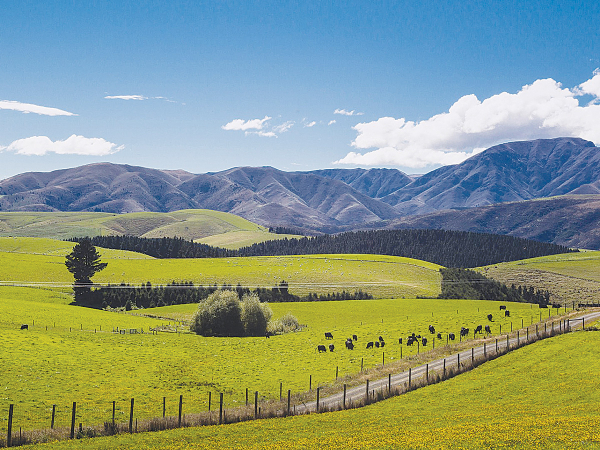 Buyers are still prepared to pay good money for the right property.
Recently released data from the Real Estate Institute of New Zealand (REINZ) shows that while the number of farm sales is low, the market remains strong.
The data shows 1131 farms were sold in the year to June 2023, with 571 less than were sold in the year June 2022.
There were 37.5% fewer dairy farms sold, 13.5% fewer dairy support farms sold, 37.4% fewer finishing farms sold, and 22.3% fewer grazing farms sold for that period.
For the three months ended June 2023, the median sales price per hectare for dairy farms was $38,160 compared to $37,010 for the three months ended June 2022.
The median price per hectare for dairy farms has increased 3.1% over the past 12 months.
On a price per kilo of milk solids basis, the median sales price was $36.67 per kg of milk solids for the three months ended June 2023, compared to $36.95 per kg of milk solids for the three months ended May 2023 (-0.8%), and $35.94 per kg of milk solids for the three months ended June 2022 (+2%).
Shane O’Brien, rural spokesman at REINZ, says the sales figures continue the steady trend that has evolved over much of 2023.
He says there has been a noticeable decrease in the volume of sales, but the median sales price has remained relatively consistent, with only a 3.7% drop on the previous 12-month period.
“The drop in the number of sales of dairy support land is a reflection on the time of year and possibly, more importantly, the decrease in farm margins from lower milk payout, higher farm expenses and of course interest rate rises,” says O’Brien.
“Dairy farmers are focused on calving coming up and as such they are not making land purchases.”
O’Brien says the looming general election is also at the forefront of people’s minds with general uncertainty over government policies directed at farming still being crystalised.
“In over 30 years in the rural real estate profession, I have never seen the election have such a pronounced impact on people’s mindsets and decision-making,” he says.
“It is important to note however amongst this negative sentiment that the market is still fundamentally strong as evidenced by the median sale prices showing little variation over the preceding 12 months,” he says.
“This tells us buyers are still prepared to pay good money for the right property that meets all their requirements.”
The latest data from the Real Estate Institute of New Zealand (REINZ) reveals a mixed rural property market due to consistent inflation concerns.
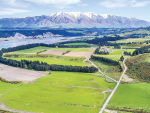
Farm sales are on the rise. According to recent data from the Real Estate Institute of New Zealand (REINZ), there was an 18.9% increase in farm sales for the three months ending August 2024 compared to the same period in 2023.
It could be that buyers are hunting out the right farm to purchase as farm sales drop for the three months ended December 2023. That’s according to the Real Estate Institute of New Zealand (REINZ).
Recently released data from the Real Estate Institute of New Zealand (REINZ) shows there were 77 fewer farm sales for the three months ended November 2023 than for the three months ended November 2022.
Recent data from the Real Estate Institute of New Zealand (REINZ) shows October was another month in which there were fewer farm sales than at the same time in 2022.

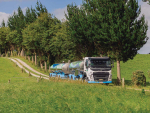
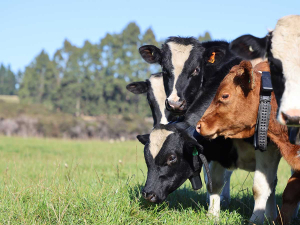
High country stations, mixed sheep and beef farms, Māori-owned farms, corporates and family operations are among the nine commercial farms taking part in the Livestock Innovation Farming Transformation programme, known as LIFT.
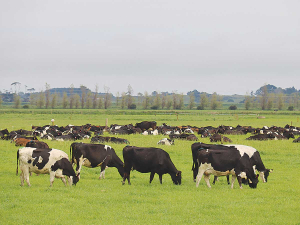
OPINION: New health and safety guidance unveiled by the Government recently provides farmers greater certainty about what is expected of them when managing risks on farm.
The National Animal Welfare Advisory Committee (NAWAC) is seeking public feedback on proposed changes to the Code of Welfare for Rodeos.
A New Zealand initiative supporting farmers to restore the health of grazing landscapes has received international backing through the Regenerative Fund for Nature, a global collaborative fund supporting regenerative agriculture and the communities that produce natural fibres for the fashion industry.
Combine premium New Zealand products, blend in a family ritual and what do you get? A world-class functional drink.
Entries are now open across eleven regions for the 2027 New Zealand Dairy Industry Awards (NZDIA).

OPINION: It seems Canterbury processor Synlait is still in the doldrums.
OPINION: Get offside with New Zealand First leader Winston Peters at your own peril.