Resilient Global Dairy Industry Overcoming Volatility
Fonterra chief executive, Richard Allen says being resilient has helped the dairy industry overcome extreme volatility in recent years.




 increase font size
 New Zealand sells products like butter to all its customers – whether they’re based in New Zealand or offshore – largely at the same price.
Kiwis love their butter, and that's great because New Zealand produces some of the best butter in the world. But when the price of butter goes up, it's tough for some, particularly when many other grocery staples have also gone up and the heat goes on co-operative Fonterra, the country's main butter maker. Here the co-op explains why butter prices are so high right now.
The main driver of the price consumers ultimately pay for butter is global prices.
Now, these prices are the highest they've been in more than five years. Strong global demand is one of the factors influencing the wholesale price of butter.
Retailers ultimately set the shelf price, but companies that sell to them buy butter at a wholesale price driven by the globally traded price from Fonterra and other suppliers.
So, who sets the global price? The global price of butter reflects demand from around the world, from China to the Middle East, and also the supply from butter exporters, not just in NZ but globally. Like other globally traded products – like coffee – global dairy prices go up and down.
Why doesn't domestic demand set the price?
New Zealand exports 95% of all its dairy products and sells products like butter to all its customers – whether they’re based in New Zealand or offshore – largely at the same price. This means the international market for dairy sets our price in New Zealand.
In some countries larger than New Zealand, where their dairy products are largely consumed domestically rather than exported, the price of their products is determined by domestic demand rather than global demand.
Why can't we sell it to New Zealanders for less?
As a farmer owned cooperative, Fonterra’s role is to collect, process and sell farmers’ milk to customers here in New Zealand as well as globally, working to get the best price they can for their farmers. Selling it for less would mean a business choosing to sell at a loss or giving a subsidy. That’s not a sustainable model for any business long term, particularly when they compete in global markets.
Is butter cheaper in supermarkets overseas?
It’s not always. And it’s really important that when prices are compared, currencies are converted so we’re looking at like for like. It’s also important to consider if the butter is in the same size format for example, in some other countries, 250g blocks are more common than the 500g seen in New Zealand.
The difference in price can be driven by a number of things, including whether the price is set by the international market or domestic market.
Tax is also applied differently in different markets. For example, in Australia they don’t have GST on butter. If you take GST off the New Zealand price and convert it to New Zealand dollars, a similar block of butter is often cheaper in New Zealand than in Australia.
How is the cost of NZ butter made up?
Fonterra is focused on keeping the costs they can control as efficient as possible.
The cost of butter varies between different brands and formats. However, if we take a 500g block of butter that’s being sold for $8.60 around 80% of this cost comes from the global butter price, and the cost to cut, wrap, store and distribute the product to the retailer.
Then there's the margins added by producers, distributors and retailers, plus all the costs to get the product from the distribution centre and onto the retailer’s shelf, and finally GST is added onto this to come to the final selling price.
Fonterra chief executive, Richard Allen says being resilient has helped the dairy industry overcome extreme volatility in recent years.

Northland farmer Greg Collins has taken over as chair of the Fonterra Co-operative Council.
Fonterra’s 2026 financial year was a year of delivery, with record volumes of milk collected, processed and shipped by the co-op.
Dairy farmers, still holding onto their Fonterra shares despite switching milk supply elsewhere or exiting the industry, now face a stricter share sell-down requirement.
Milk powder prices are continuing their merry run, firming up a potential $10/kgMS farmgate price this season.



During the nesting season, from September to December, industrious starlings can quickly build nests in the darker areas behind tractor and vehicle, usually close to hot engines, typically resulting in localised damage or in some cases complete write-offs.
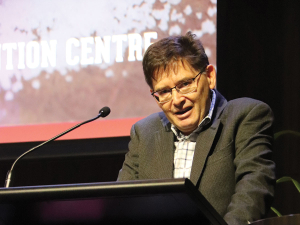
The meat processing industry is much more collegial than it was in the past and is now more focused on common goals.
With the last couple of months having seen some potential tractor purchases put on hold with the impending election and continued input cost rises, year-to-date figures, ending September, has seen deliveries up around 5% over the same period in 2025, with a total of 2026 units.
Beef+Lamb New Zealand is calling for nominations for director roles in the Northern South Island and Northern North Island electoral districts.
Fonterra chief executive, Richard Allen says being resilient has helped the dairy industry overcome extreme volatility in recent years.
The head of the Ministry for Primary Industries (MPI) trade and international relations group says New Zealand is well-positioned to secure trade access and compete internationally as the world becomes more complicated, demanding and uncertain.

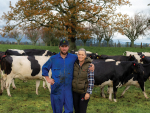

OPINION: It seems Canterbury processor Synlait is still in the doldrums.
OPINION: Get offside with New Zealand First leader Winston Peters at your own peril.